🛡️Matter & Thread: The Future of Smart Home Security Standards

TLDR
- Matter is a smart home standard that helps devices from different brands work together securely.
- Thread is a low-power wireless protocol that creates a reliable mesh network for smart devices.
- Together, Matter and Thread improve speed, reliability, and local control for home security systems.
- They reduce reliance on cloud services, which can improve privacy and responsiveness.
- For DIY security setups, they simplify compatibility and make future upgrades easier.
If you have been looking into smart home security lately, you have probably run into the terms Matter and Thread. At first glance, they sound like just another round of tech buzzwords. However, these two are actually reshaping how smart home devices connect and communicate.
In simple terms, they are trying to fix one of the biggest frustrations in DIY home security where to start projects: compatibility. You know the drill. One brand works with your phone but not your hub. Another needs its own app. Things get messy fast.
Matter smart home security aims to clean that up, and for home security, that is a pretty big deal. It moves the industry away from walled gardens and toward a more open ecosystem.
🔌 What Matter Actually Is
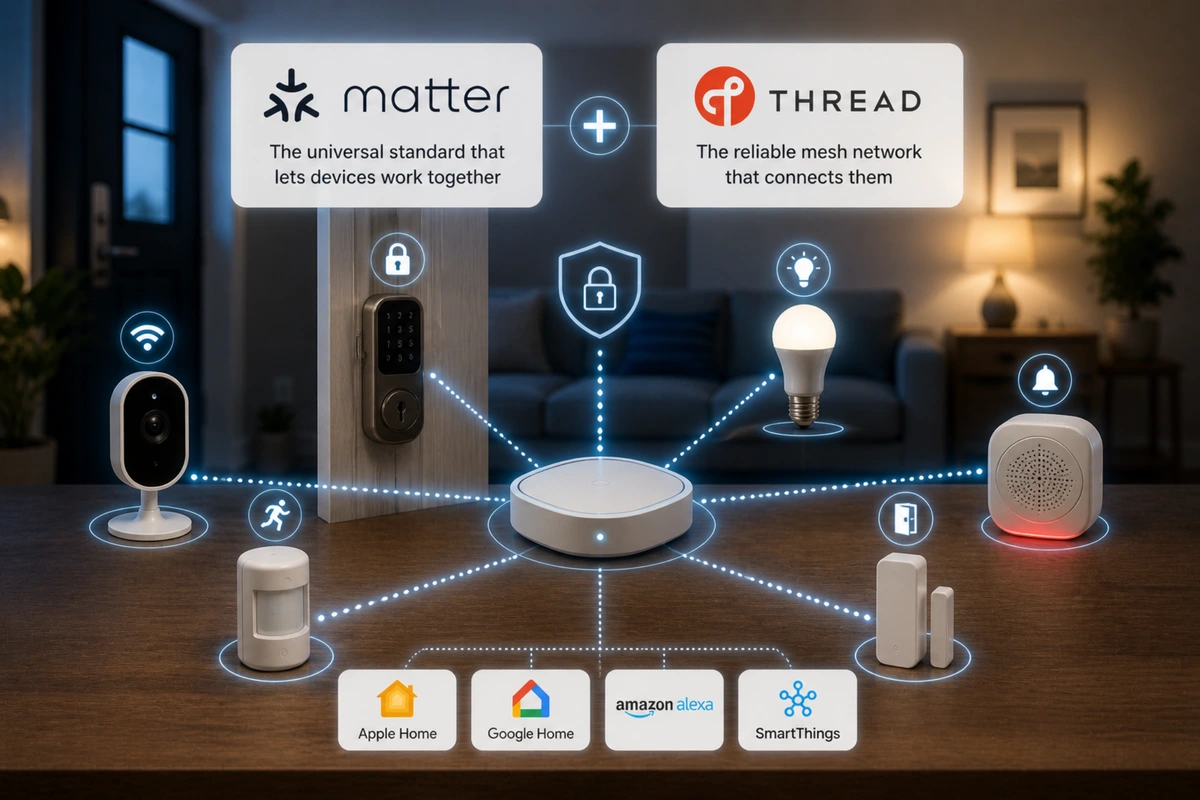
Matter is not a device or a wireless signal. It is a standard. Think of it as a software-based communication protocol that runs on top of your existing network.
If a device supports Matter, it is designed to work across multiple platforms without needing complicated workarounds. This is especially helpful when dealing with home security threats most people ignore because it allows for a more comprehensive and responsive network of sensors.
Traditional vs. Matter Connectivity
| Feature | Traditional Setup | Matter Setup |
| Brand compatibility | Limited | Much broader |
| Setup process | Often complex | More streamlined |
| App dependency | Multiple apps | More unified control |
| Future upgrades | Risk of mismatch | More flexible |
Using this standard helps remove the friction often found in common DIY home security failures. By standardizing how devices announce themselves and share data, Matter ensures that your motion sensors vs contact sensors speak the same language as your alarm.
📡 What Thread Does Behind the Scenes
While Matter is the language, Thread is one of the ways devices communicate. The Thread smart home protocol is a wireless technology similar in concept to WiFi or Bluetooth but built specifically for low-power smart home devices.
Understanding how Thread works smart home setups is about the mesh network. Instead of every sensor trying to reach your router directly, they can “hop” between devices.
Network Performance Overview
| Feature | WiFi | Thread |
| Power usage | Higher | Low |
| Network type | Centralized | Mesh |
| Reliability | Depends on router | Self-healing network |
| Range | Limited to router | Expands with devices |
This is a core part of learning how to build redundancy into a DIY security setup. If one device in the mesh goes offline, the network self-heals and finds a new path for the signal.
This is critical for how reliable wireless security systems are in real-world scenarios. For security devices, that low power usage is especially useful. It helps batteries last longer, making the battery vs wired security devices debate much easier for DIYers.
🏡 Why This Combo Works So Well for Security
Matter and Thread are often mentioned together because they complement each other. Matter handles compatibility and communication rules, while Thread handles how devices physically connect.
Together, they create a system that is more stable and less prone to dropped connections. For home security, reliability is everything. A delayed alert or dropped connection defeats the purpose of what DIY home security actually protects against.
Security Performance Improvements
- Lower Latency: Signals travel faster within a Thread mesh compared to congested WiFi.
- Reduced Failure Points: The mesh network avoids the single point of failure common in router-only setups.
- Privacy Controls: Enhanced local encryption keeps your data within your four walls.
- Easier Upgrades: You can upgrade a DIY system over time without trashing your old hardware.
This combo helps reduce weak points by establishing a reliable framework. It ensures your best DIY home security cameras for apartments maintain a steady connection without constant maintenance.
🔐 Local Control and Privacy Advantages
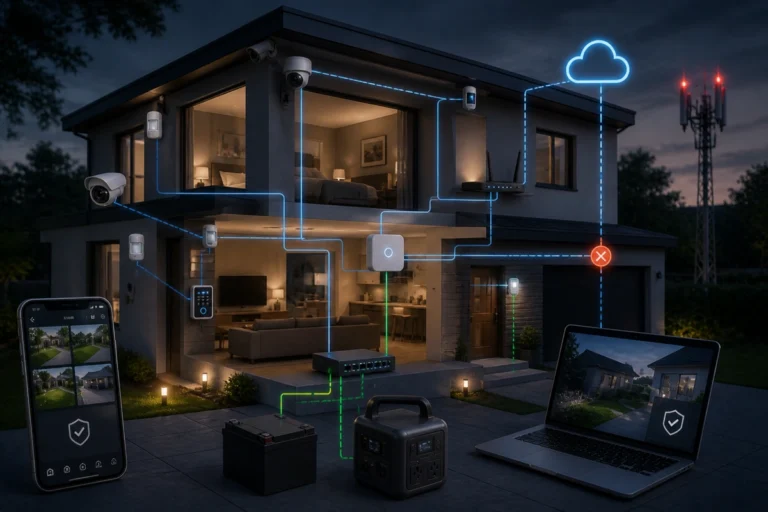
One of the biggest shifts with Matter smart home security is the move toward local control. Many traditional systems rely heavily on cloud servers. When you trigger a sensor, the signal goes to the internet, gets processed, and then comes back to your phone. With Matter and Thread, more actions happen locally within your home.
Local Control vs. Cloud Comparison
| Aspect | Cloud-Reliant System | Matter/Thread System |
| Internet dependency | High | Low |
| Response Speed | Variable | Fast (instant local) |
| Privacy | Data sent to servers | Data stays local |
| Downtime Risk | High (if cloud is down) | Minimal |
This does not eliminate cloud use entirely, but it reduces reliance on it. From a security perspective, fewer external dependencies mean fewer points of failure during power and internet outages. It also makes local storage vs cloud storage for security cameras more viable.
⚙️ What You Actually Need to Use Them
Getting started with the Thread smart home protocol and Matter is not complicated, but you need the right pieces. This is similar to designing a home security system on a budget where you pick and choose specific, effective components.
The Matter and Thread Shopping List
- Matter-compatible devices: Ensure your home security cameras explicitly list Matter support.
- A Matter Controller: A hub or device that manages your Matter network.
- A Thread Border Router: This connects your Thread mesh to your home WiFi. Many smart locks and hubs already act as border routers.
- Matter-enabled App: You will need a centralized app to manage permissions and automations.
📋 When It Makes Sense to Upgrade
Not everyone needs to jump into Matter vs Zigbee security debates or overhaul their house immediately. However, if you are currently assessing your home like a burglar would, you might find that your older wireless equipment has significant range or latency gaps.
Who Should Upgrade Now?
- New Homeowners: If you are building a system from scratch.
- Platform Switchers: If you are tired of being locked into one brand app.
- Large Property Owners: If your WiFi range cannot handle your outdoor motion lighting or gate sensors.
- Security Purists: If you want the absolute fastest response time for your contact sensors.
🧪 Real-World Experience: The Consistency Difference
From a day-to-day perspective, the biggest difference is consistency. Devices connect faster. Automations feel more responsive. And you spend less time troubleshooting weird compatibility issues that arise in common DIY home security failures. I have noticed that once a Thread network is established, it just quietly does its job. No constant reconnecting, no random dropouts.
What You Will Notice Day to Day
- Instant Notifications: Reduced lag between a door opening and your phone pinging.
- Better Battery Life: Your smart locks will not need battery changes as frequently.
- Simplified Apps: One app can truly control everything, from your window security to your lights.
- Stable Connectivity: Fewer “Device Unavailable” errors when you go to check a camera.
🧠 Expert Insight: Future of Smart Home Security Standards
If there is one reason people are paying attention to Matter and Thread, it is future-proofing. Smart home tech changes fast, but Matter is backed by major industry players, increasing the chances that it sticks around. It represents the future of smart home security standards.
Thread, meanwhile, solves real technical limitations that older protocols struggled with. When you look at how home burglaries actually happen, speed of detection is often the only thing that prevents a loss.
Future-Proofing Strategy Table
| Phase | Action |
| Phase 1 | Buy Matter-certified hubs or smart speakers. |
| Phase 2 | Replace aging door and window sensors with Thread-enabled ones. |
| Phase 3 | Integrate compatibility Matter security devices into your broader home automation. |
| Phase 4 | Set up redundancy using local control features. |
⚖️ Pros and Cons You Should Know
Like anything, it is not all upside. It is important to know the limitations before you spend money on home security.
The Balanced View
- Pros: Faster communication, mesh reliability, cross-brand support, and enhanced privacy.
- Cons: The ecosystem is still growing, some older devices will never be compatible, and you may still need a hub for advanced features.
- The Verdict: If you are planning to upgrade a DIY system over time, Matter and Thread should be at the top of your requirement list.
🧾 Final Thoughts
Matter and Thread are not magic fixes, but they are a meaningful step forward. They make smart home security systems easier to build, easier to expand, and generally more reliable. Whether you are looking for the best DIY setups for apartments or a full house with a secured garage, these standards ensure you spend less time fighting your setup and more time trusting it.
In an industry where most homes are vulnerable despite having locks, having a robust, fast-acting communication layer is your best defense. Regular testing of your home security system will show that Matter and Thread devices hold their connection better than almost any other consumer tech. Start small, but keep these standards in mind as you build your ultimate layer of protection.