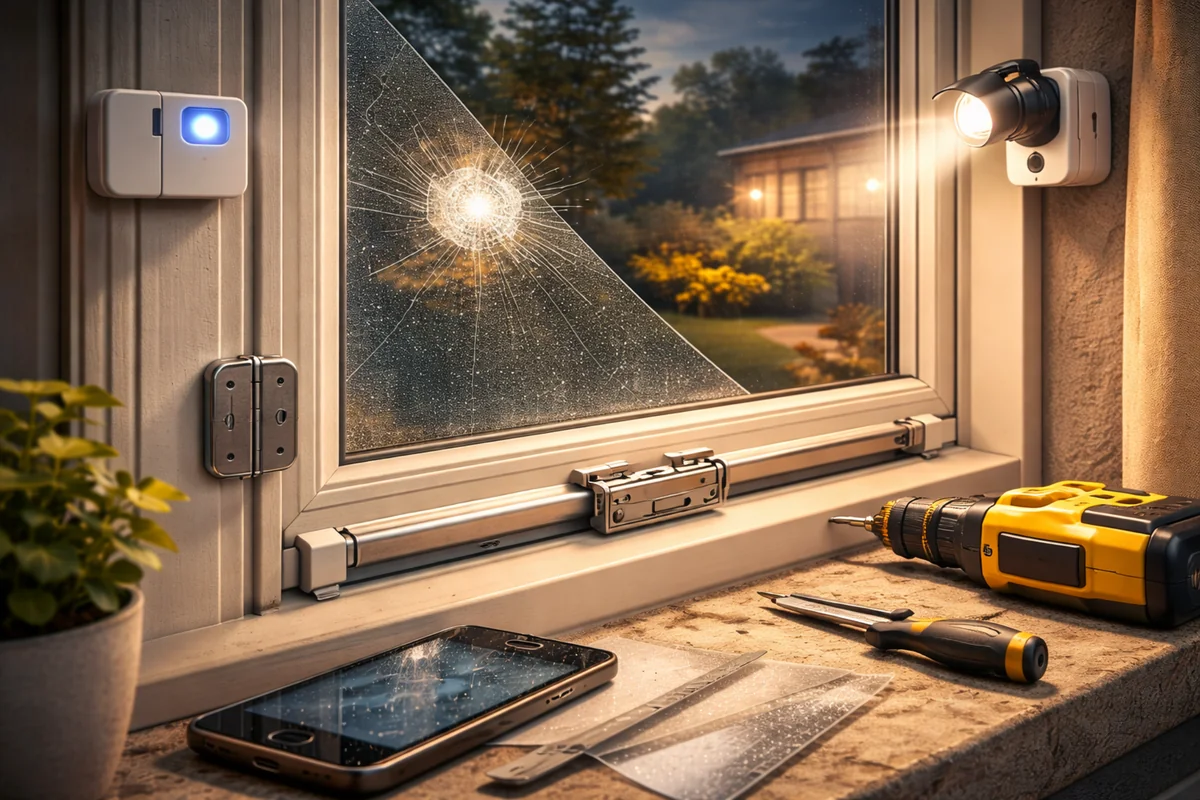
🪟DIY Window Security Upgrades That Actually Deter Break-Ins

TLDR
- First-floor windows account for roughly 20–25% of break-ins, making them a major security priority.
- Most standard window locks are easy to bypass, so reinforcing them is essential.
- Simple upgrades like window locks, security film, and track blockers significantly increase resistance.
- Sensors, lighting, and visibility act as strong deterrents when layered with physical security.
- Effective window security is about slowing entry, increasing noise, and making your home a less attractive target.
Windows are one of those things people assume are “fine” as long as they’re closed. And to be fair, they look secure. Glass is solid, frames feel sturdy, and there’s usually a latch in place. But when you look at actual break-in patterns, windows tell a different story.
A significant portion of home intrusions happen through ground-level windows. Not because they’re the easiest in every case, but because they’re often the most overlooked. If your front door is reinforced and your alarm is visible, a window becomes the path of least resistance. This makes securing sliding glass doors and windows a high priority.
The good news is you don’t need to replace your windows or install anything complicated. A handful of practical window security upgrades can make a real difference. Let’s walk through the ones that actually work.
🏘️ Why Windows Are a Common Target
Before upgrading anything, it helps to understand the “why.” Most burglars aren’t looking for a challenge. They’re looking for access that’s quick, quiet, and low risk. First-floor windows check all three boxes if they’re not secured properly.
General home burglary statistics show that the majority of break-ins happen at the ground level. Standard window latches are usually designed for convenience, not security. In some cases, they can be bypassed with simple tools.
And because many windows are located on the side or back of a home, they’re often out of sight, which is one of the home security threats most people ignore.
Another factor is visibility. If a burglar can approach a window without being seen, they have more time to work. That’s why window security isn’t just about the glass or the lock, it’s about the whole setup. This is a critical realization when assessing your home like a burglar would.
🔒 Upgrade 1: Install Proper Window Locks
Let’s start with the basics. Many windows either don’t have locks or rely on very simple latches. These are better than nothing, but they’re not designed to resist forced entry. This is exactly why most homes are vulnerable despite having locks that seem functional on the surface.
| Lock Type | Security Level | Ease of DIY |
| Sash Locks | Moderate | Very Easy |
| Pin Locks | High | Easy |
| Keyed Locks | Very High | Moderate |
Adding dedicated window locks, like keyed locks, pin locks, or sash locks, improves security immediately. These prevent the window from being lifted or slid open, even if someone tries to manipulate the latch from outside. Pin locks, in particular, are among the best ways to secure windows cheaply. They’re easy to install and physically block movement rather than relying on a small internal mechanism.
If you only do one thing, focusing on window locks and security film is a strong first step.
🛡️ Upgrade 2: Add Window Security Film
This is one of the most effective DIY window security solutions that still flies under the radar. Security film is a clear layer applied to the glass. It doesn’t stop the glass from breaking, but it holds the pieces together when it does. That changes the entire dynamic of a break-in.
Instead of a quick smash-and-reach entry, the intruder now has to keep striking the same spot, creating noise and taking time. That delay is often enough to discourage the attempt altogether. According to detailed home burglary data, the more time an intruder has to spend at an entry point, the higher the chance they will abandon the attempt.
I’ve installed film on a few ground-level windows before, and while it takes a bit of patience, the result feels noticeably more solid. It’s one of those upgrades you don’t think about daily, but it’s doing quiet work in the background to secure windows from break ins.
🚧 Upgrade 3: Use Window Track Blockers
If you have sliding windows, this is a must. Just like sliding doors, sliding windows can sometimes be forced open even when locked. A simple track blocker, like a cut piece of wood or a metal bar, prevents movement entirely.
It’s low-tech, but very effective for those designing a home security system on a budget. The key is making sure it fits snugly. If there’s play in the track, the window might still move enough to create a gap. A tight fit turns it into a solid barrier.
🔔 Upgrade 4: Install Glass Break or Contact Sensors
Physical upgrades are important, but detection adds another layer. Contact sensors trigger when a window is opened, while glass break sensors detect the sound or vibration of shattering glass. Both are essential parts of window alarm systems installation.
Here’s the important part: they serve different purposes.
- Contact Sensors: Won’t trigger if someone breaks the glass and climbs through without opening the window.
- Glass Break Sensors: Won’t trigger if someone quietly forces the window open without shattering it.
Using both covers more scenarios and is a vital part of knowing where to start with DIY home security.
Expert Tip: When choosing sensors, consider if you want a minimalist home security setup that uses a central hub or standalone units that just emit a loud siren.
🌿 Upgrade 5: Reinforce the Surrounding Area
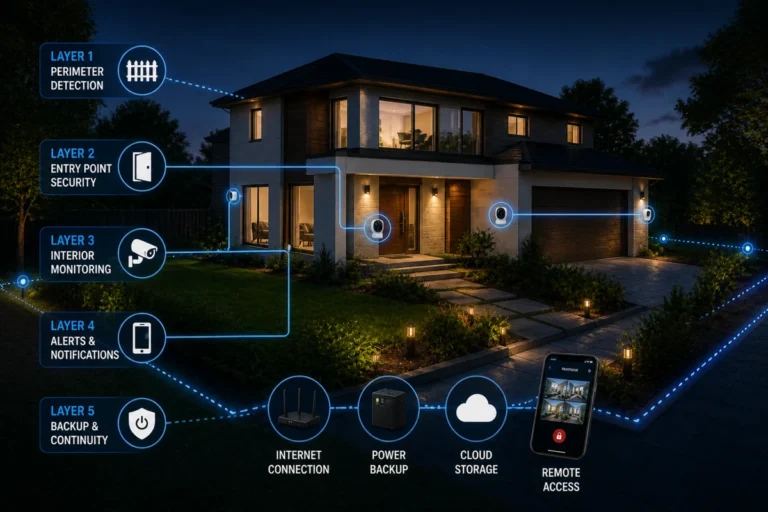
This is where people often miss opportunities. Window security isn’t just about the window itself. It’s also about what’s around it. This is a core part of a layered home security practical DIY framework.
- Visibility: Trim back bushes or plants that provide cover for someone to hide.
- Access: Remove objects like ladders or furniture that could help someone reach higher windows.
- Privacy: Keep valuables out of direct view from outside to reduce the things that make a home easy to break into.
💡 Upgrade 6: Add Motion Lighting
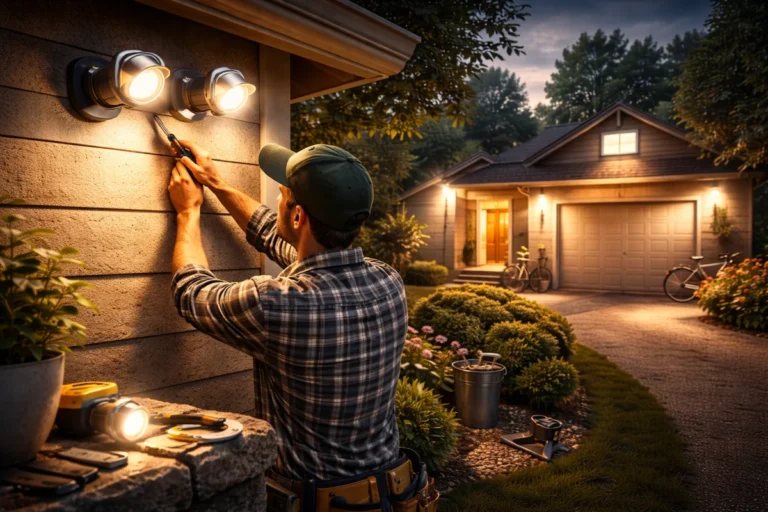
Lighting is one of the simplest deterrents available. A motion-activated light near a window removes the advantage of darkness. It makes anyone approaching the window visible and exposed. This is particularly important for the best diy security setups for apartments where windows might face dark alleys or shared hallways.
This doesn’t stop someone physically, but it changes behavior. Most intruders prefer to operate unnoticed. Light makes that harder. Even a basic battery-powered unit can be effective if it’s positioned correctly.
⛓️ Upgrade 7: Consider Window Bars or Grilles
This one depends on your situation. Window bars or grilles provide a strong physical barrier. They’re especially common on basement windows or in high-risk areas.
However, they’re not always practical or desirable for every home. They can affect aesthetics and must be installed in a way that allows emergency escape from inside. If you use them, make sure they’re designed with quick-release mechanisms for safety. This is a common part of diy home security systems explained for older homes or urban environments.
💎 Upgrade 8: Improve Glass Strength
Not all glass is equal. Standard glass can break relatively easily under force. Laminated glass, on the other hand, includes an inner layer that holds it together when struck. While replacing glass isn’t always a DIY-friendly project, learning how to reinforce windows at home by adding film achieves a similar effect at a lower cost.
- Standard Glass: Breaks into sharp, dangerous shards quickly.
- Tempered Glass: Stronger, but still shatters into small pieces upon heavy impact.
- Laminated Glass: Stays in the frame even after being smashed.
The idea is the same: make entry slower and louder. If you are serious about window security upgrades, making the glass itself harder to penetrate is a major win.
🏗️ Layering: The Real Difference Maker
If there’s one theme that comes up again and again, it’s this: no single upgrade does everything.
- Physical: A lock stops movement and film slows breakage.
- Electronic: Sensors provide alerts and alarms.
- Environmental: Lighting adds visibility and exposure.
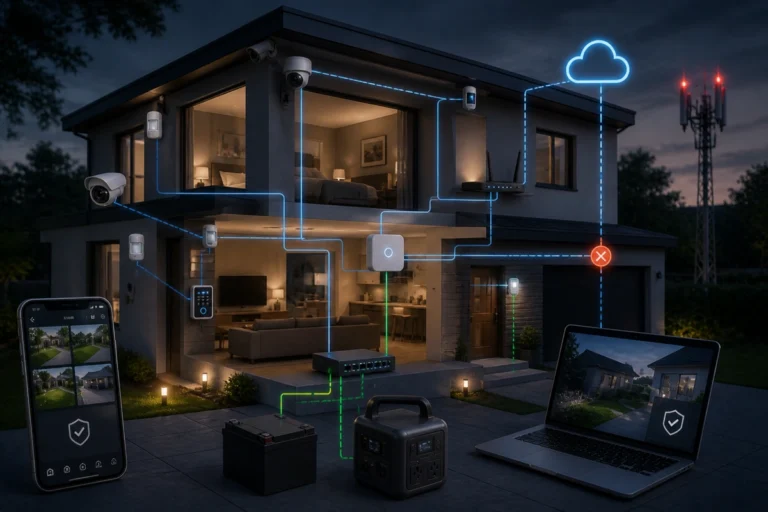
When you combine them, you create a system that’s much harder to defeat. Burglars tend to look for the easiest option. If your windows require more time, more noise, and more effort than the next house, that alone can be enough to shift their attention elsewhere. This is what DIY home security actually protects against.
⚠️ Common Mistakes to Avoid
A few things come up frequently when people attempt DIY window security solutions.
- Relying only on closing: Closed doesn’t mean secure. Always engage the locks.
- Ignoring the “Hidden” Windows: Don’t forget side and rear windows just because they’re less visible from the street.
- Skipping Maintenance: Installing window alarm systems installation kits and never testing your home security system regularly is a recipe for failure.
- Poor Film Application: Installing film incorrectly can leave bubbles or edges that make it easier to peel off.
🏁 Final Thoughts
Window security doesn’t have to be complicated or expensive. In fact, some of the most effective upgrades are simple, affordable, and easy to install.
If you’re starting from scratch, focus on the basics. Upgrade your locks, add a track blocker if needed, and consider window locks and security film for ground-level windows.
From there, layer in sensors and lighting. What you’ll end up with isn’t just a “secured window,” but a system that works together to slow, expose, and discourage any attempt at entry. That’s really the goal.
Not perfection, but a setup that makes your home a harder, noisier, and far less appealing target. If you ever feel your system is lagging, you can always upgrade a DIY system over time as your budget allows.