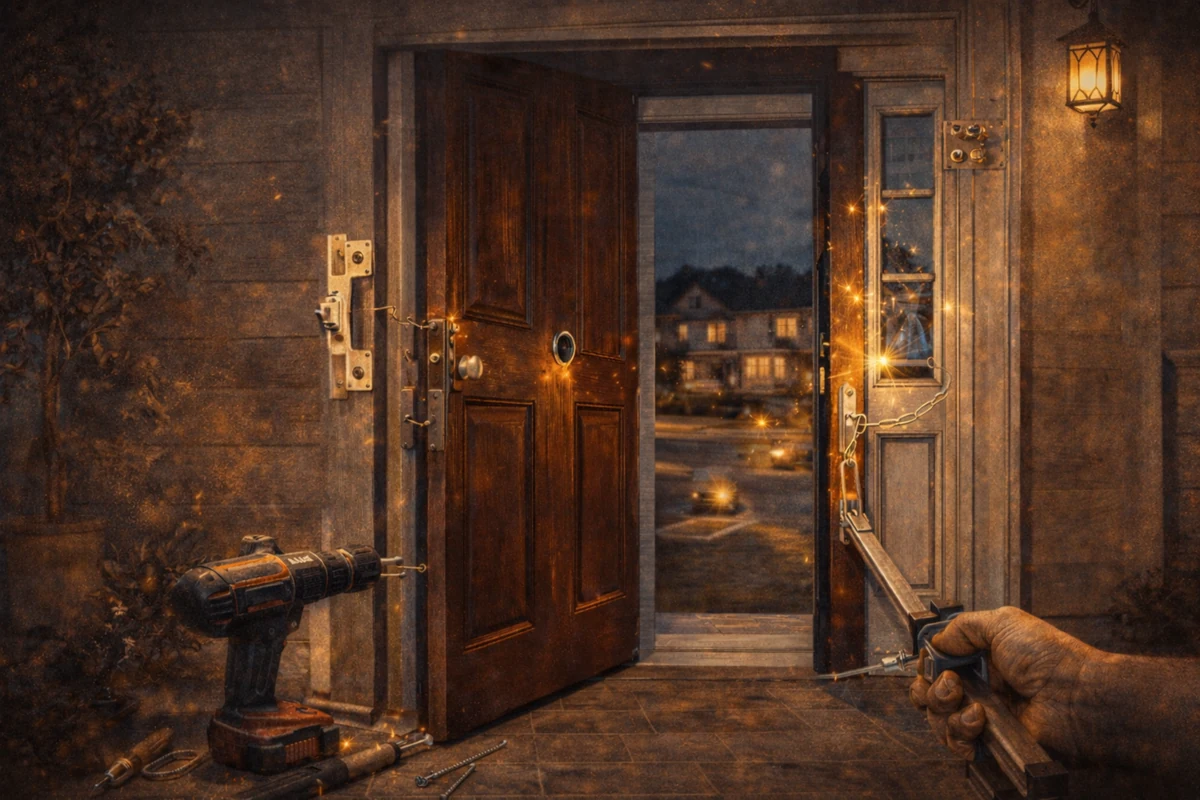
🏠How to Reinforce Your Front Door Without Replacing It
TLDR
- Most front doors fail at the frame and hardware, not the door itself. 🚪
- Replacing short factory screws with 3-inch screws is one of the simplest and most effective upgrades. 🔩
- Reinforced strike plates and door jamb kits significantly improve resistance to forced entry. 🛡️
- Adding secondary locks, hinge reinforcements, and door barricades creates strong layered protection. 🏗️
- You don’t need a new door to improve security, smart upgrades to weak points make the biggest difference. ✅
If there is one part of your home that deserves extra attention, it is your front door. It is the main entry point and your first line of defense. However, in many forced entry situations, it is not the door itself that fails.
It is the frame, the screws, or the hardware holding everything together. I’ve seen doors that look solid give way in seconds simply because of cheap components. The good news is you can reinforce front door entryways using smart, budget-friendly DIY methods.
🔩 Start With the Weakest Link: The Strike Plate
If you only make one upgrade, make it this one. The strike plate is the metal piece on your door frame where the deadbolt locks in. On most homes, it is secured with half-inch screws that only go into the thin door jamb.
A strong kick can rip it right out. Swapping those short screws for longer ones, typically around 3 inches, anchors the strike plate into the wall stud behind the frame. This is arguably the best way to secure front door cheaply.
You can go a step further and install strike plate reinforcement. These are thicker, larger, and designed to distribute force across a wider area. When you assess your home like a burglar, the strike plate is the first thing they look for as a point of failure.
| Component | Factory Standard | Security Upgrade |
| Screws | 0.5 inch (Softwood) | 3-inch (Steel Stud Anchor) |
| Strike Plate | Thin, small footprint | Heavy-duty, 4-6 screw holes |
| Hinges | Short screws, standard pins | Non-removable pins, long screws |
| Door Jamb | Exposed wood | Metal reinforcement plate |
🏗️ Reinforce the Door Frame (Not Just the Door)
Standard door frames are usually made from relatively soft wood. When pressure is applied, the frame can split, making the lock useless. This is why a door jamb reinforcement DIY project is so valuable.
Data confirms that the front door is the most common entry point for break-ins, so securing it is the smartest first step you can take. These kits typically include long metal plates that run along the lock side of the frame.
Instead of force hitting one small area, it gets spread out across the entire reinforced section. This is a core part of a layered home security practical DIY framework.
💡 Expert Tip: When installing long screws, pre-drill your holes. If you drive a 3-inch screw directly into an old stud without a pilot hole, you risk splitting the wood, which defeats the entire purpose of the reinforcement.
🔐 Upgrade Your Deadbolt and Hardware
Not all locks are created equal. If your current deadbolt feels loose or old, it might be worth an upgrade. Look for a deadbolt with a solid metal bolt that extends fully into the reinforced strike plate.
What matters most is how deeply the bolt engages with the frame. You should also understand are smart locks safe before making a switch, as some offer better physical resistance than others.
Even the best deadbolt won’t help if it is attached to a weak frame. It is just one part of a minimalist home security strategy that focuses on quality over quantity.
🚪 Don’t Ignore the Hinges
The hinge side of the door is often missed. If your door opens outward and the pins are exposed, someone could potentially remove them and take the door off entirely.
You can reinforce hinges by replacing the screws with longer ones that anchor into the structural framing. There are also hinges with built-in security features like non-removable pins or interlocking studs. Understanding how home burglaries actually happen helps you see these hidden gaps.
🛡️ Add a Secondary Lock or Barricade
Sometimes you want a bit of extra insurance, especially at night. Secondary locks, like latch guards or interior reinforcement locks, limit how far a door can open even if the main lock is compromised.
You might also consider an add door security bar or floor-mounted barricade. These physically block the door from being pushed inward, even under significant force. These are excellent temporary home security solutions for renters who cannot modify the frame permanently.
📖 Read Also: Why most homes are vulnerable despite having locks
🛠️ How to Strengthen Front Door Without Replacing It
A door reinforcement plate is an upgrade that does not get talked about enough. It wraps around the area where your lock is installed, preventing the wood from splitting around the lock under pressure.
This creates a much stronger lock-to-frame connection. When combined with a door security bar, it makes the entry point incredibly difficult to breach. For those following a simple home security setup, this is a high-impact move.
📏 Close the Gaps: Fit and Alignment
You can have all the right hardware, but if your door does not fit properly, you are still leaving room for prying. Gaps between the door and frame make it easier for an intruder to insert a tool.
Take a few minutes to check how your door sits when closed. It should feel solid, with minimal movement. If needed, adjust the strike plate or hinges to tighten the fit. It is a small detail that plays a big role in overall resistance.
📖 Read Also: Motion sensors vs contact sensors what you actually need
💡 Add Visibility and Deterrence
Reinforcement is not just about physical strength; it is also about discouraging attempts. A well-lit entryway makes a big difference. Motion lights remove the cover of darkness and make an intruder feel exposed.
Video doorbells or visible cameras add another layer of psychological pressure. Research shows that intruders often move on when they see visible security measures. You are not just building resistance, you are shaping behavior.
🚩 Common Mistakes to Avoid
Focusing only on the lock is the most common error. A high-end deadbolt will not help if the strike plate is weak. Another is skipping the hinge side entirely, leaving a massive vulnerability.
Do not overcomplicate things. Most of the real gains come from reinforcing the basics. Start with the screws, then the strike plate, then the frame. You can learn more about prioritizing these tasks in our guide on where to place security cameras.
🏁 Conclusion
Learning how to strengthen front door without replacing it is one of the most cost-effective things you can do for your family. Most of these upgrades cost very little and take less than an hour to install with basic tools.
If I had to prioritize, I would start with longer screws and a reinforced strike plate. From there, add frame reinforcement and a secondary lock if needed. It is a layered approach that works.
Once you have completed these steps, you will notice the door feels sturdier when you close it. Focus on the basics, keep it simple, and ensure your home remains a hard target.