🛡️Securing Sliding Glass Doors: DIY Methods That Actually Work

TLDR
- Sliding glass doors are one of the most common weak points in home security and are frequently targeted by intruders. 🚪
- Most factory-installed locks are basic and can be bypassed, lifted, or forced open without specialized tools. 🚫
- Simple DIY upgrades like security bars, window film, and track blockers can significantly improve resistance. 🛠️
- Layering physical barriers with sensors and lighting creates a much stronger defense than relying on one solution. 🏗️
- The goal is not making your door “unbreakable” but making it slow, noisy, and unattractive to intruders. 🧠
Sliding glass doors are one of those features you do not think much about until you start looking at your home through a security lens. They are bright, convenient, and honestly, pretty nice to have.
However, from a security standpoint, they are often the weakest entry point in your home. I’ve seen this firsthand: people invest in cameras and smart locks but leave the sliding door with the same basic latch it came with.
🏢 Why Sliding Glass Doors Are a Security Risk
Most sliding doors are designed for convenience, not security. They typically rely on simple latch mechanisms instead of full deadbolts, which can often be forced open or jiggled loose with minimal effort.
Another issue is the track system itself. Many sliding doors can be lifted off their tracks if there is enough play in the frame, meaning someone can remove the entire door without picking a lock.
| Vulnerability | Typical Method | DIY Solution |
| Weak Latch | Prying or jiggling | Secondary locking mechanism |
| Track Lifting | Vertical lifting of the pane | Anti-lift brackets or screws |
| Glass Breakage | Impact with tools | Security window film |
| Low Visibility | Working in the dark | Motion-activated lighting |
Recent data from the Bureau of Justice Statistics consistently shows that ground-level entry points are the most common access points during break-ins. This is why you must secure sliding glass door entryways before focusing on high-tech interior gadgets.
📏 Method 1: Add a Security Bar or Dowel Rod
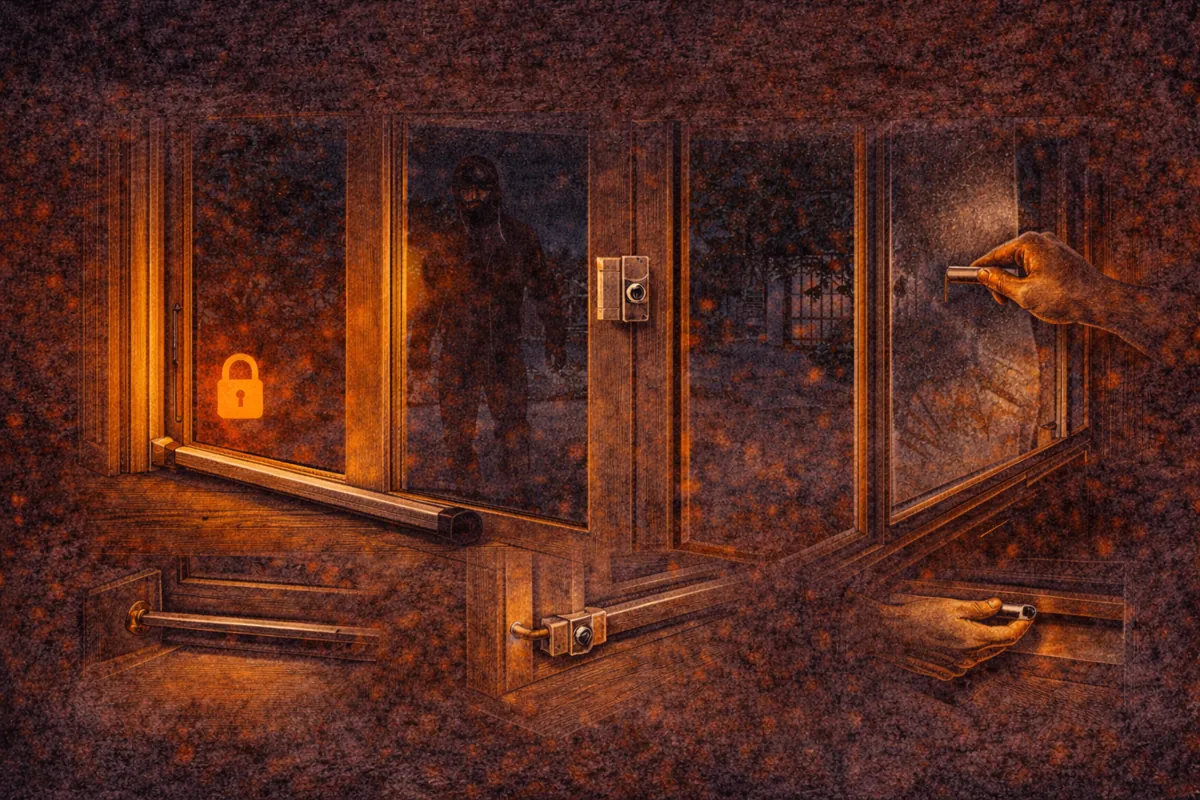
This is the simplest upgrade you can make, and it is surprisingly effective. A security bar placed in the bottom track physically prevents the door from sliding open even if the lock is compromised.
It is not a fancy solution, but it works because it adds a solid mechanical barrier. For those interested in a sliding door security bar installation, it is as simple as measuring the track and dropping the bar into place.
💡 Expert Tip: Make sure the bar fits tightly against the frame. A loose rod allows the door to move enough to potentially bypass other security layers or give an intruder leverage.
🔒 Method 2: Upgrade the Locking Mechanism
The factory latch is usually the weakest part of the system. Upgrading to a secondary lock makes a noticeable difference in your overall sliding door security.
Options include double-bolt locks, loop locks, or keyed locks designed specifically for these frames. Some of these are easy to install with just a screwdriver and require no structural changes.
📖 Read Also: Are smart locks safe a practical security analysis
🏗️ Method 3: Prevent the Door from Being Lifted
If your sliding door has enough clearance, it can sometimes be lifted upward and removed from the track entirely. This is a known issue with older or poorly adjusted doors that lack DIY sliding door lock solutions.
There are two easy fixes: adjust the rollers so the door sits more tightly in the frame, or install anti-lift devices. These can be as simple as screws placed in the upper track to limit upward movement.
🛡️ Method 4: Apply Security Window Film
Security film does not make the glass unbreakable, but it does make it much harder to get through. When struck, the film holds the shards together instead of allowing them to shatter instantly.
This forces an intruder to keep hitting the same spot repeatedly, creating noise and drawing unwanted attention. It turns a quick entry into a messy, time-consuming process that most criminals want to avoid.
📖 Read Also: Why most homes are vulnerable despite having locks
🚨 Method 5: Use Glass Break or Door Sensors
Physical barriers are great, but detection matters too. Glass break sensors listen for the sound frequency of breaking glass, while contact sensors trigger when the door is opened.
Research suggests that making a home even slightly more difficult to enter can discourage the majority of property crimes. These sensors provide the immediate alert you need.
For more information on sensor types, check out motion sensors vs contact sensors what you actually need.
💡 Method 6: Install Motion Lighting Around the Door
Sliding doors are often located in darker, less visible areas of the yard. Adding motion-activated lighting changes that instantly by removing the cover of darkness.
You do not need a complicated setup here: even a basic battery-powered light can make a difference. The key is placement: ensure it covers the door and the surrounding area.
| Deterrent Type | Benefit | Ease of Setup |
| Lighting | Exposes the intruder | Very Easy |
| Signage | Psychological deterrent | Instant |
| Clearance | Removes hiding spots | Moderate (Landscaping) |
👀 Method 7: Reinforce Visibility and Deterrence
Sometimes, the simplest sliding glass door security tips are the most effective. Keep the area around your door clear of large plants that could provide cover for an intruder.
You can also add decals or signage indicating that the home is monitored. Even if your system is DIY, the perception of surveillance can be enough to deter opportunistic intruders from trying.
🏗️ Layering the Best Way to Reinforce Sliding Doors
Effective security is layered. A security bar stops the door from opening, a better lock slows forced entry, film delays glass breakage, and sensors alert you.
None of these are perfect on their own, but together they create a system that is much harder to defeat. This is the best way to reinforce sliding doors without spending thousands on a professional installation.
💡 Expert Tip: When learning how to secure a sliding glass door from break ins, always start with the physical barrier. Electronics can fail, but a metal bar in the track is a constant.
🚩 Common Mistakes to Avoid
Relying only on the factory lock is probably the biggest mistake homeowners make. It is rarely enough on its own to stop a determined intruder.
Ignoring the track and lift vulnerability is another common gap in residential defense. Some people also install devices but never test them to ensure they actually fit.
If you are looking for a minimalist home security setup, make the sliding door one of your first three priorities.
🏁 Conclusion
Sliding glass doors do not have to be a weak point, but they do require a bit of focused attention. Most of the effective solutions are affordable, easy to install, and renter-friendly.
From my experience, the biggest shift comes from thinking in layers. Once you start combining a few of these methods, the door goes from being an obvious vulnerability to a much tougher barrier.
Focus on smart, practical upgrades and you will significantly improve your home’s defense profile. Good security is about making your space more difficult to target than the average house.