🏠Minimalist Home Security Setups That Actually Work

TLDR
- A minimalist setup can still be highly effective if it focuses on key entry points and visibility. 🎯
- Cameras, sensors, and lighting provide the most value when used together in layers. 💡
- Most burglars avoid homes with visible security measures and audible alarms. 🚨
- You don’t need dozens of devices, just a few well-placed, high-quality components. 🛠️
- Simplicity improves reliability, ease of maintenance, and consistent long-term use. ✅
There’s a temptation with home security to go all-in. Multiple cameras, sensors on every window, and complex smart integrations everywhere look impressive on paper, but they often lead to “alert fatigue.”
In real life, these bloated systems often turn into a burden you don’t maintain or eventually start ignoring because they are too noisy. A minimalist home security setup flips that idea on its head by asking what actually matters to the safety of your family.
🏢 Why Minimalist Security Actually Works
More devices do not automatically mean more security. Security works best when it is visible, consistent, and easily maintained by the average homeowner.
Research from organizations like the Electronic Security Association consistently shows that even a basic monitored alarm system significantly reduces the chance of a successful burglary.
Many intruders actively avoid homes that appear monitored because the risk of capture is far too high for their comfort.
| Requirement | Why Minimalism Helps |
| Visibility | Focal points are clear and obvious to intruders |
| Maintenance | Fewer batteries to change and firmware to update |
| Daily Use | Simple systems are armed more consistently |
A simple home security setup excels because there are fewer points of failure. When you understand what makes a home easy to break into, you can focus your limited hardware where it has the most psychological impact.
🎯 The Core Principle: Cover the Obvious First
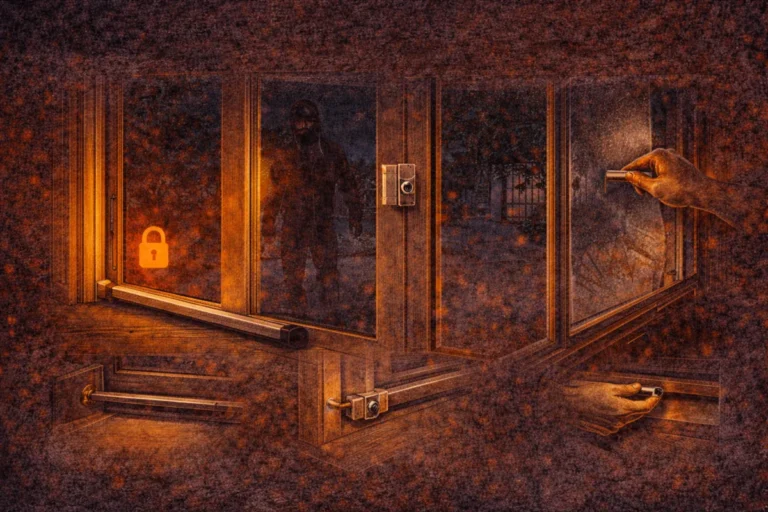
If you strip everything down, most break-ins follow very predictable patterns. Intruders typically use doors or accessible windows and prefer poorly lit areas where they can work in private without being seen.
A basic home security system focuses on these likely points of entry. By prioritizing how home burglaries actually happen, you ensure your core layers are ironclad rather than thin and widespread.
💡 Expert Tip: Focus your initial budget on the “big three”: the front door, the back door, and any hidden side entrances. If these are secure, you’ve already mitigated the majority of your residential risk.
🛡️ The 3-Component Minimalist Setup
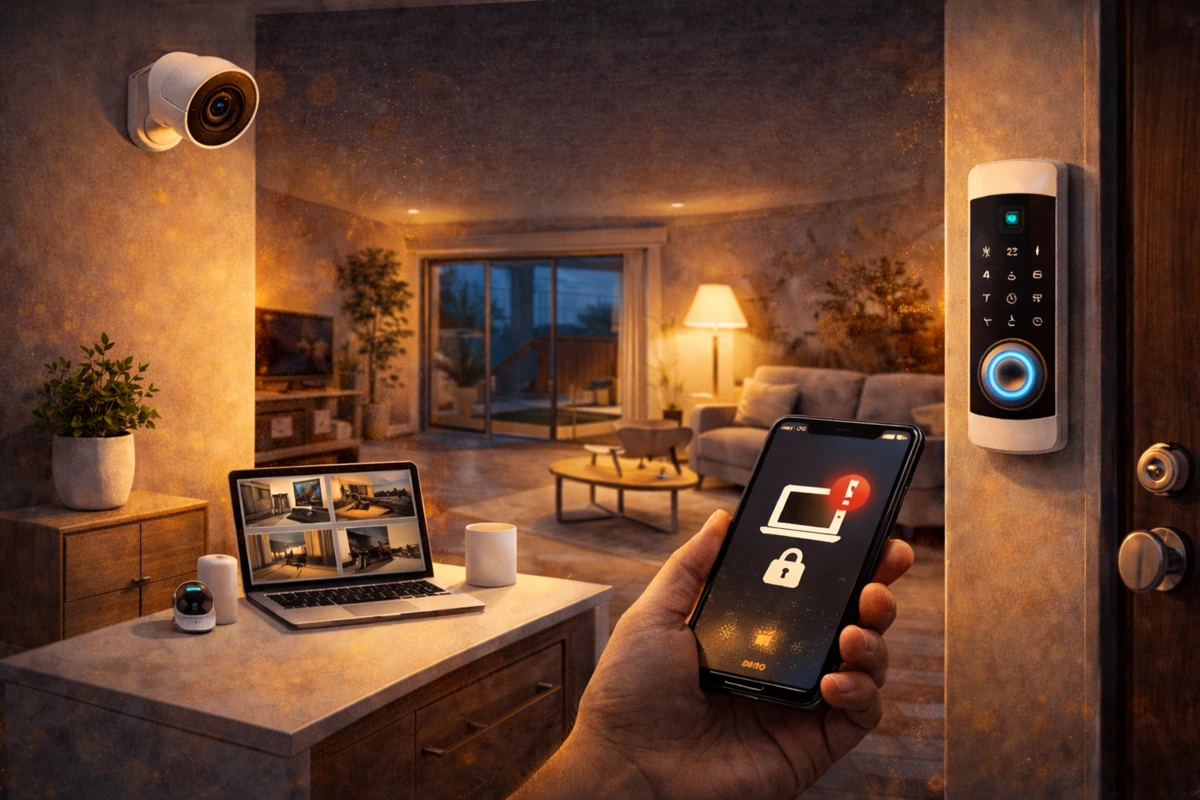
You can build a reliable system from scratch by using essential home security devices only. Each plays a specific role in deterrence and detection, ensuring your home remains a “hard target” without the clutter.
1. A Visible Camera (or Two): You don’t need a full camera grid to protect a standard home. One well-placed camera at the main entrance and perhaps one for the interior or backyard is plenty.
Visible cameras are far more effective at deterrence than hidden ones. If you understand where to place security cameras for maximum coverage, a single lens can do the work of three.
2. Entry Sensors on Key Doors: You don’t need sensors on every single window in the house. Start with your main and secondary doors, as these are the most common entry points for intruders who want to walk right in.
📖 Read Also: Motion sensors vs contact sensors what you actually need
3. Lighting That Works for You: Lighting is often overlooked but is one of the simplest deterrents available. A well-lit entrance removes hiding spots and signals that the home is occupied, which is enough to make many burglars move to the next house.
📈 The Hidden Advantage: Consistent Usage
Complicated systems often fail because of the user, not the technology. People forget to arm them or start ignoring notifications because of frequent false alarms from pets or swaying branches.
A minimal security setup that works avoids this fatigue. When you only have a handful of components, it is easier to check them and understand exactly what is happening in your environment.
I have personally scaled back systems before and found the results were positive. Fewer alerts meant I took every notification seriously, increasing my overall confidence in the system’s integrity.
📖 Read Also: Why most homes are vulnerable despite having locks
🚩 Common Mistakes in Simple Setups
Minimalism does not mean random or incomplete coverage. One major pitfall is relying on a single device that leaves obvious blind spots for an intruder to exploit.
If your camera doesn’t capture a clear face at the door, it isn’t helping as much as it could. You must ensure your minimalist home security is efficient, not just small or poorly planned.
| Mistake | Impact | Easy Fix |
| Poor Camera Angle | Misses identifying features | Test placement at eye level |
| Dark Entryways | Attracts intruders | Install motion-activated LED lights |
| Ignoring Updates | Vulnerable to software bugs | Enable auto-updates on the hub |
According to data from the FBI’s Uniform Crime Reporting (UCR) Program, a vast majority of burglaries are residential and occur during the day. This highlights why a simple home security setup is so important for every family.
🏗️ Building Your Layered Framework
Simple does not mean weak or basic. Some of the most effective setups follow a layered home security practical DIY framework that focuses on the perimeter first.
By combining a camera with visible lighting and basic entry alerts, you check most of the boxes that deter crime. You are adding “friction” to the intruder’s process, which is the ultimate goal of any defense.
Security isn’t about perfection; it’s about making your home less convenient and more effort to breach than the target next door. A small home security solution does this well because it influences human behavior rather than just recording it.
💡 Expert Tip: If you want to expand later, look into how to build redundancy into a DIY security setup without adding clutter or complexity.
🔋 The Maintenance Factor
When you have a house full of 20 sensors, maintenance becomes a part-time job. Batteries die at different times, and keeping everything synced can lead to system neglect.
A low cost minimal security system allows you to focus on high-quality devices. Instead of buying ten cheap cameras, you can buy two top-tier units with better resolution and local storage vs cloud storage options that fit your privacy needs.
Fewer devices also mean you are more likely to notice when one goes offline. This “eyes-on” approach is much safer than a large system that has been dormant for months because it was too difficult to fix.
🚦 Visibility vs. Stealth
There is a debate in the security community about whether cameras should be hidden or visible. For a minimalist home security setup, visibility is your strongest ally.
You want a potential intruder to see the camera the moment they step onto your porch. This creates immediate psychological pressure to leave, which is far more valuable than capturing a video of a masked person stealing your property.
Visible signage and window stickers work in tandem with your hardware. These low-cost additions reinforce the idea that your home is a high-risk target for any criminal.
📖 Read Also: Home security cameras explained types features and use cases
🏢 Adapting Minimalism to Your Space
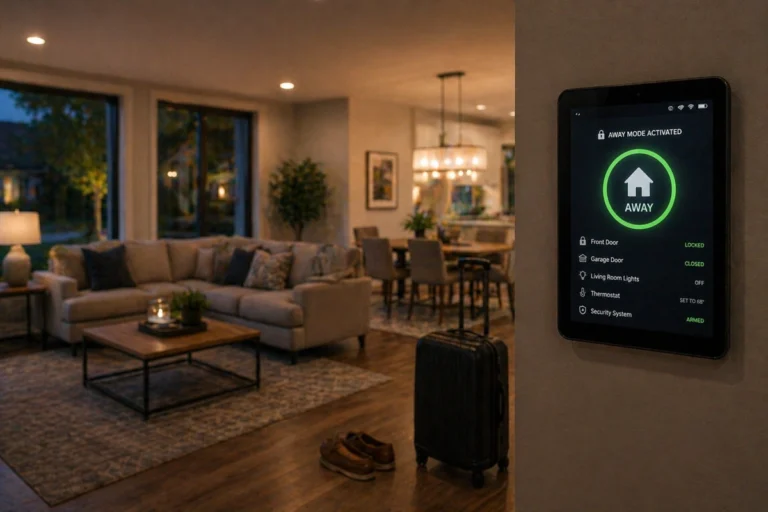
A basic home security system looks different in an apartment than it does in a suburban house. However, the core focus on entry points remains the same across all property types.
For apartments, focus on the front door and any shared balconies. For houses, expand that focus to include the garage and any side gates that lead to the backyard.
You can find specialized gear in our guide on the best diy security setups for apartments. The goal is always to maximize your detection capabilities while minimizing the footprint of your hardware.
🏁 Conclusion
A minimalist home security setup isn’t about doing less; it’s about doing the right things effectively. You don’t need a complex system to make your home safer, you need a thoughtful one that you can rely on every single night.
Focus on visibility, entry points, and reliable alerts to keep your property protected. Simple systems are easier to use every day, and the best system is the one that is actually working when you need it.
Keep your setup lean, keep it maintained, and keep your peace of mind intact through smart, efficient choices. Security is about layers, and even a small home security solution can create a formidable safe haven.