🛡️DIY Home Security for Renters: What You Can and Can’t Do

TLDR
- Renters can install wireless, non-invasive security devices without damaging the property. 🏠
- Most leases prohibit drilling, wiring, or permanent modifications without permission. 🚫
- Indoor cameras and removable sensors are usually allowed, but privacy rules still apply. 🎥
- Landlord approval is typically required for lock changes or hardwired systems. 🔑
- The best renter setups focus on portable, removable, and lease-safe security layers. 📦
Renting comes with a built-in limitation that homeowners don’t have to think about: it is not your property. This doesn’t mean you are stuck with whatever level of security your apartment came with.
In fact, modern DIY systems are practically built for renters. However, there is a line you can’t cross, and violating your lease over a few screws can be a costly mistake.
🚪 Why Renters Need a Different Approach
If you own your home, you can drill, wire, and reconfigure however you want. Renters don’t get that freedom because most leases restrict structural changes or alterations to doors.
Violating these terms often means losing part of your security deposit. The good news is that renters home security has adapted to this reality with battery-powered, removable devices.
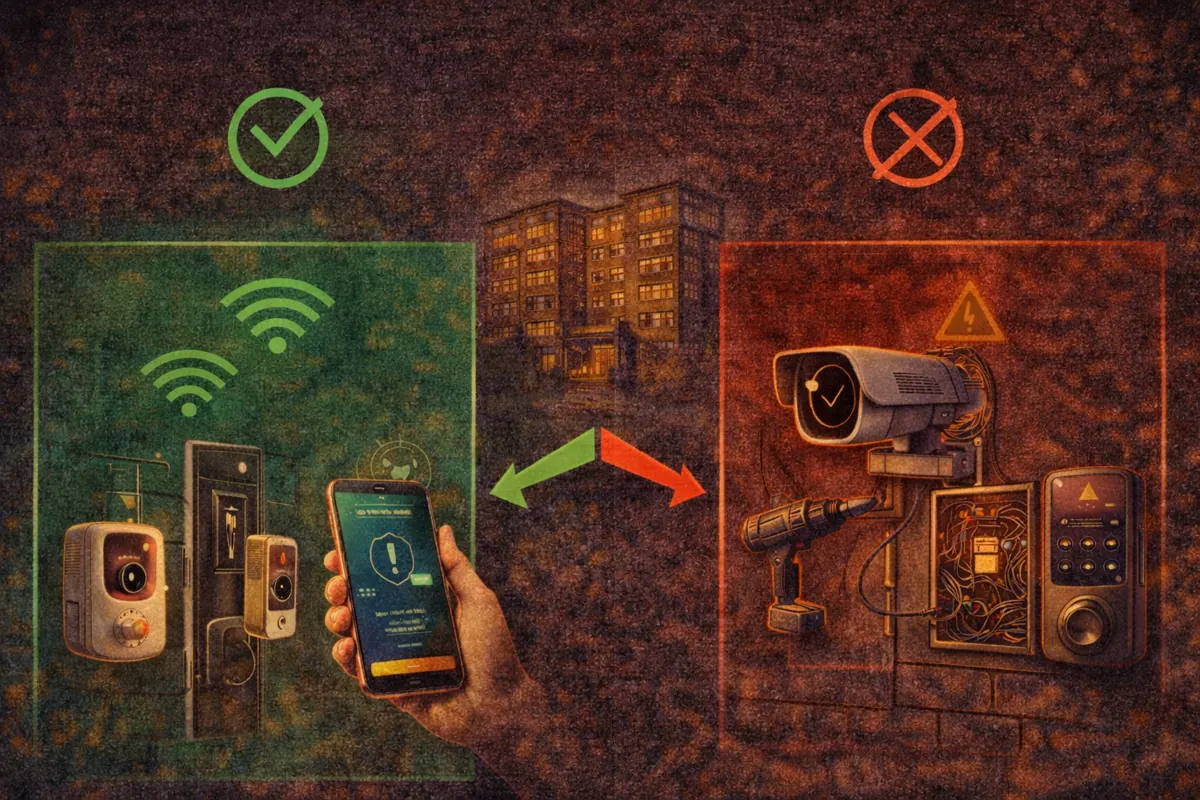
| Restricted Activity | Potential Consequence | Renter-Friendly Alternative |
| Drilling Walls | Deposit deductions for repair | Adhesive mounting strips |
| Hardwiring | Electrical code violations | Battery-powered devices |
| Changing Locks | Lease termination/Entry issues | Interior-only smart locks |
According to safety experts at the National Crime Prevention Council, visible security measures are the primary deterrent for opportunistic intruders. This makes DIY security for renters a vital investment even in temporary housing.
✅ What You Can Do Without Permission
There is actually a lot you can do to improve DIY security for renters without ever asking your landlord for help. Most of these solutions are “plug-and-play” and leave zero trace behind when you move.
Indoor cameras are usually the easiest win because they can sit on shelves or window ledges. As long as you are recording inside your private living space, you are generally within your rights.
Peel-and-stick sensors for doors and windows are also essential for apartment security without drilling. These use adhesive backing that can be removed cleanly, providing an alert the moment an entry point is breached.
💡 Expert Tip: When using adhesive sensors, clean the surface with rubbing alcohol first. This ensures a strong bond so the sensor doesn’t fall off and trigger a false alarm in the middle of the night.
📦 The Power of Portability
Motion detectors and alarm hubs are now renter-friendly by design. Most are freestanding or use simple adhesive mounts, making them perfect temporary home security solutions.
These devices give you “something’s happening” awareness without touching the structure of the apartment at all. Because they are battery-powered, they are also incredibly easy to reposition as your needs change.
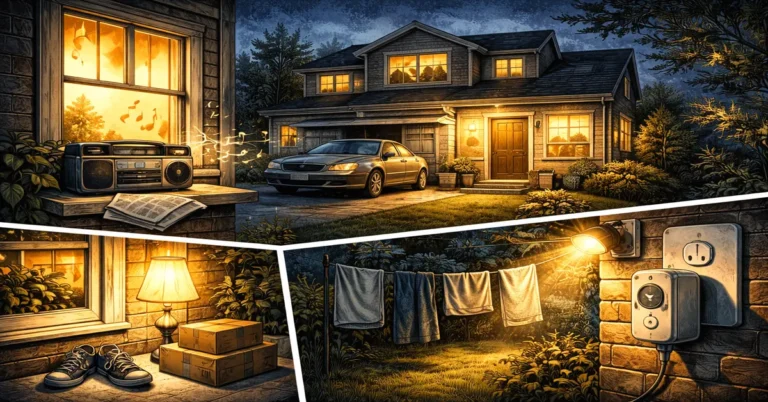
Smart plugs and lighting automation are also powerful tools for portable home security for renters. You can use them to turn lights on and off while you are away to create the appearance of a lived-in home.
📖 Read Also: Best diy security setups for apartments
⚖️ What You Should Double-Check First
Some upgrades sit in a gray area and depend heavily on the specific language in your lease. For example, some smart locks replace the entire hardware, while others simply attach to the inside of your existing deadbolt.
That second type is often allowed because it doesn’t change the exterior lock or key access. However, it is always worth checking are smart locks safe a practical security analysis before installing any hardware on a door.
Doorbell cameras also sit right on the edge of what is permissible. If they require wiring or screwing into the door frame, you will almost certainly need written permission from the landlord first.
💡 Expert Tip: If you want a doorbell camera but can’t drill, look for a “no-drill” mount. These brackets wrap around the edge of the door and are held in place by pressure when the door is closed.
🎥 Privacy and Shared Spaces
Outdoor security is where most renters hit a wall because it often affects shared or exterior areas. Even if you find a no-drill option, you are dealing with property boundaries that you do not own.
Data from the Bureau of Justice Statistics shows that apartments are just as likely to be targeted as houses, so don’t wait to secure your space. Privacy rules are taken very seriously in many jurisdictions, so you must ensure your lenses aren’t capturing the neighbors.
Recording shared hallways or neighboring units can create legal issues even if your lease doesn’t explicitly forbid it. The safest approach for the best renter friendly security systems is to keep your cameras focused strictly on your own living space.
📖 Read Also: Home security cameras explained types features and use cases
🚩 What You Typically Cannot Do
Anything that involves screws, anchors, or holes in the drywall is usually off-limits. Even small holes can be enough to violate a lease if the landlord is particularly strict about “original condition.”
Hardwired security systems are also generally prohibited without permission. These installations affect the electrical structure and safety of the property, which are tightly controlled by building owners.
Replacing locks entirely is one of the most sensitive issues in any rental agreement. Landlords require emergency access to the property, and changing the key without notice is a major red flag.
📋 Navigating Your Lease Agreement
Before starting your DIY security for renters project, you must actually read your lease. Most agreements include specific lines about “no alterations without written consent” or “no changes to fixtures.”
These lines matter more than any general advice you find online. Two renters in identical buildings might have different permissions based on the specific contract they signed.
If there is any uncertainty, asking your landlord in writing is always better than guessing. Most landlords won’t mind a no install alarm system apartment if they know it won’t damage their property.
| Renter Priority | Implementation Strategy |
| Visible Deterrence | Window stickers and indoor cameras |
| Entry Detection | Adhesive-backed door and window sensors |
| Identity Protection | Privacy-focused indoor camera placement |
| Relocation Ease | Focus on portable home security for renters |
🏗️ Building a Setup Within the Rules
The limitation of renting forces you to think differently, but that often leads to a more flexible system. A solid setup for apartment security without drilling usually includes indoor cameras, entry sensors, and smart lighting.
Everything in this type of system is portable and can be removed in under an hour. Most importantly, everything works without risking your security deposit or causing a dispute with management.
If you are on a budget, look into how much should you spend on home security to prioritize essential wireless components. These systems grow with you and can be moved to your next home easily.
📖 Read Also: Why most homes are vulnerable despite having locks
🛡️ The “Moveable” Security Strategy
I once made the mistake of mounting a camera with screws in a rental and lost part of my deposit for the repair. Since then, I’ve stuck strictly to temporary home security solutions and haven’t missed a thing.
The technology has finally caught up to the limitations of apartment living. You can now get high-definition video and real-time alerts without ever picking up a power drill.
When you invest in the best renter friendly security systems, you are buying gear that moves with you. This makes it a better long-term investment than a hardwired system you have to leave behind.
🏁 Conclusion
DIY home security for renters is absolutely doable and, in many cases, surprisingly effective. You just have to work within a different set of rules that prioritize non-invasive setups.
Stick to wireless devices and removable installations to keep your landlord happy. If you approach it with a focus on renters home security, you can build a system that protects your space and respects your lease.
In the end, the best system is the one that stays with you. Focus on choosing the right diy home security system and you’ll have peace of mind regardless of where you live. Security is about layers, and even in a rental, you have the power to create a safe haven.