🛡️ Why Most Homes Are Vulnerable Despite Having Locks
TLDR
- Most burglaries rely on simple access points like doors and windows, not advanced lock-picking.
- Many homeowners rely on handle locks or weak door frames that fail under pressure.
- Unsecured windows, garages, and sliding doors often bypass even good front-door locks.
- Spare keys, outdated access codes, and poor digital security weaken physical protection.
- Real security comes from layered reinforcement, not locks alone.
It is easy to assume that once you turn a key, your home is secure. The lock clicks, the door feels solid, and you move on with your day. That sense of finality is comforting. However, the uncomfortable truth is that a lock by itself is not a security system; it is just a single component, and in many homes, it is the only one.
When assessing your home like a burglar would, it becomes clear that homes are rarely vulnerable because they lack hardware. They are vulnerable because those locks are misunderstood, poorly supported, or quietly bypassed.
Understanding why locks are not enough for security is the first step in moving toward a truly layered home security framework.
After years of reviewing real-world cases, the same pattern emerges repeatedly. Intruders do not look for the strongest part of your defense; they look for the path of least resistance.
If you rely solely on a piece of metal in the door, you are ignoring the structural, digital, and psychological layers that actually stop a break-in. Real protection requires looking at the house as a complete system where the lock is merely the starting point.
🚪 A Lock Is Only as Strong as the Door Around It
A high-quality deadbolt sounds impressive on the box with its hardened core and anti-drill features. However, the bolt does not anchor into concrete; it anchors into a strike plate, which is often secured with short screws driven into decorative door trim rather than structural framing.
Under force, the wood splits long before the lock fails. This highlights one of the major weaknesses of door locks: the weak point is often not the lock cylinder, but the surrounding material.
Replacing short screws with longer structural screws and reinforcing your front door dramatically increases resistance. It is a small hardware upgrade that changes the outcome of forced entry attempts, yet many people looking for where to start with DIY security never think about it.
Without this reinforcement, even the most expensive door lock security can be bypassed with a single well-placed kick.
The 3-Inch Rule: Standard door hinge and strike plate screws are usually only 1 inch long. Replacing them with 3-inch screws anchors the door directly into the wall studs, making it significantly harder to kick in.
🔑 Handle Locks Are Not Security Locks
Many exterior doors have two locking points: the handle latch and a deadbolt above it. The latch lock is designed primarily for alignment and light privacy, not security. When people leave home and only lock the handle, they are relying on a spring-loaded latch that can be defeated with modest force or basic prying.
Consistently locking the deadbolt is one of the simplest, highest-impact habits to improve home security locks. It costs nothing and eliminates a major vulnerability that contributes to common DIY home security failures. Relying solely on a handle latch is a primary example of how burglars bypass locks with minimal effort.
Why Handle Latches Fail
- Spring Dependency: Latches rely on a spring mechanism that can be “shredded” or slipped with a credit card or shim tool.
- Low Depth: Most handle latches only extend half an inch into the frame, providing minimal surface area to resist prying.
- Lack of Deadlocking: Many cheap handle locks do not have a deadlocking plunger, meaning they can be pushed back manually if accessed.
🪟 Windows Are Frequently Overlooked
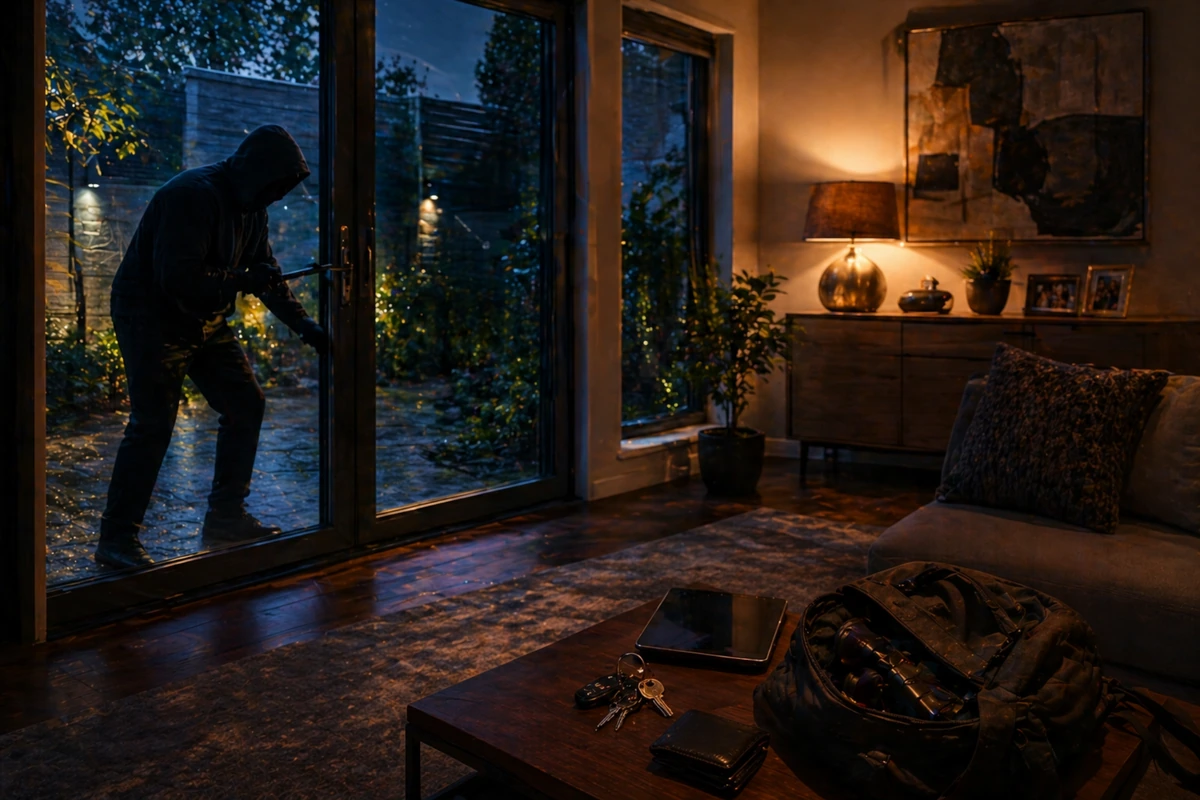
You can have the strongest front door on the block and still leave yourself exposed through a side window. Data from recent criminal victimization reports consistently shows that unlawful entry often occurs through windows or secondary doors. Rear and ground-level windows are especially vulnerable because they are less visible from the street.
Many sliding windows can be lifted out of their tracks if they lack secondary stops, which is why securing sliding glass doors and windows is critical. Testing each window after locking it is eye-opening; if it shifts significantly, it needs DIY window security upgrades.
In these cases, it is clear that standard window latches are another area where why locks are not enough for security becomes obvious.
| Window Type | Primary Vulnerability | Suggested Reinforcement |
| Sliding Windows | Lifting out of tracks | Track blockers or anti-lift screws |
| Double Hung | Weak center latches | Sash pins or keyed locks |
| Casement | Crank mechanism prying | Security film or reinforced latches |
| Basement | Hidden from view | Metal security bars or window wells |
🚗 Garages Create a False Sense of Security
Garages feel internal, so people treat them differently. Interior garage doors are often left unlocked, and remote controls are sometimes left in vehicles parked outside overnight. If someone gains access to the vehicle, the home is next.
Furthermore, if the overhead door’s emergency release is accessible from outside, it can be disengaged with simple tools.
The garage is an entry point, not a separate structure. Learning how to secure your garage by locking the interior door and shielding the release mechanism provides essential additional security beyond locks. Failing to do so is one of the most common security mistakes homeowners make.
The Garage Security Audit
- The “Zip-Tie” Method: Secure your emergency release cord so it cannot be reached with a coat hanger from outside.
- Interior Deadbolt: Treat the door leading from the garage to the kitchen like an exterior front door.
- Remote Control Protocol: Never leave your garage door opener on the visor of a car parked in the driveway.
🗝️ Spare Keys Undermine Good Locks
It does not matter how advanced your deadbolt is if a working key sits under the doormat. Spare keys hidden in planters, fake rocks, or above door frames are routinely checked by intruders. Security depends on control, and spare keys often remove it.
If you are designing a home security system on a budget, consider that a physical key cannot be recalled once copied. This is a significant point in the smart locks vs traditional locks debate, as keypad locks allow you to remove access codes instantly, maintaining the integrity of your door lock security.
The Key Control Factor: Once a physical key leaves your sight, assume a copy has been made. Keypads eliminate this “hidden” risk entirely.
💻 Digital Weaknesses Affect Physical Safety
Modern locks increasingly connect to apps and Wi-Fi networks, introducing digital risk. Many connected devices ship with default credentials that users forget to change, or they run on routers with outdated encryption. If someone can access the network, they may interact with connected security devices.
Optimizing your Wi-Fi and changing default passwords are simple steps that protect physical security indirectly. This digital layer is a modern example of weaknesses of door locks that traditional hardware cannot address alone.
Digital Safety Checklist
- Rename your SSID: Do not use your last name or the brand of your security system as your Wi-Fi name.
- Enable 2FA: Always use two-factor authentication for any app that controls your door locks or cameras.
- Firmware Updates: Set your smart devices to auto-update to ensure you have the latest security patches.
🌿 Visibility and Concealment Matter
A locked door hidden behind dense shrubs in a dark corner is more vulnerable than a modest lock visible from the street. Intruders prefer privacy because concealment reduces the risk of interruption; if someone can work on a door unseen, time is on their side.
Using landscaping as a home security layer and installing outdoor motion lighting raise the perceived risk for an intruder. Security is psychological as much as mechanical, and these methods prove that do locks stop burglars less effectively than the fear of being seen.
| Visibility Factor | Risk Impact | DIY Solution |
| Tall Hedges | High (provides cover) | Trim to 3 feet or lower |
| Dark Entryways | High (conceals activity) | Motion-activated LED lighting |
| Hidden Side Doors | Moderate | Install visible security cameras |
| Overflowing Mail | Low (signals absence) | Use timers for smart lighting occupancy |
📅 Routine and Maintenance
Locks protect openings, but they do not protect patterns. Leaving at the same time every morning creates a visible routine that communicates your absence. Using smart lighting to simulate occupancy can help interrupt these visible patterns.
Furthermore, hardware requires upkeep. Small alignment issues, such as a bolt that no longer seats deeply into the frame, become major security issues over time. You must test your security system regularly to ensure your home security locks are functioning at peak performance.
Neglected maintenance is a common way for intruders to find a way to how burglars bypass locks that were once secure.
Maintenance Habits for Better Security
- Listen to the click: If you have to pull the door handle hard to get the bolt to turn, the strike plate is misaligned.
- Check for sagging: Hinges can loosen over time, causing the door to sit crooked and preventing the lock from fully engaging.
- Inspect the bolt: Look for scrape marks on the bolt itself, which indicates it is hitting the plate rather than sliding into the hole.
🧠 Why Layered Security Changes Everything
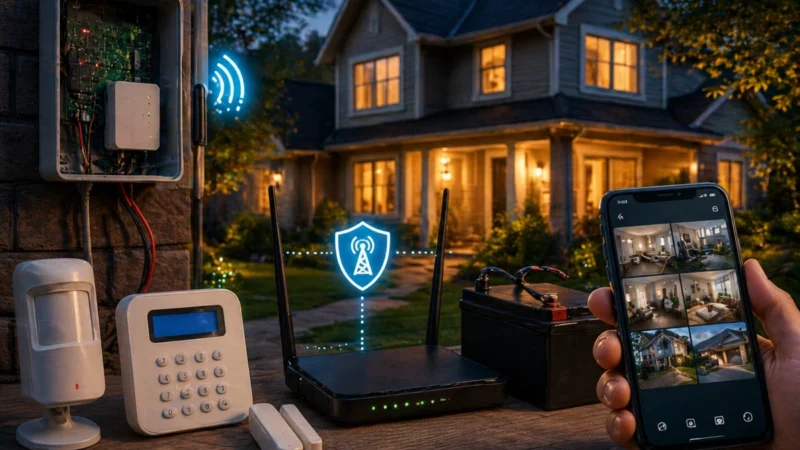
A lock is a single barrier. Layered security adds reinforcement, detection, visibility, and habit. Each layer compensates for potential failure in another. This is the core of what DIY home security actually protects against: it creates a system where do locks stop burglars by being part of a larger, more daunting whole.
In my own experience, the biggest improvements came not from replacing expensive hardware, but from reinforcing the structures around it. A $20 strike plate reinforcement kit and a few hours of work can do more for your safety than a $300 lock on a flimsy frame.
The 4 Layers of Real Security
- Deterrence: Signs, lighting, and clear sightlines that make the house an unattractive target.
- Detection: Motion sensors vs contact sensors that alert you the moment a perimeter is breached.
- Delay: Reinforced doors and windows that force an intruder to spend more time and make more noise.
- Defense: The physical locks and your internal response plan if an entry actually occurs.
🔐 Conclusion: Moving Beyond Hardware
Most homes are vulnerable because locks are treated as complete solutions rather than components. By providing additional security beyond locks, such as reinforcing frames and adjusting lighting, you can fix most of these weaknesses in an afternoon. Security does not require complexity; it requires layers and consistency.
The goal is to move from a “closed door” mindset to a “secured home” mindset. A lock starts the process, but it should never be the end of it.
By focusing on the structural integrity of your doors, the visibility of your property, and the redundancy of your fail-safe planning, you create an environment where a lock finally does its job effectively. Stay vigilant, maintain your equipment, and always look for the next layer to add.