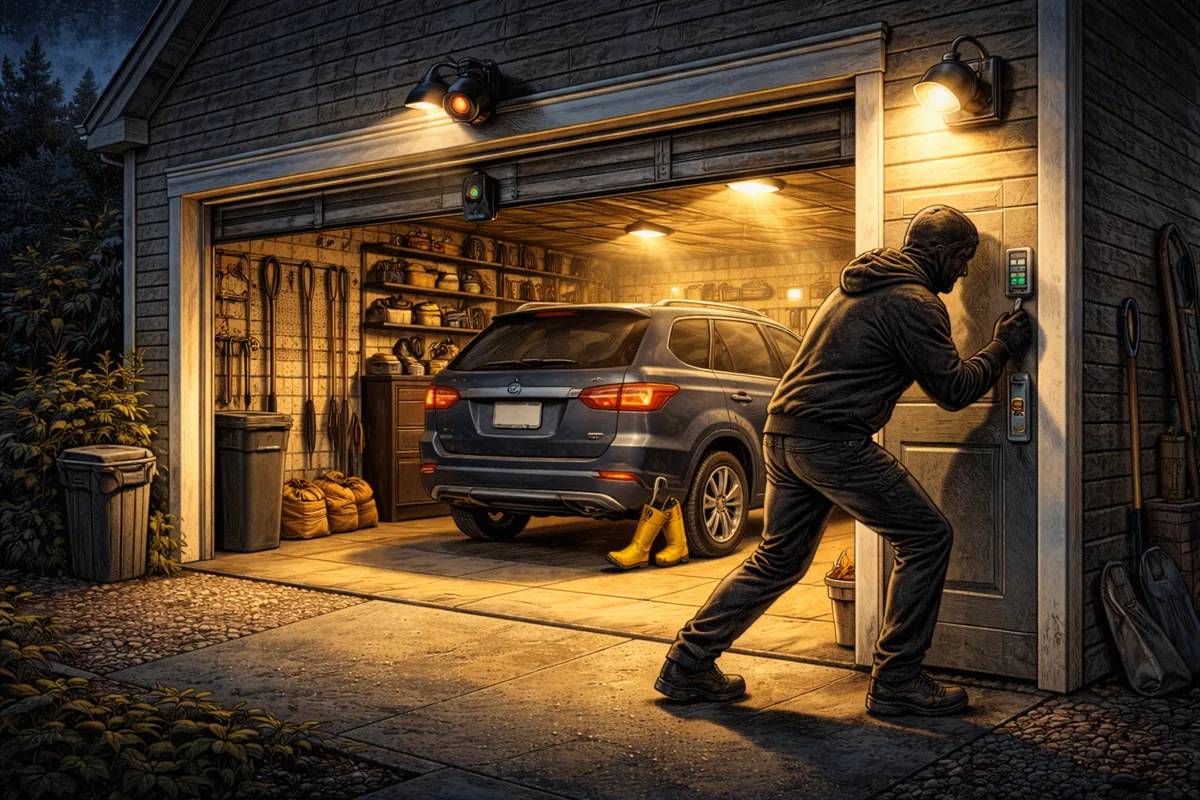
🛡️How to Secure Your Garage Against Break-Ins

TLDR
- Smart, layered garage security reduces risk more than any single device or upgrade.
- Most break-ins exploit simple weaknesses like unlocked doors or poor visibility.
- Reinforcing access points and improving lighting are the highest-impact steps.
- Garage-to-house entry points are often the most overlooked vulnerability.
- Consistent habits matter just as much as hardware when securing your garage.
Garages do not always get the attention they deserve when it comes to home security. Most people focus on front doors, cameras, or maybe a few window locks. Meanwhile, the garage quietly becomes the easiest way in.
That is not just a theory. Break-ins often target the simplest access point available, and garages tend to offer exactly that: less visibility, weaker locks, and plenty of valuable items inside. According to common burglary statistics, the garage is a high-traffic entry point for opportunistic thieves.
The good news is that securing your garage does not require a full overhaul. With a few practical upgrades and some consistent habits, you can turn it from a weak spot into a solid layer of protection. This is a vital part of a layered home security framework for any property owner.
🏗️ Why Garages Are a Common Target
Think about what is usually inside your garage. Tools, bikes, sometimes a vehicle, and often direct access to the main house. From a burglar’s perspective, it is a high-reward, low-risk entry point. Understanding this helps when you are assessing your home like a burglar would.
Garages are also more likely to be out of sight. Side alleys, back lanes, or fenced areas create natural cover. Add in poor lighting, and you have a situation where someone can work unnoticed for longer than you would expect.
| Feature | Why Burglars Love It | Risk Level |
| Out-of-Sight Location | Provides cover for forced entry. | High |
| Valuable Contents | High payout with bikes/tools. | Very High |
| Aging Hardware | Easier to bypass than modern front doors. | Moderate |
| House Connectivity | Often leads to an unlocked interior door. | Critical |
Many garages simply are not secured as well as the rest of the house. A solid front door might have a deadbolt and reinforced frame, while the garage relies on a basic latch or aging mechanism. This is one of the home security threats most people ignore.
🚪 Start With the Garage Door Itself
Your first line of defense is the garage door. If it is weak, everything else you add becomes less effective. Roll-up and sectional doors should close tightly and sit properly in their tracks. Gaps, warping, or misalignment can create leverage points for a crowbar.
Locking mechanisms matter too. Many garages rely solely on the automatic opener, which is not designed as a primary security feature. To truly secure garage door access, consider the following:
- Manual Slide Bolts: Install these on the interior track for when you are away for long periods.
- Track Reinforcement: Ensure the tracks are not easily bent or tampered with from the outside.
- Vertical Locks: Use these to prevent the door from being lifted manually.
Adding the best locks for garage door security can provide an extra layer of defense. I have noticed over time how many people forget to actually close their garage fully. Even a partially open door can invite trouble.
Make it a habit to check before heading inside, especially if you are using minimalist home security setups that rely on solid basics.
🔓 Don’t Ignore the Emergency Release
This is one of those details that does not get talked about enough. Most automatic garage doors have an emergency release cord that disengages the motor. It is useful for power outages, but it is also a known weak point.
In some setups, that cord can be accessed from outside using simple tools like a coat hanger. Secure the release mechanism by using a zip tie on the carriage or installing a shield.
This is an essential part of how to prevent garage break ins without affecting your ability to use the door in a real emergency. It is a small adjustment that closes a gap exploited often enough to be worth addressing.
Expert Tip! Check your garage door’s carriage mechanism. If you can see the red pull-cord through the window at the top of the door, a burglar can likely reach it. Install frosted window film to block their view and prevent targeting.
🏘️ Secure the Door Between Garage and House
If your garage connects directly to your home, that interior door deserves just as much attention as your front door. In many homes, you will find a hollow-core door with a basic knob lock. That is not ideal. This is one of the most common security mistakes homeowners make.
Upgrading to a solid-core or metal door with a proper deadbolt makes a real difference. Use these garage entry security tips to harden this critical point:
- Longer Screws: Replace the standard 1-inch screws in the hinges and strike plate with 3-inch versions.
- Reinforced Strike Plate: Install a heavy-duty plate to prevent the door from being kicked in.
- Deadbolt Integration: Ensure the door has a grade 1 or 2 deadbolt.
If someone gets into your garage, this door becomes the final barrier. It should be treated as a primary exterior entry point. You can even reinforce your door without replacing it using these same methods.
💡 Improve Lighting Around the Garage
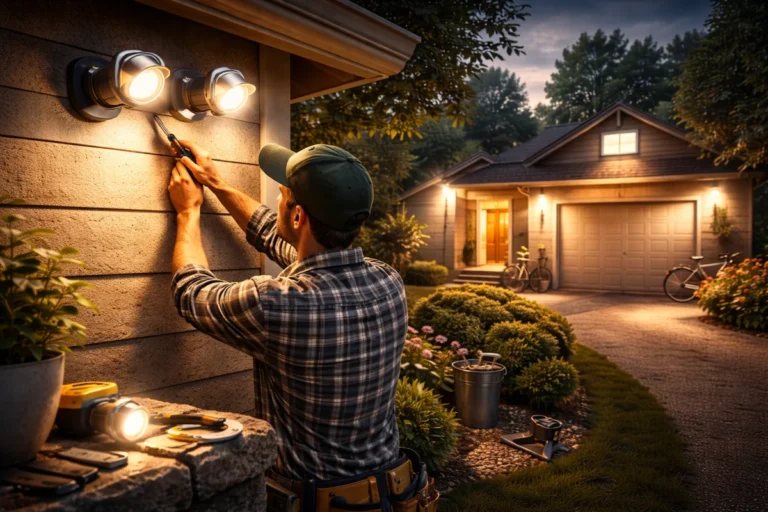
Lighting changes behavior. It is one of the simplest deterrents you can add. Burglars tend to avoid well-lit areas because visibility increases the risk of being seen or recorded. Adding a motion sensor for garage security lighting is especially effective because it draws attention at the exact moment someone approaches.
Focus on these areas:
- Driveway Entry: To alert you when someone pulls up.
- Side Service Doors: Often the most targeted and least lit entry.
- Garage Windows: To eliminate shadows where someone might hide.
I have seen setups where one well-placed light made more difference than an entire row of poorly positioned ones. Proper outdoor motion lighting setup is a cost-effective way to make your garage an unattractive target.
🪟 Keep Windows Covered and Reinforced
Garage windows can be a double-edged sword. They let in light, but they also allow someone to see what is inside. If valuables are visible, you are essentially advertising.
Window Security Checklist:
- Obscure the View: Use frosted film or spray to keep tools and cars hidden.
- Reinforce the Glass: Apply security film to prevent glass from shattering during an entry attempt.
- Secondary Locks: Install DIY window security upgrades like sash locks or bars.
Slowing someone down matters. Most break-ins rely on speed and minimal resistance. If your windows are difficult to bypass, most opportunists will move to a house that is easier to break into.
🛠️ Don’t Leave Tools Within Reach
Items stored outside or in an unlocked area can be used against you. Ladders, crowbars, and heavy garden tools can become entry tools in the wrong hands. Keeping them secured removes that advantage.
Inside the garage, it is worth organizing tools so they are not immediately accessible. It is not about hiding everything, just making sure you are not unintentionally helping someone break in. This logic is a key part of DIY home security where to start.
🤳 Use Smart Devices Where They Make Sense
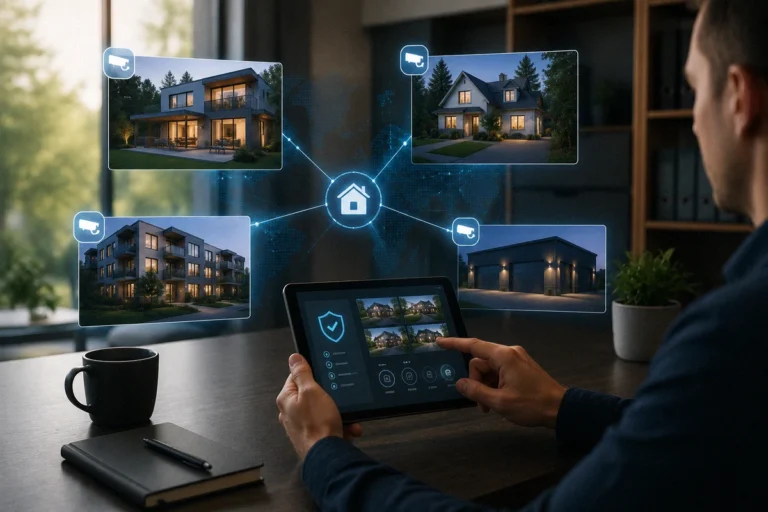
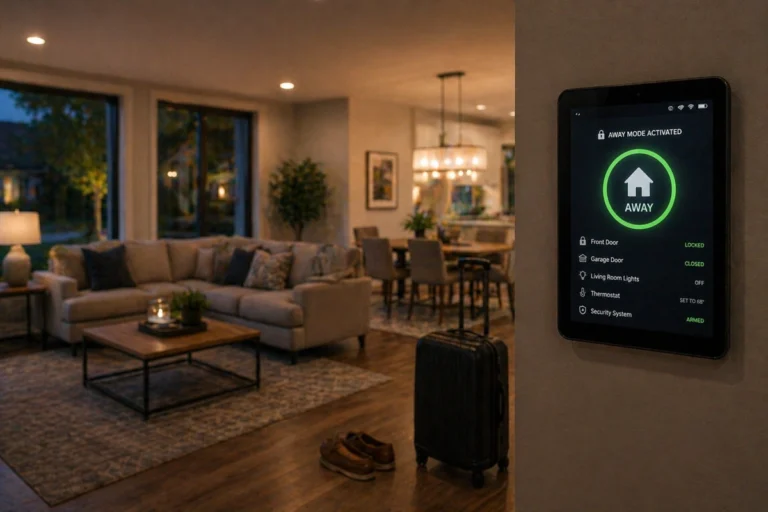
You do not need to turn your garage into a fully automated system, but a few smart upgrades can add convenience and security. A garage door alarm system or a smart opener can alert you if the door is left open or opened unexpectedly.
| Device Type | Benefit | Security Value |
| Smart Opener | Remote monitoring and alerts. | High |
| Outdoor Camera | Visual verification of arrivals. | Moderate |
| Vibration Sensor | Detects tampering with the door. | High |
| Motion Alarms | Alerts you to movement inside. | High |
What matters is choosing tools that you will actually use. A simple system that you check regularly is more effective than a complex one you ignore. If you are on a budget, look for the best budget home alarm systems that offer garage-specific sensors.
🔄 Build Consistent Habits
Technology helps, but habits are what make everything work. A significant number of break-ins happen without forced entry. That usually means something was left unlocked or unsecured.
These garage security tips are only effective if they become routine:
- The Nightly Check: Always verify the garage is closed before going to sleep.
- Remote Control Safety: Do not leave your garage door remote clipped to the sun visor in a car parked in the driveway.
- Interior Locking: Lock the door leading into the house, even when you are home.
Consistency beats complexity. You do not need a perfect system; you need a reliable routine. These habits are as important as knowing how home burglaries actually happen.
👀 Pay Attention to Visibility From the Street
Visibility plays an interesting role in garage security. Too exposed, and people can see what is inside. Too hidden, and someone can work unnoticed. Finding a balance helps. Keeping the area tidy and trimming overgrown plants makes your property less appealing as a target.
At the same time, avoid displaying high-value items near windows or open doors. It is a small adjustment, but it changes how your space is perceived from the outside. Reviewing expert home security tips can give you more ideas on how to manage your home’s curb appeal without sacrificing safety.
🏚️ Don’t Forget Detached Garages
Detached garages come with their own challenges. They are often farther from the house and easier to access without being noticed. In these cases, lighting and visibility become even more important.
Adding a simple camera or motion sensor can provide awareness when you are inside the house. If the garage stores high-value items, consider it its own security zone rather than an extension of your home.
You may need to look into how reliable wireless security systems are to ensure you stay connected to a garage that is far from your main Wi-Fi router.
🧱 Layering Is What Makes It Work
No single measure will stop every break-in attempt. That is just the reality. What works is layering. A solid door, good lighting, reinforced entry points, and consistent habits together create a system that is much harder to bypass.
Burglars tend to look for easier targets. If your garage requires more effort, more time, or creates more risk, it becomes less appealing. You are not trying to make your home invulnerable; you are making it a place that is not worth the trouble. This is the ultimate goal of DIY home security systems explained.
🏁 Conclusion
Garage security does not have to be complicated, but it does need to be intentional. Start with the basics: strong doors, proper locks, and good lighting. Then build from there with a few smart upgrades and better daily habits. Each step adds another layer, and those layers are what make the difference.
Take a bit of time to walk through your setup, look at it from the outside, and ask yourself one simple question. If you were looking for an easy way in, would your garage stand out? Fix the spots that would. That alone puts you ahead of most homes.