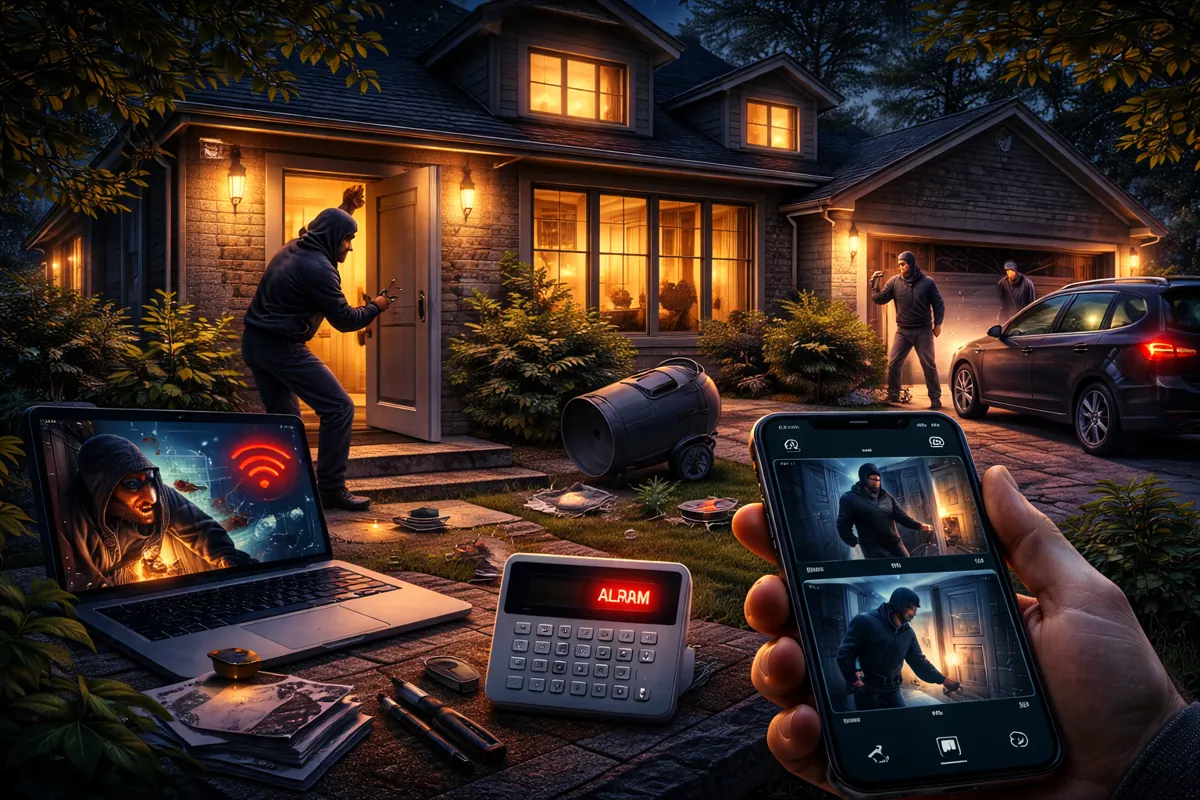
Home Security Threats Most People Ignore

Key Take-Aways
- Most home break-ins happen through simple access points like doors, windows, and garages, not dramatic forced entry.
- Weak Wi-Fi passwords and default smart device settings are real security risks.
- Everyday habits like package handling and spare key storage matter more than expensive gear.
When people think about home security, they picture the big stuff. Cameras, alarms, maybe a monitoring service.
The reality is less cinematic. Most real-world security failures come from ordinary oversights that feel harmless at the time.
After years of dealing with DIY security setups, I’ve noticed something consistent: homeowners don’t get defeated by a lack of technology.
They get defeated by assumptions.
- A quiet street feels safe.
- A familiar delivery driver seems trustworthy.
- A smart device probably updates itself.
Security problems rarely announce themselves. They hide inside daily routines.
Below are the home security threats that almost nobody worries about until after something goes wrong.
Most people ignore their digital home security, while this is becoming a massive threat you really can’t afford to dismiss! Ensure you always have a quality VPN active whenever you connect the internet!

The Front Door Is Still the Main Entry Point
People love talking about hacking and lock-picking, but the simplest method remains the most common.
- Someone tries the door.
- Not kicks it in.
- Not drills it open.
- Just tries it.
Doors get left unlocked during quick errands, dog walks, or while carrying groceries.
Many people rely on the handle lock instead of the deadbolt, which offers minimal resistance. This is a prime example of why most homes are vulnerable despite having locks that look sufficient.
Others forget the garage entry door entirely because it feels internal, even though it’s an exterior entry.
Consistency beats equipment here. A proper deadbolt locked every time you leave is one of the highest impact habits you can build.
Expert Tip! Make it a habit to check the door by pulling the handle after you lock it. It sounds simple, but it ensures the latch actually engaged in the strike plate.
Spare Keys Are Often Not Hidden at All
There’s a strange universal agreement about where spare keys live. These locations aren’t secret anymore; they are overlooked home security threats.
- Under mats: The first place anyone looks.
- Inside planters: Too predictable for side entrances.
- Fake rocks: Usually stand out because they don’t match the local geology.
- Above door frames: Easily reached by anyone with a bit of height.
The practical fix is to avoid outdoor spare keys entirely. I think it’s frankly pretty stupid.
Using smart locks allows you to provide shared access via codes that can be changed in seconds. Metal keys simply cannot offer that level of flexibility.
Or just keep your spare key on your body at all times, for example in a travel belt, or in your wallet.
Garage Doors Are a Quiet Weak Spot
Garages feel private, but that illusion causes people to relax their habits. This leads to several common security weaknesses in houses.
| Garage Vulnerability | The Easy Fix |
| Emergency release cord | Shield the mechanism with a zip-tie or cover |
| Remotes in cars | Take the remote inside or use a smartphone app |
| Interior entry door | Keep it locked with a deadbolt at all times |
Many garage doors include an emergency release cord that can be disengaged from the outside with a simple hook tool.
Furthermore, leaving remotes in parked cars overnight is a massive risk. If the vehicle gets accessed, the house does too.
Social Media Accidentally Announces Your Schedule
Posting vacation photos in real time seems harmless if you’re an oblivious person, but it tells strangers exactly when a home is empty.
Even private accounts often have wider audiences than people realize.
This is not paranoia; it is pattern exposure. Wait to post until you return home. This small delay closes one of the most significant home security threats most people ignore in the digital age.
Or, and I know this may sound like blasphemy to many of you, just don’t post at all. Don’t put your life online for any and all psychos to view and use.
Read More: Assessing your home like a burglar would to see what other digital footprints you might be leaving behind.
Package Deliveries Create Predictable Opportunities
Package theft signals unattended property. Over time, these routines form ignored home burglary risks. To break the pattern, consider these adjustments:
- Schedule: Use delivery scheduling to ensure you are home.
- Redirect: Send high-value items to secure pickup points or lockers.
- Alerts: Place a visible doorbell camera at the entrance to get instant notifications.
- Timing: Avoid leaving packages on the porch overnight or for extended daytime hours.
A visible camera acts as a deterrent by addressing what makes a home easy to break into by removing the belief that the intruder won’t be identified.
Your Wi-Fi Network Is Part of Your Physical Security
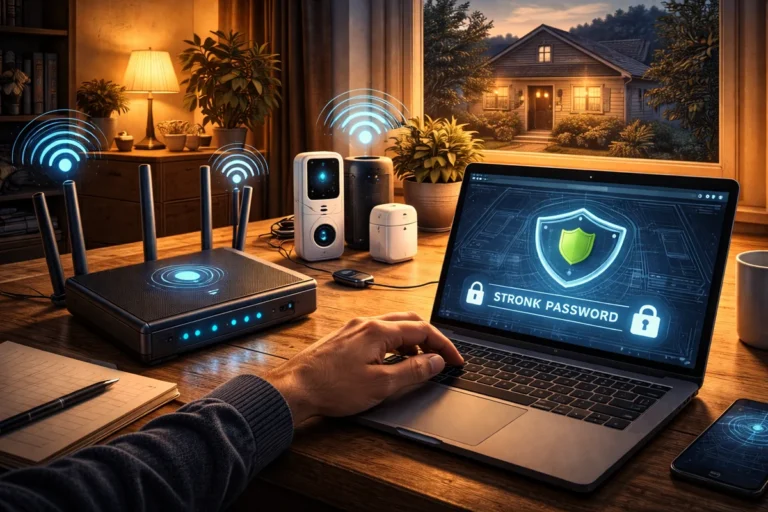
Many homeowners separate digital safety from physical safety. Modern homes do not. Doorbells, cameras, and locks all rely on the network.
Weak passwords or default credentials are home security blind spots that can expose your entire system.
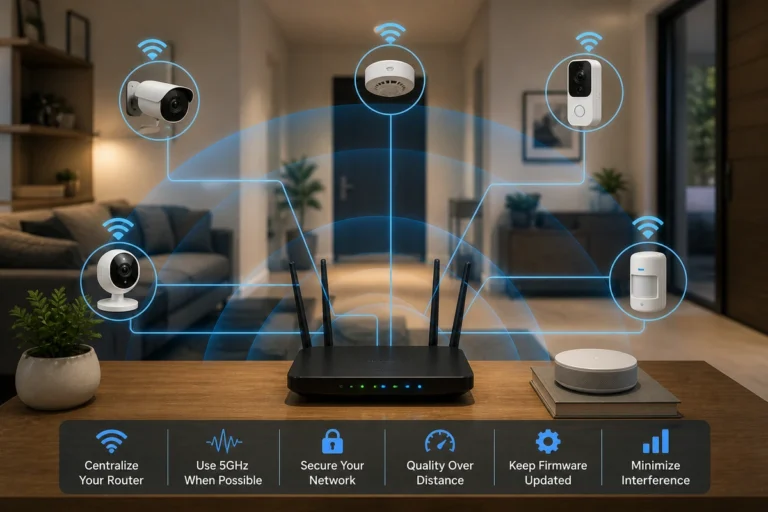
Basic hygiene is required for optimizing Wi-Fi for home security devices:
- Change default router and device passwords immediately.
- Update firmware to patch security vulnerabilities.
- Use a dedicated guest network for smart home devices to keep them separate from your personal data.
And of course, like I’ve been saying for years: always, ALWAYS use a strong VPN.
Landscaping Can Hide More Than It Beautifies
Dense shrubs beside windows create concealment for unexpected break-in methods. Entry points that can’t be seen from the street reduce the chance of an intruder being interrupted.
Good security landscaping is about visibility. Trim plants near windows and keep sightlines open to doors.
Expert Tip! Prune your bushes to a maximum height of 3 feet and ensure tree canopies are limbed up to at least 7 feet. This creates a clear zone where intruders cannot hide.
Service Access Is Rarely Reviewed
Over the years, homes accumulate access permissions for cleaners, dog walkers, and repair techs. The problem isn’t trust; it’s permanence.
A yearly review takes five minutes. Remove outdated codes and permissions to ensure your DIY home security system remains tight. Digital access should be treated like a temporary password.
Read More: Professional vs DIY home security systems and how they handle long-term user management.
Old Windows Fail Quietly
Windows do not always need to break to open. Older latches loosen, and sliding windows can often be lifted off their tracks.
Because they look closed, they are frequently home vulnerabilities.
A simple test works: gently push and lift each window after locking it. If it moves, it needs a secondary lock.
This is a major part of how home burglaries actually happen, as rear windows are often targeted for their lack of visibility.
Lighting Timers Still Matter
Smart home automation has made lighting schedules easier than ever. Dark homes night after night create detectable patterns.
Even though FBI statistics show crime rates falling, residential burglary still targets unoccupied-looking houses.
Using layered home security that includes lighting timers simulates presence and discourages curiosity.
Expert Tip! Don’t just set one timer. Set multiple lights on different schedules to mimic someone moving from the kitchen to the living room and finally the bedroom.
Routine Beats Equipment
The biggest takeaway is that expensive systems do not compensate for inconsistent habits. A locked door, trimmed bushes, and secured Wi-Fi collectively outperform many high-end setups used carelessly.
Note: While burglary rankings by city vary, the entry methods used by intruders remain remarkably consistent.
Conclusion
Home security does not start with products; it starts with awareness. The home security threats most people overlook are small and predictable.
Unlocked doors, visible patterns, and weak networks define how easy a home appears to approach.
Layered security works because it reduces convenience for someone looking for a target.
By focusing on where to start with DIY home security, keeping habits first and devices second, you end up with a safer home and a simpler system to maintain.
Most people ignore their digital home security, while this is becoming a massive threat you really can’t afford to dismiss! Ensure you always have a quality VPN active whenever you connect the internet!