🏘️ Professional vs DIY Home Security Systems

TLDR:
- Professional systems offer “turnkey” convenience with 24/7 monitoring centers, while DIY systems prioritize cost-control and total user flexibility.
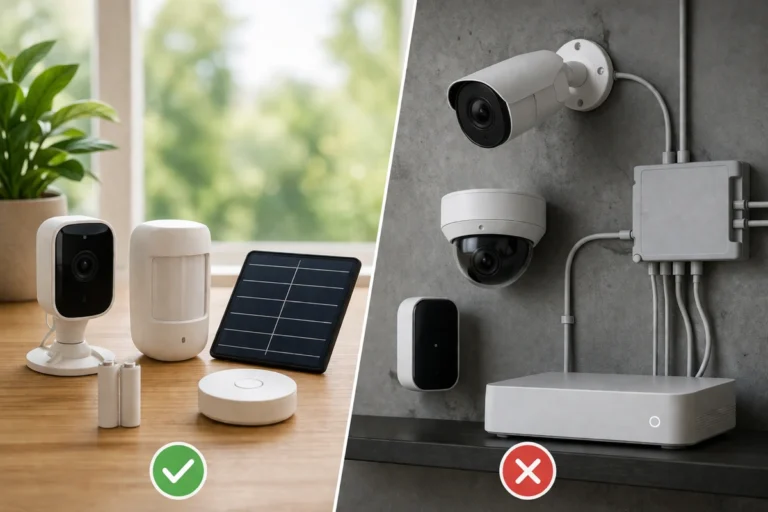
- Installation differs between expert technician setups (Professional) and “peel-and-stick” simplicity (DIY).
- Cost remains the biggest differentiator; DIY avoids long-term contracts and installation fees that characterize pro services.
- Hybrid models are emerging, allowing you to use DIY hardware with professional monitoring only when you need it.
- Both systems require identical “network hygiene” to prevent hacking and ensure reliable performance.
Deciding between a professional and a DIY home security system is the first major crossroad you’ll hit when you start protecting your family. Both paths aim for the same result – peace of mind – but they involve very different daily experiences, legal responsibilities, and financial trade-offs.
You don’t need to feel overwhelmed. Whether you want a system that “just works” out of the box or a custom setup that you control down to the last sensor, this guide breaks down the performance standards and real-world costs of both.
🛠️ What Defines a “Professional” System?
👷♂️ Expert Installation and 24/7 Monitoring
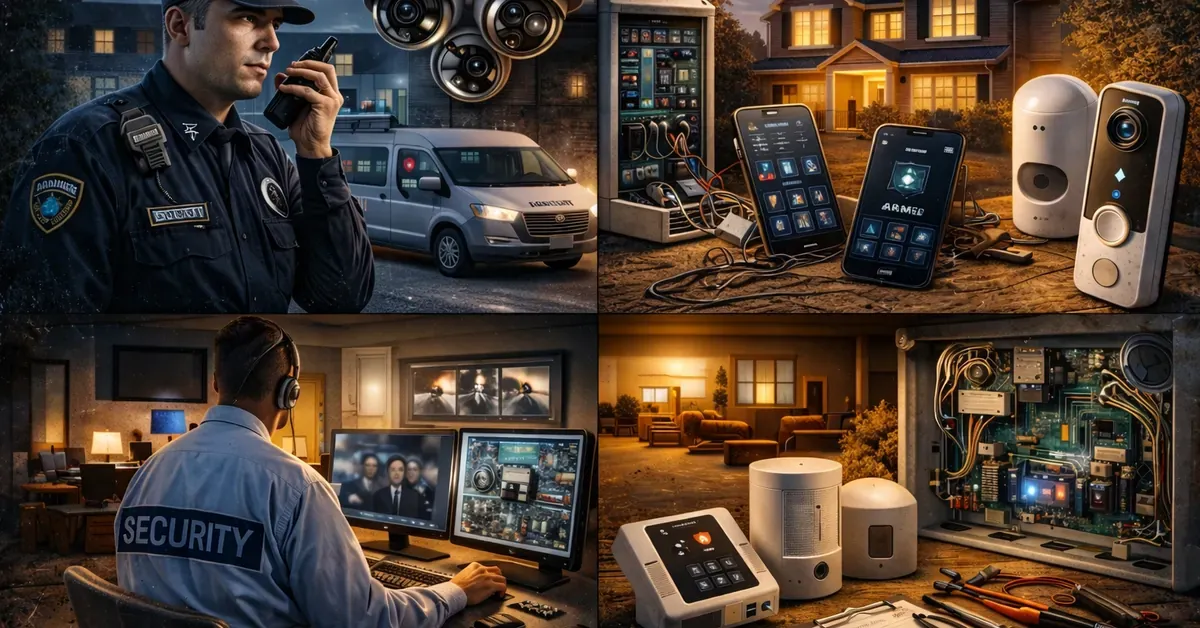
Professional systems are typically installed by trained technicians who handle everything from cable runs to sensor placement. The core feature of these systems is Professional Monitoring: a 24/7 service where staff verify alarms and contact emergency responders on your behalf. If a window is smashed at 3 AM, a live person is already working on the response while you are still waking up.
📝 Contracts and Service Agreements
Pro systems usually come with a contract, often spanning one to three years. In exchange for the equipment and installation, you agree to monthly payments. This often includes a service guarantee; if a camera fails, you don’t troubleshoot it yourself, you call the provider to fix it.
🤳 What Defines a “DIY” System?
🧩 Installation You Control
DIY systems are designed for the non-engineer. They typically use “peel-and-stick” sensors and magnetic mounts. You are in the driver’s seat, deciding exactly where each camera goes without waiting for a scheduled appointment. This makes them the best DIY security setups for apartments or rentals where you cannot drill holes in the walls.
🔓 Flexibility and Choice
With DIY, professional monitoring is usually an optional add-on rather than a requirement. You can choose to “self-monitor,” where alerts go straight to your phone. You also decide how to store your footage, whether that’s on an SD card or a cloud subscription.
⚖️ Head-to-Head Comparison
💰 Total Cost of Ownership
DIY systems almost always have a lower upfront cost. You buy the hardware, skip the installation fee, and avoid the contract. Even if you choose to add monitoring, the monthly fees are usually significantly lower than professional counterparts. For those budgeting your lifestyle and security across different locations, the lack of a locked-in contract is a massive advantage.
Professional systems may offer “free” equipment upfront, but the high monthly monitoring fees and installation costs mean they are almost always more expensive over a three-year period. You can see a breakdown of these numbers in our guide on how much should you spend on home security.
⏱️ Ease of Setup
If you have zero interest in tech or ladders, the professional route wins. A technician ensures everything is configured and that your sensors aren’t pointed at a heat vent (which causes false alarms).
DIY systems require patience. While companies have made them incredibly user-friendly, you are still responsible for the “walk test” to ensure your sensors are triggering correctly. If you’re unsure where to start, read DIY home security: where to start to avoid the common rookie mistakes.
🚨 Monitoring and Emergency Response
This is where the two diverge most. Professional monitoring acts as a safety net. If you are on a plane or sleeping, the monitoring center acts.
DIY self-monitoring puts the burden on you. You must see the alert and act on it. If you are in a meeting or your phone is dead, an alert might go unnoticed for hours. This is why many people now look for DIY home security systems explained specifically to see which ones offer “on-demand” monitoring for when they go on vacation.
🛂 Customization and Smart Home Control
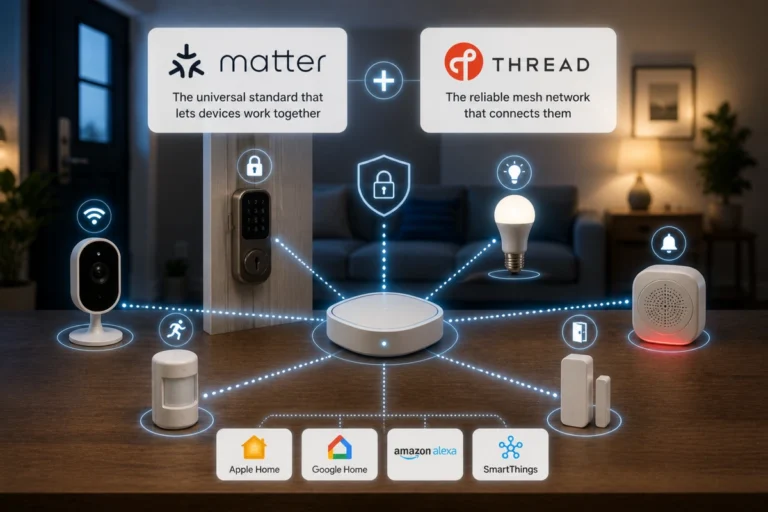
DIY systems generally play better with others. You can often mix and match brands or integrate your cameras with your existing smart home hub.
However, this freedom comes with a risk. Most DIY devices rely on your home Wi-Fi. Following the official guidance from CISA on home network security is non-negotiable for DIYers. You must change default passwords and use strong encryption to ensure your cameras aren’t hacked.
📋 Real-World Pros and Cons
✅ When Professional Makes Sense
- You travel frequently and can’t always check your phone.
- You want a “turnkey” solution with zero maintenance.
- You live in a high-risk area where a verified police response is a priority.
- You are securing a home for an elderly family member who isn’t tech-savvy.
✅ When DIY Makes Sense
- You want to avoid long-term contracts.
- You are a renter and need a portable system.
- You enjoy “tinkering” and customizing your setup.
- You are focused on what DIY home security actually protects against rather than just buying the most expensive package.
🔄 The Hybrid Approach
Today, you don’t have to choose exclusively. Many modern homeowners are opting for a “Blended Strategy”:
- Buy and install high-quality DIY hardware.
- Self-monitor during the week when you are at home.
- Activate “contract-free” professional monitoring only when you go on vacation or work trips.
This gives you the cost-savings of DIY with the security of a pro system when it matters most.
🕵️♂️ Common Misconceptions
❌ Myth: Professional Systems Are Inherently More Reliable
In the past, pro systems used dedicated phone lines, making them more “stable.” Today, both pro and DIY systems often rely on cellular backups or Wi-Fi. A high-end DIY sensor from a reputable brand is just as reliable as a sensor installed by a pro. The difference is the response, not the hardware quality.
❌ Myth: DIY Is Always “Budget Junk”
The DIY market has matured. You can now get 4K cameras, advanced AI for person detection, and backup power solutions for home security systems that rival anything a pro-installer would provide.
❌ Myth: Professional Systems Maintain Themselves
Even with a service contract, you still need to check your batteries and ensure your motion sensors vs contact sensors are clean and unblocked. No system is “set it and forget it.”
📍 How to Decide for Your Home
Ask yourself these four questions:
- Do I respond to phone alerts within 60 seconds? (If no, go Pro).
- Am I comfortable using a ladder and an app? (If yes, go DIY).
- Is my budget under $50 a month for the next three years? (If yes, go DIY).
- Do I need a system I can take with me when I move? (If yes, go DIY).
🏁 Final Thought
The “best” system is the one you will actually use and maintain. A professional system is great for those who want to outsource the headache, but a DIY system offers a level of control and transparency that modern homeowners increasingly value.
Start by identifying your most vulnerable entry points. Whether a pro installs a deadbolt or you do it yourself, the goal remains the same: making your home an unattractive target.
Related Reading: