🏠The Most Common Security Mistakes Homeowners Make

TLDR
- Leaving doors and windows unlocked remains one of the most common causes of successful break-ins.
- Many homeowners underestimate the importance of reinforcing door frames and strike plates.
- Predictable routines and visible absence increase burglary risk.
- Poor lighting and overgrown landscaping create concealment zones.
- Failing to update passwords and secure smart devices introduces modern security gaps.
Home security does not usually fail because of one dramatic oversight. It fails because of small, ordinary habits that feel harmless. Most homeowners are not careless; they simply assume certain risks are unlikely or that basic measures are enough.
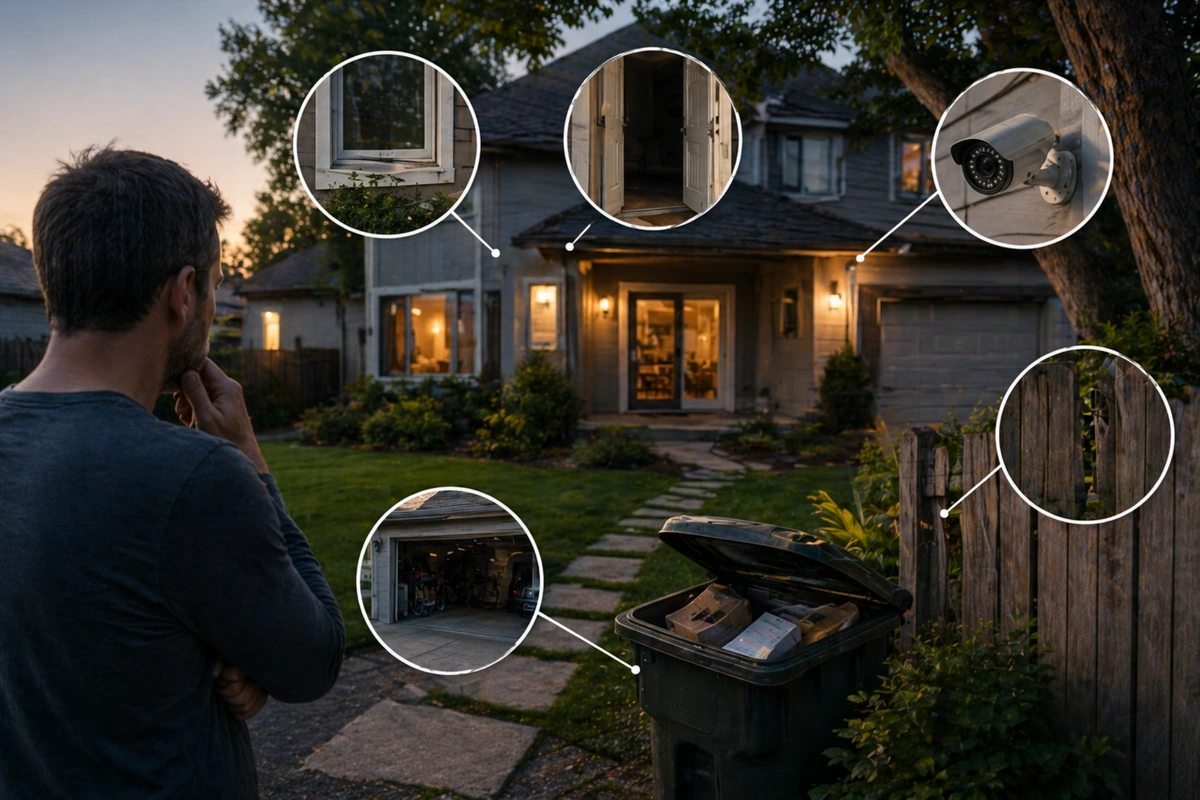
The reality is that residential burglaries often succeed because of simple, preventable mistakes. Understanding those patterns makes it much easier to tighten up your defenses without overspending or overcomplicating your setup.
Let’s walk through the most common security mistakes and how to fix them in a practical way.
🔓 Leaving Doors and Windows Unlocked
It sounds obvious, but this remains one of the biggest contributors to successful break-ins. Home security mistakes often start with the path of least resistance.
According to Criminal Victimization data, a significant share of residential burglaries involve unlawful entry without forced damage. In many cases, the door or window was simply unlocked. No tools. No dramatic entry. Just access.
| Entry Point | Common Error | Prevention Tip |
| Front Door | Left unlocked during yard work. | Use an auto-locking smart lock. |
| Side Window | Left open for ventilation. | Use window pins to limit opening width. |
| Back Door | Unlocked for “quick” errands. | Establish a mandatory exit ritual. |
This often happens during short errands, while working outside, or during the day when people assume the neighborhood feels safe. Hardware only works when it is actually used, which is why assessing your home like a burglar would usually reveals these simple lapses first.
🛠️ Relying on the Lock Alone
Many homeowners assume that if a door has a deadbolt, it is secure. The problem is not always the lock; it is the frame. Standard door frames are often secured with short screws that do not anchor deeply into wall studs. Under force, the frame can split long before the lock fails.
One of the biggest home security mistakes homeowners make is ignoring the physical structure. Upgrading a door’s reinforcement is inexpensive compared to replacing a damaged door after a forced entry.
Expert Tip! Replace the 1-inch screws in your strike plate with 3-inch hardened steel screws. This simple change anchors the plate into the house’s framing, making it much harder to kick in. You can learn more about this in our guide on how to reinforce your front door.
🪟 Ignoring First Floor Windows
Windows, especially on the ground level, are commonly used entry points. Yet many homeowners focus almost exclusively on doors. Older window latches may prevent rattling but do not always resist lifting or prying.
- Sliding Mechanisms: These are particularly vulnerable to being lifted off their tracks.
- Secondary Stops: Without these, an open window is a welcome sign.
- Visual Privacy: Transparent glass allows thieves to inventory your valuables.
Testing each window after locking it is a simple step. Adding window pins or track blockers increases resistance. For those on a budget, DIY window security upgrades are some of the most effective ways to stop opportunistic entries.
🚗 Overlooking the Garage
Garages are frequently treated as storage space rather than a primary access point. However, this is one of the simple security mistakes that attract burglars.
Attached garages often connect directly to the interior of the home. If the interior door is not secured with a deadbolt, someone who gains access to the garage may have a relatively easy path inside. Another overlooked issue is leaving garage door remotes inside vehicles parked outside.
If a vehicle is accessed, the remote becomes a convenient key. Treating your garage as a true exterior door, not an afterthought, is a cornerstone of layered home security.
💡 Poor Lighting Around Entry Points
Darkness creates concealment. While not all burglaries happen at night, poor lighting increases vulnerability during evening hours. Motion-activated lighting near doors, driveways, and ground-level windows increases visibility and perceived risk.
Common lighting errors include:
- Burnt-out bulbs: Neglected maintenance signals an empty home.
- High-glare placement: Lights that blind you (or cameras) rather than the intruder.
- Shadowed corners: Leaving “blind spots” where someone can work on a lock.
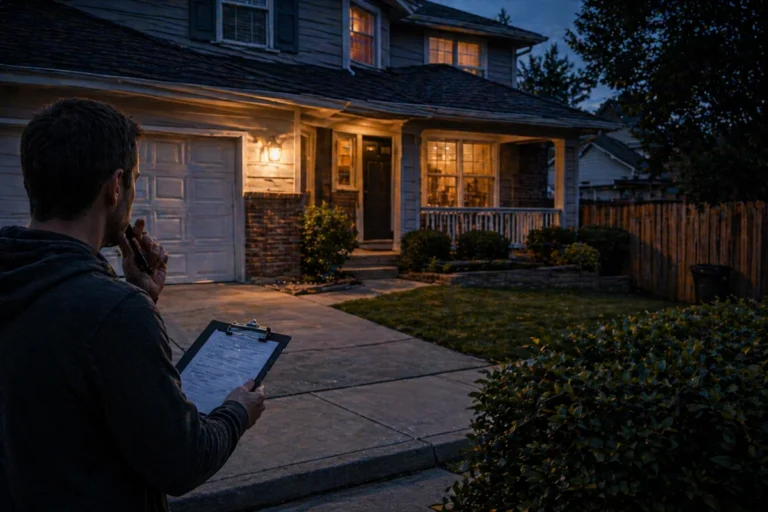
Walk around your home at dusk. Notice where shadows collect. Those are the spots to address. Avoiding outdoor motion lighting mistakes can significantly increase your home’s perceived risk to an intruder.
🌿 Overgrown Landscaping
Privacy is comfortable, but dense shrubs near windows and doors can provide cover for someone attempting entry. Crime prevention through environmental design principles emphasize visibility and natural surveillance.
Keeping shrubs trimmed below window height and maintaining clear sightlines to entry points makes suspicious activity easier to notice. You do not need to remove landscaping; you just need to prevent it from becoming a hiding spot.
This is a common DIY security system mistake—focusing on the tech inside while ignoring the concealment outside.
📢 Broadcasting Absence
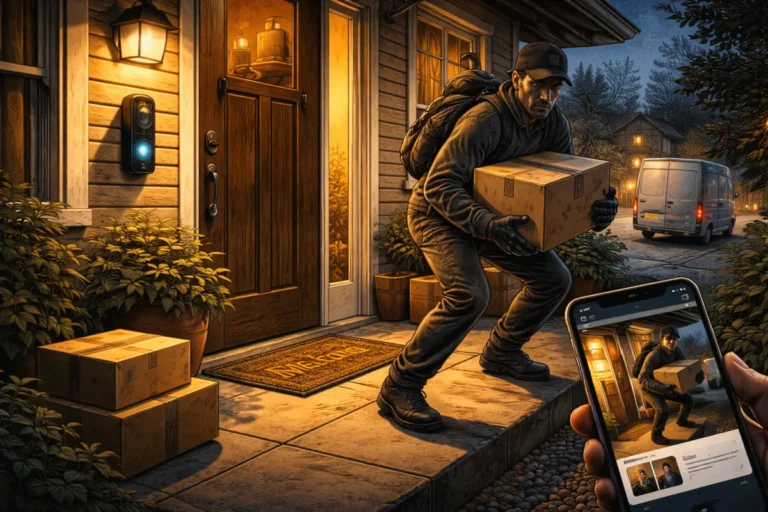
Many burglaries occur when homes are unoccupied. Daytime break-ins are common because residents are often at work or school. Visible signals of absence, such as accumulated mail or packages left on the porch, increase attractiveness to someone scanning for opportunity.
- Social Media: Real-time travel updates reduce uncertainty about your absence.
- Lighting Patterns: Consistently dark interiors at night suggest nobody is home.
- The “Closed Up” Look: Curtains that stay shut for days on end are a major signal.
Using light timers and smart lighting to simulate occupancy helps mask these signals. Small changes in habit can make a noticeable difference in what makes a home easy to break into.
🚨 Failing to Use Security Systems Consistently
Installing a security system but forgetting to arm it is more common than most people admit. A security system that is not armed cannot perform its intended function.
| System Habit | Why it Fails | Solution |
| “Quick Errand” Mode | Alarm left off for 15-minute trips. | Build the habit of arming every time. |
| The “Stay” Mode | Forgetting to arm while sleeping. | Schedule automatic arming times. |
| User Complexity | System is too annoying to use. | Choose a minimalist home security setup. |
Build the habit of arming your system whenever you leave and before going to sleep. If you are struggling with the tech, DIY home security systems explained in simple terms can help you find a more user-friendly option.
💻 Weak Digital Security
Modern home security extends beyond physical locks. Smart cameras and doorbells connect to your home network. If default passwords are left unchanged, these devices can become vulnerable.
Common home security setup errors in the digital space include using the same password for your alarm and your email, or ignoring firmware updates. Your Wi-Fi router is part of your security perimeter; treat it that way by optimizing your Wi-Fi for security devices.
🏚️ Neglecting Layered Protection
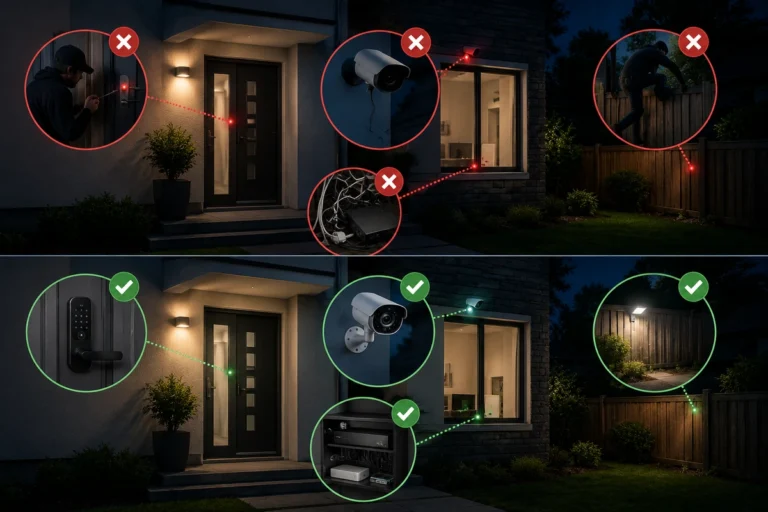
Relying on a single security measure creates vulnerability. A strong lock without lighting, or camera placement mistakes home owners make (like only pointing them at the front door), leaves gaps.
Layered security combines physical reinforcement, visibility, detection, and good habits. Even small additions, such as motion sensors vs contact sensors, significantly increase resistance. You do not need a complex or expensive system; you need intentional, overlapping coverage.
🏁 Conclusion
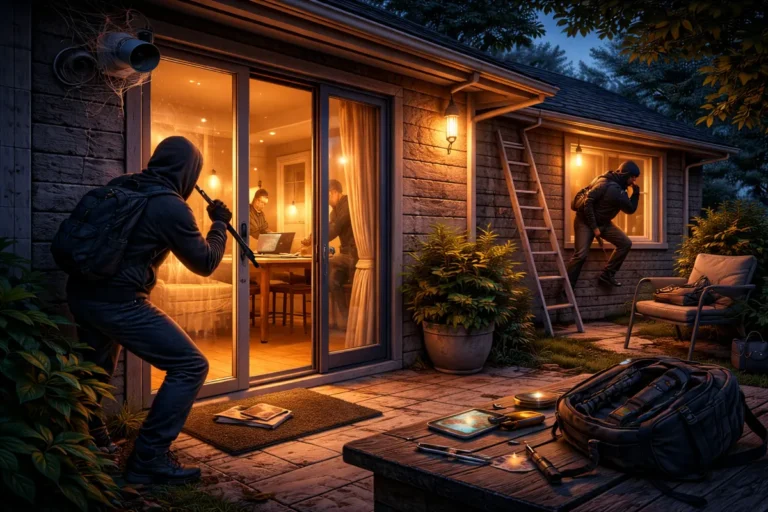
Most home security failures are not dramatic. They are ordinary oversights repeated consistently. Unlocked doors, weak door frames, neglected garages, predictable routines, and unsecured smart devices are common patterns in successful burglaries.
The encouraging part is that these mistakes are fixable. Security works best when it is simple, layered, and used consistently. By addressing the most common gaps, you significantly reduce your home’s attractiveness to opportunistic crime.
You do not need to live anxiously; you need awareness, consistency, and a few practical upgrades that align with how home burglaries actually happen. That is the foundation of effective home defense.