🛡️ Assessing Your Home Like a Burglar Would

TLDR
- Most burglars look for easy access, low visibility, and predictable absence.
- Front doors, first floor windows, and back entrances are the most commonly targeted areas.
- Unlocked doors and windows remain a major factor in successful break ins.
- Landscaping, lighting, and sightlines heavily influence target selection.
- A simple perimeter walk can reveal vulnerabilities you may not notice as a homeowner.
It sounds uncomfortable at first. Why would you want to think like someone trying to break into your own house? Because clarity beats assumptions every time. Most residential burglaries are not elaborate operations; they are practical decisions made quickly based on what looks accessible, unoccupied, and low risk.
If you can see your property through that lens, you gain a serious advantage. You stop guessing and start identifying real gaps in your layered home security framework.
When you evaluate home like a burglar, you stop viewing your house as a sanctuary and start seeing it as a series of obstacles. This shift in perspective is the foundation of a solid home security assessment. By understanding how burglars evaluate homes, you can prioritize upgrades that offer the most protection.
This guide will walk you through a home security checklist self audit grounded in actual entry patterns rather than movie scenes.
🏠 Start at the Street
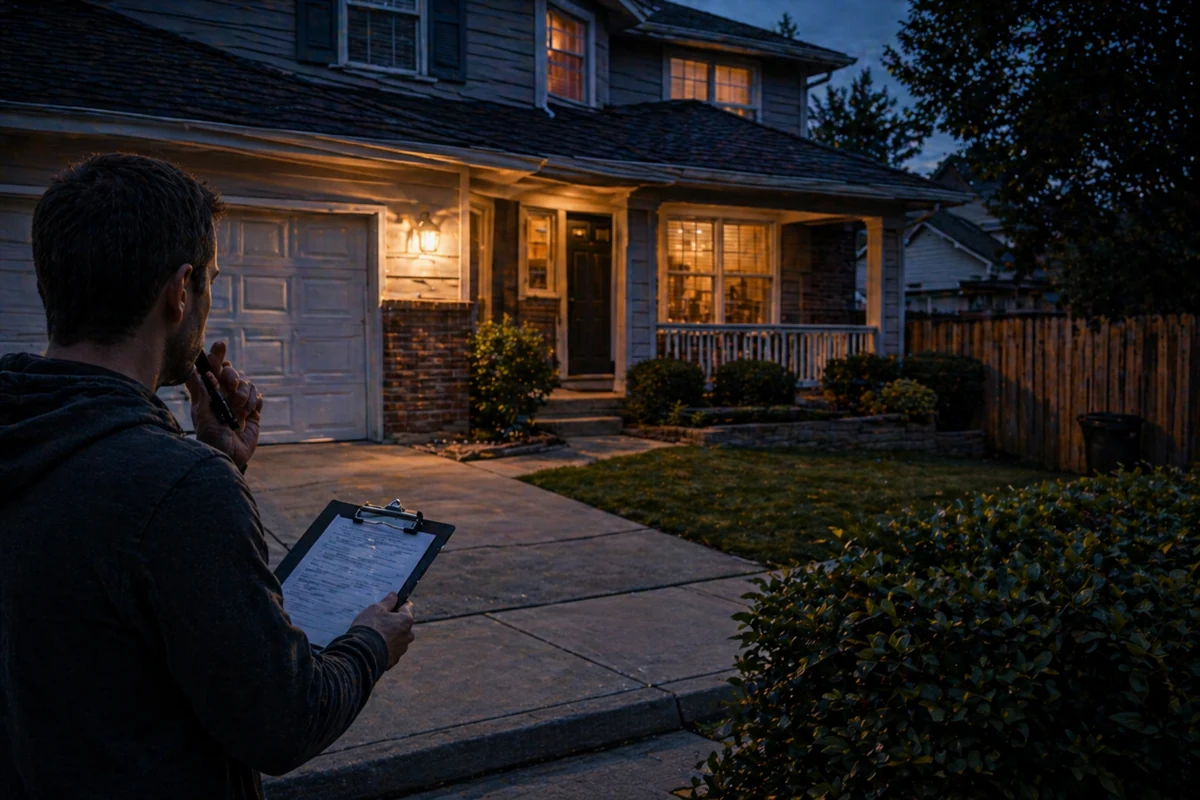
Before you even step onto your driveway, pause at the curb and look at your house the way a stranger would. What stands out? Are entry points clearly visible or partially hidden? Does the property look occupied and monitored, or quiet and predictable?
Data from national crime reporting consistently shows that burglars favor properties that appear easy to approach and exit. Visibility matters. If someone can walk up to a door or window without being seen by neighbors or passing traffic, the perceived risk drops. You want your home to look inconvenient to approach.
Curb Appeal Vulnerabilities
- Hidden Entries: Doors obscured by large architectural features or plants.
- Dark Zones: Areas that lack street light or porch light coverage.
- Signals of Ease: No visible cameras or security signs.
🚪 The Front Door Is Not Just Decorative
Many homeowners focus heavily on back doors and side windows, assuming the front is too exposed. In reality, front doors are frequently used as entry points.
This does not always mean dramatic forced entry; in many cases, it means checking whether the door is locked. A surprising number of residential burglaries involve no forced entry at all.
Stand in front of your door and test your home security by asking a few questions. Is the frame solid? Does the deadbolt fully extend into reinforced wood? Are there short screws holding the strike plate in place? The lock is only as strong as the structure around it. If you find it lacking, you should reinforce your front door immediately.
Expert Insight: Many common security mistakes involve neglecting the front entrance because “someone might see.” Burglars often hide in plain sight or use simple knock tests to confirm absence.
🚶 Walk the Perimeter Slowly
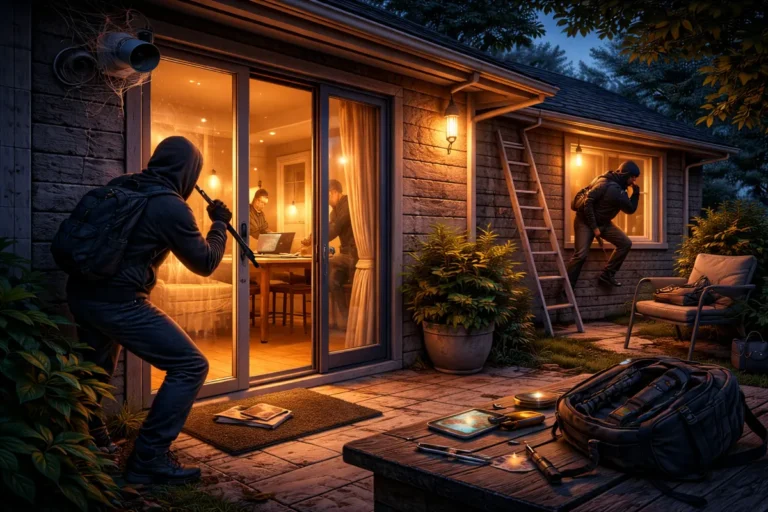
Now move around your home, slowly and intentionally, to assess home security. Look at ground level windows, which are among the most common access points. If a window is shielded by shrubs or fencing, it may offer privacy for you, but it also offers privacy for someone attempting entry.
Test your own windows. Are they fully latched? Could they be lifted off the track? Sliding glass doors in particular deserve attention, as they can sometimes be forced if not secured with secondary reinforcement. This is not about paranoia; it is about checking what someone else would check in less than a minute.
| Feature | Vulnerability | DIY Fix |
| First Floor Window | Weak latch or thin glass | Security film or sash pins |
| Sliding Door | Liftable from tracks | Security bar or track screws |
| Side Entrance | Low visibility | Motion-activated lighting |
🌑 Check for Concealment Zones
Burglars prefer not to be observed. Look for areas where someone could stand unseen for thirty seconds. Dense bushes near doors, tall fencing that blocks neighbor sightlines, and poorly lit corners near entry points reduce the perceived chance of interruption.
You do not need to remove every plant, but using landscaping as a security layer by trimming shrubs below window height can dramatically change your home’s appearance. Light and visibility are powerful deterrents because they increase uncertainty. This is one of the most effective ways to check home security weaknesses without spending a fortune.
🕒 Consider Timing and Routine
A home can be structurally secure and still predictable. National insurance and crime data shows that many burglaries occur during the day when homes are unoccupied. Work hours and school schedules create reliable windows of opportunity.
Think about your own patterns. Does your car leave at the same time every weekday? Are lights consistently off during certain hours? Small adjustments help, such as using smart lighting to simulate occupancy or ensuring prompt package retrieval. Uncertainty discourages opportunistic crime.
Routine Red Flags
- Package Buildup: Signals that the residents are away or not paying attention.
- Consistent Dark Windows: Confirms the house is empty during evening hours.
- Static Lighting: Lights left on 24/7 are as much of a signal as lights left off.
🚗 The Garage Is Not an Afterthought
Garages are often treated as storage spaces rather than entry points, which makes them attractive targets. If your garage is attached, the interior door should be secured just like any exterior door. Many homeowners forget this step, leaving a major threat ignored.
When you secure your garage against break ins, you remove a primary access point. Also consider visibility; if your garage door is open while you work in the yard, tools and equipment are visible from the street, which can signal opportunity beyond the garage itself.
🕵️ Perform a Simple Mock Assessment
One practical method is to perform a mock home security assessment. Pretend you have sixty seconds to evaluate home like a burglar and identify a target. Where would you try first? What looks weakest? Where could you stand without being seen?
Most homeowners are surprised by what stands out once they intentionally switch perspectives. You are not trying to defeat your own home; you are trying to remove the easy break in opportunities that offenders look for.
DIY Mock Test Steps
- The Pressure Test: Apply moderate pressure to locked doors and windows to see if they flex or rattle.
- The Sightline Test: Stand at your neighbor’s property and see if your side door is visible.
- The Light Test: Check for shadow zones that allow someone to bypass motion sensors.
🔐 Conclusion: Actionable Security
Assessing your home like a burglar would is not about fear; it is about understanding real world patterns. Most break ins rely on simple access points, predictable absence, and low visibility. That practicality works in your favor because it means the solutions are practical too.
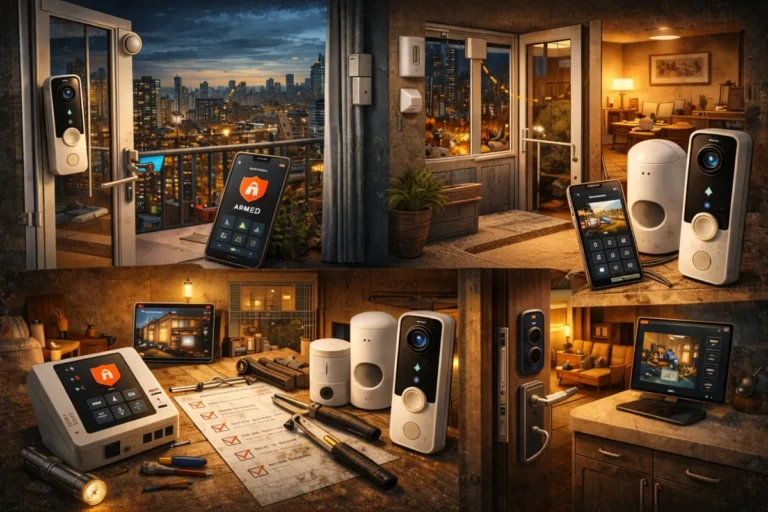
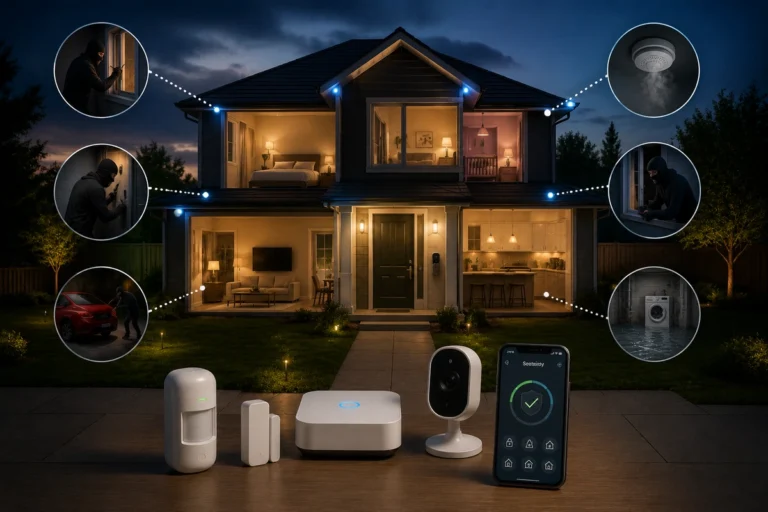
Walk your perimeter and complete your home security checklist self audit today. Improve visibility, reduce predictability, and upgrade your system over time. Security works best when it is intentional and layered. Once you see your home through the lens of opportunity and risk, you can close gaps calmly and confidently.