🛡️Do Fake Cameras and Security Signs Actually Work?

TLDR
- Security signs and fake cameras can deter some opportunistic burglars, but they are not reliable on their own.
- Visible security measures work best when they signal real risk, not just the appearance of it.
- Studies show signage alone can influence decisions, but experienced intruders may ignore or test it.
- Fake cameras often fail under closer inspection and don’t provide any real protection or evidence.
- The most effective approach is combining visible deterrents with actual security layers like cameras and locks.
It’s a tempting idea. Spend a few dollars on a fake camera or a yard sign, stick it in plain view, and suddenly your home looks protected. No wiring, no subscriptions, no complicated setup.
And to be fair, there’s some truth behind the idea. Visible security signals do influence behavior. But the real question isn’t whether they work at all; it’s how well they work, and where they fall short.
Because the gap between “some deterrent” and “reliable protection” is bigger than most people expect. Understanding what DIY home security actually protects against is the first step in deciding if a bluff is enough for your home.
🏘️ Why Visible Security Matters in the First Place
Before getting into fake cameras and signs specifically, it helps to understand why visibility matters. Most residential break-ins are not highly planned operations. They tend to be quick decisions based on opportunity, access, and perceived risk.
If a home looks easy to enter and unlikely to attract attention, it becomes more appealing. If it looks monitored or occupied, the perceived risk goes up. That’s where visible deterrents come in.
Devices, lighting, alarms, and signage all send a message that the home may not be worth the trouble. Fake security cameras and signs try to tap into that same psychology, just without the underlying system. This is a common tactic when designing a home security system on a budget.
| Feature | Fake Deterrent | Real Security System |
| Initial Cost | Very Low | Moderate to High |
| Maintenance | None | Low (updates/batteries) |
| Evidence | None | High-quality footage |
| Alerts | None | Real-time notifications |
🔍 Are Security Signs Effective Deterrent Tools?
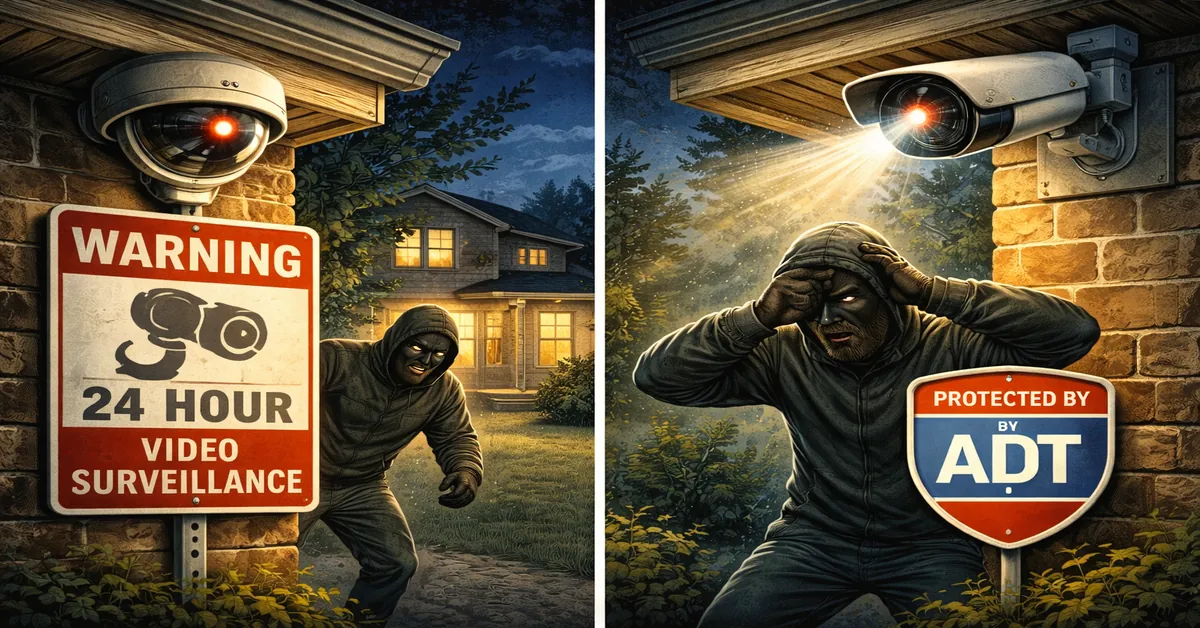
Short answer: yes, to a point. Research involving convicted burglars has shown that security signage can influence target selection. A noticeable percentage of offenders report avoiding homes that appear to have alarm systems.
That makes sense. A sign suggests there’s something in place, and even a small increase in perceived risk can push someone toward an easier target. You can read more about how security cameras deter crime through psychological pressure.
But there’s a limit. Signs rank relatively low compared to other deterrents like dogs or visible cameras. They’re a signal, not a barrier. And importantly, their effectiveness depends on who’s looking at them.
An opportunistic intruder might see a sign and move on immediately. Someone more experienced may look for confirmation. If they don’t see sensors or motion sensors vs contact sensors to back it up, the sign loses credibility.
💡 Expert Tip: If you use a sign, place it near the most likely entry point, not just in the front yard. Burglars often scout the sides and back of a house where they are less visible.
⚠️ The Problem With Fake Security Signs
Using a fake sign is essentially a bluff. Sometimes it works, sometimes it doesn’t. One issue is visibility. A sign only works if it’s seen and noticed before someone approaches the home.
Another issue is believability. Generic or unfamiliar branding can raise suspicion. Experienced criminals often know the logos of major local security companies. If you’re wondering “what makes a home easy to break into,” a generic sign is often a red flag that the owner is cutting corners.
There are also practical concerns. Without a real system behind the sign, there’s no alert, no recording, and no response if something actually happens. You can weigh the pros and cons of security yard signs to see if they fit your specific neighborhood profile.
📹 Do Fake Cameras Deter Burglars?
Fake cameras follow the same logic but add a visual element. At a glance, a camera suggests surveillance. That can be enough to make someone think twice. However, the dummy security cameras effectiveness is often undermined by poor quality.
Many models are easy to spot. Missing wiring, unrealistic placement, or obvious design flaws can give them away. Even small details, like a blinking red LED, can signal that the device isn’t real. Real cameras typically don’t use visible blinking lights during standard operation.
Do burglars notice fake cameras? Yes, especially if they are placed in spots where a real camera wouldn’t function, like deep in a dark corner without an infrared source.
- Glaring Flaws: Plastic lenses that reflect light unnaturally.
- Bad Wiring: Cables that lead to nowhere or are obviously “stuck” on.
- Movement: Dummy cameras that swivel on a fixed timer regardless of activity.
📖 Read Also: Why most homes are vulnerable despite having locks
⚖️ Pros and Cons of Fake Security Cameras
Let’s look at the pros and cons of fake security cameras for the average DIYer. While they are cheap, they offer a false sense of security that can lead to negligence in other areas, like forgetting to reinforce your front door.
- Pro: Extremely affordable for those on a tight budget.
- Pro: Easy to install for renters with limited options.
- Con: Zero evidence if a crime is committed.
- Con: Can be easily identified by professionals.
If you are asking “should you use dummy cameras,” the answer depends on your goal. If you want a temporary psychological edge while waiting to buy real gear, they have some value. If you want a long-term solution, they fall short.
📖 Read Also: How home burglaries actually happen real entry patterns
🛡️ A Better Approach: Layered, Visible, and Real
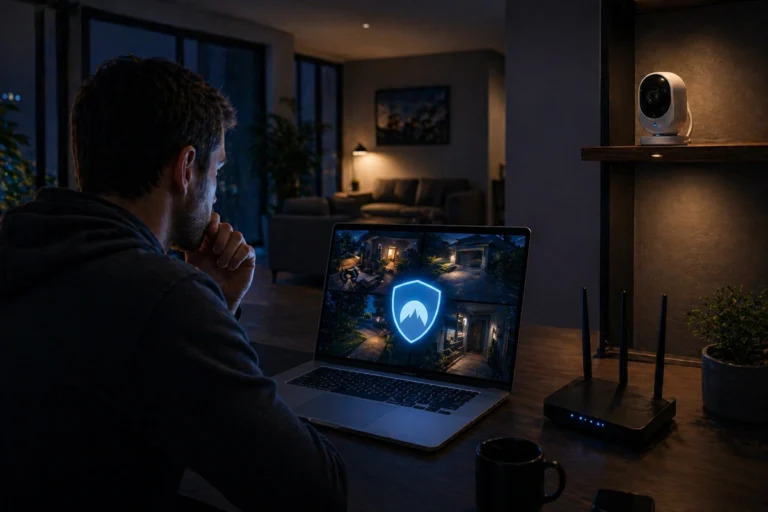
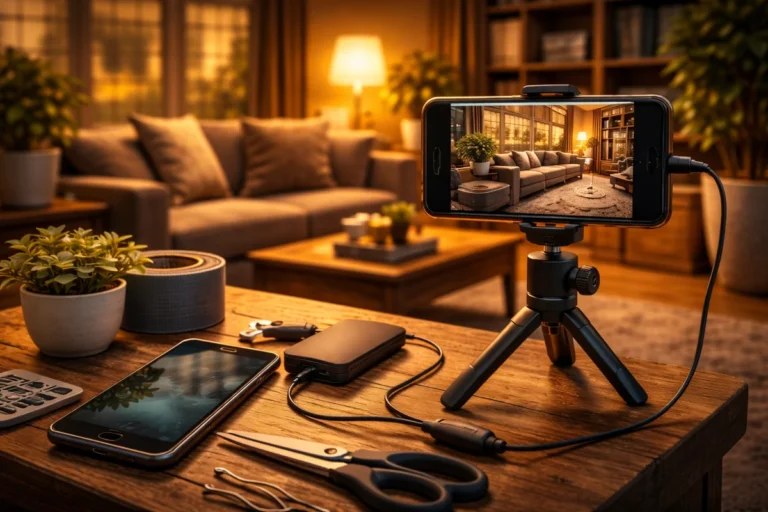
Visibility matters, but it works best when it reflects reality. A simple, effective setup doesn’t have to be expensive. Instead of relying on a bluff, consider a minimalist home security setup that uses real technology.
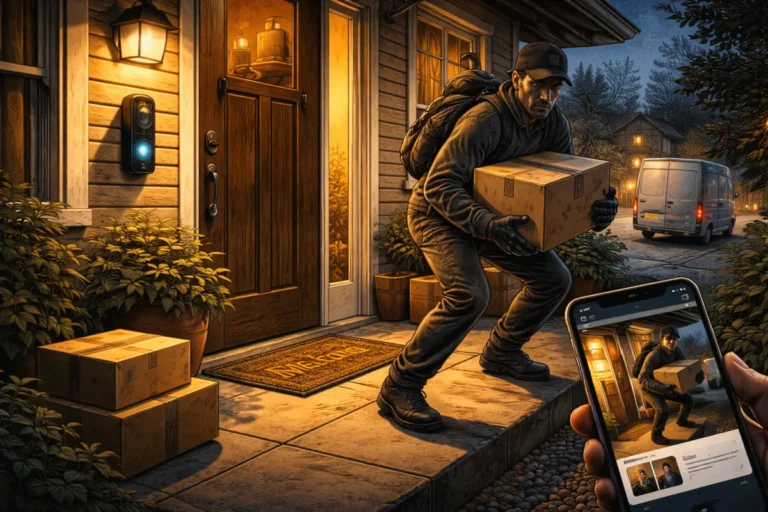
A real camera at the front entrance, motion lighting covering key areas, and solid locks on doors and windows create both perception and substance. This is the heart of a layered home security practical DIY framework.
| Real Layer | Security Benefit |
| Front Door Camera | Identification and evidence |
| Motion Lighting | Eliminates hiding spots |
| Window Sensors | Immediate alerts upon entry |
🧠 Common Misconceptions About Deterrence
One of the biggest misconceptions is that burglars carefully analyze every home. In reality, many decisions are quick. That’s why even basic deterrents can have an effect. But there’s also a misconception in the other direction, that a sign or fake security cameras alone are enough.
They aren’t. Security works in layers. Each element adds something, but none of them should stand alone. This is why many people eventually move from a purely visual approach to best budget home alarm systems.
💡 Expert Tip: If you do use a dummy camera, buy a real camera housing that has been gutted. It will look identical to a professional unit because, physically, it is one.
🏁 Conclusion: Are They Worth It?
If you’re asking whether fake security cameras and signs work at all, the answer is yes, sometimes, for the most opportunistic and inexperienced intruders. But if you’re asking whether they’re enough, the answer is a resounding no.
They can help reduce your home’s appeal, but they don’t provide protection, response, or evidence. They are a surface-level upgrade. Useful in certain situations, but not something to rely on for your family’s safety.
Focus on a few real, visible measures first. Even a small setup can go a long way when it’s intentional. Use signs and visual cues to amplify what you already have, not to replace it. That’s the difference between looking secure and actually being secure.
📖 Read Also: How to upgrade a DIY system over time