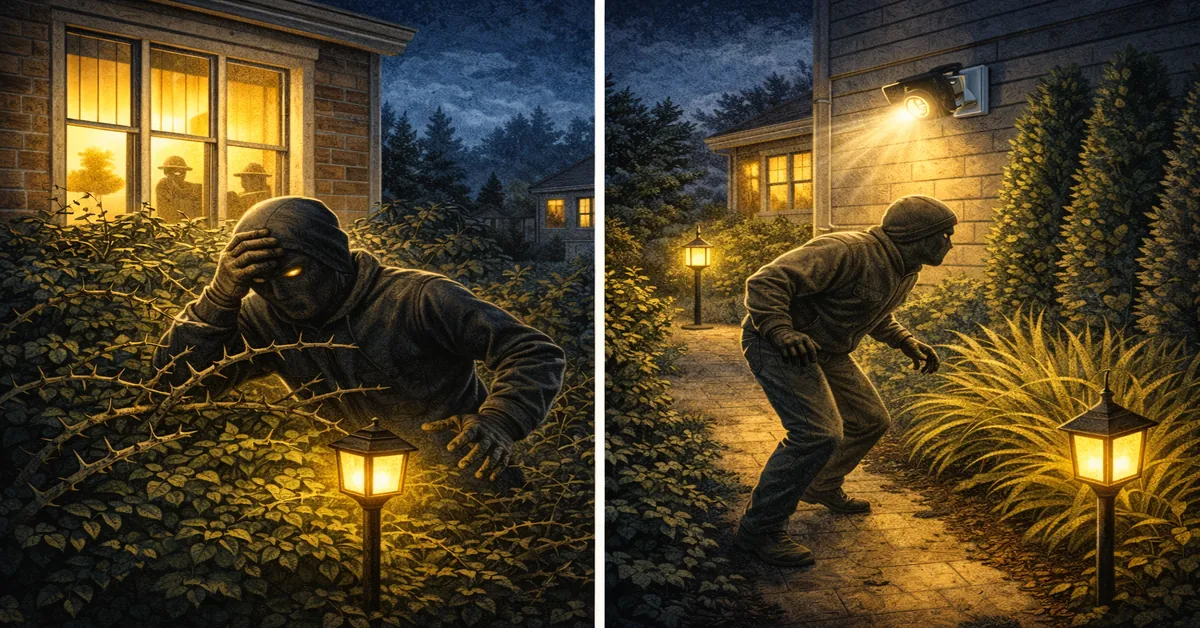
🌿Using Landscaping as a Home Security Layer
TLDR
- Smart landscaping improves home security by increasing visibility and reducing hiding spots.
- Well-maintained yards signal occupancy and attention, which discourages opportunistic burglars.
- Thorny plants and natural barriers can physically slow down or deter access to entry points.
- Poor landscaping choices like overgrown bushes and dark corners create unintentional security risks.
- Landscaping works best as part of a layered security setup, not as a standalone solution.
Walk up to two homes on the same street. One has overgrown bushes, dark corners, and a cluttered yard. The other is clean, open, and clearly maintained. Without thinking too hard, most people feel more comfortable near the second one.
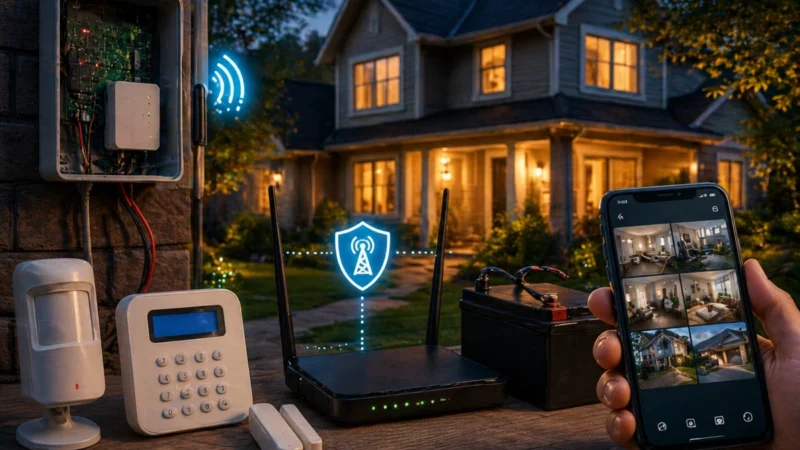
Interestingly, that instinct matters more than you might expect. Landscaping isn’t just about curb appeal. Done right, it quietly shapes how people move, what they can see, and whether your home feels like an easy or difficult target. While it doesn’t beep or send notifications, landscaping for home security plays a vital role in a layered home security framework.
👁️ Why Landscaping Influences Security at All
Modern advice often fixates on high-tech devices. However, long before you install home security cameras, there is something more basic at play: visibility and perception.
Crime prevention strategies often utilize landscape-based CPTED (Crime Prevention Through Environmental Design) principles. The idea is simple: the more visible a space is, the less comfortable someone feels doing something they shouldn’t.
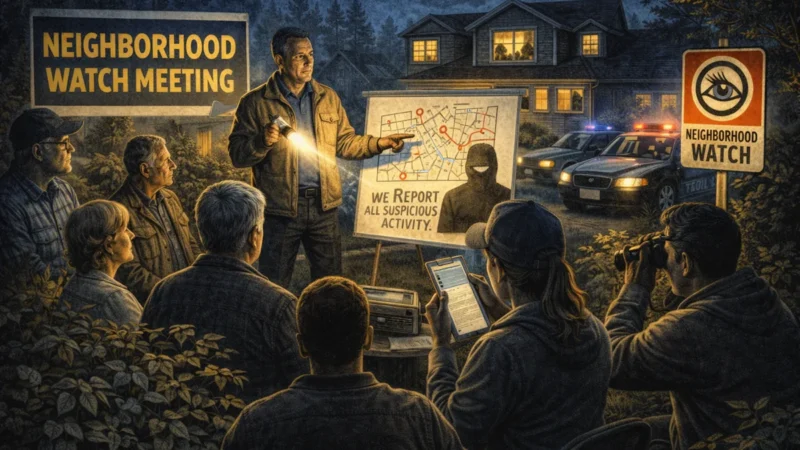
When your yard is open and easy to see into, you create passive visibility from neighbors and pedestrians.
Expert Tip! Walk across the street and look at your property. If you can’t see your own front door or first-floor windows clearly because of foliage, neither can your neighbors.
📏 Visibility Is Your First Line of Defense
Clear sightlines matter more than fancy features. If you want to remove hiding spots around house perimeters, you need to follow the “3-7 Rule” for foliage:
- Bushes and Hedges: Should stay at 3 feet (waist height) or lower near windows and entry points.
- Trees: Lower branches should be trimmed upward to at least 7 feet to open the line of sight.
Trimming these branches upward opens the space. Suddenly, the same yard feels brighter, more exposed, and less forgiving for anyone trying to stay hidden. This is a crucial step when assessing your home like a burglar would.
🚶 Landscaping as Natural Access Control
Good landscaping subtly guides movement. Strategic placement of plants and garden beds can gently steer visitors toward more visible areas. This is often called natural access control.
| Feature | Security Function |
| Defined Walkways | Signals exactly where visitors are expected to be. |
| Gravel Borders | Creates crunching sounds that alert you to movement. |
| Low Fencing | Defines boundaries without creating a visual shield for intruders. |
A well-defined path to your front door makes unusual movement stand out more. Someone cutting across your yard instead of using the path becomes noticeable, even from a distance. It is one of the more effective security landscaping ideas for large properties.
🧹 The Role of Maintenance in Deterrence
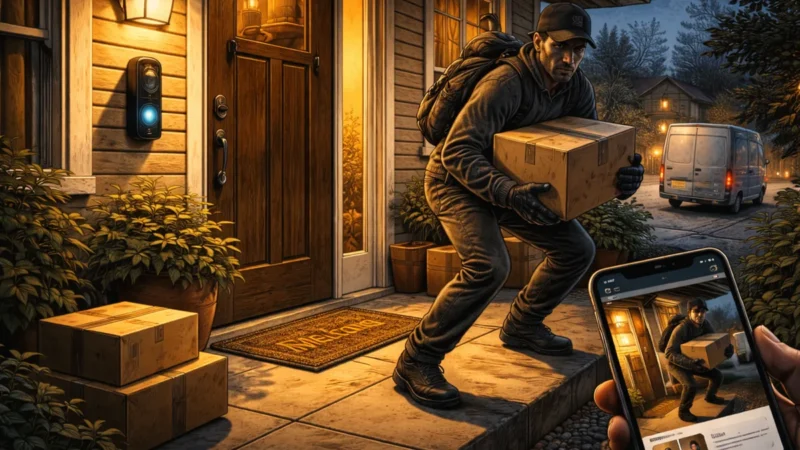
Maintenance itself is a security signal. An unkempt yard suggests neglect, which is one of the common security mistakes homeowners make. A well-kept yard suggests that someone is present, attentive, and likely to notice changes.
Regular upkeep like trimmed grass and pruned plants sends a message that the property is cared for. This is especially important for renters looking for DIY security, as keeping a tidy porch is a zero-cost deterrent.
Read More: What makes a home easy to break into—and how maintenance levels factor into that perception.
🌵 Using Plants as Physical Barriers
Some landscaping can actively slow an intruder down. Certain plants that deter burglars, especially dense or thorny ones, can be placed near vulnerable points like ground-floor windows.
- Best bushes for security around windows: Holly, Berberis (Barberry), and Pyracantha (Firethorn).
- Friction: These aren’t impenetrable, but they add noise and physical discomfort.
- Placement: Focus on side areas and rear windows that lack street visibility.
These obstacles are highly effective because most break-ins are quick and opportunistic. Anything that adds time increases the chance that an intruder decides the attempt isn’t worth the risk.
💡 Lighting and Landscaping Work Together
Landscaping works best when paired with a proper outdoor motion lighting setup. Even a well-designed yard becomes a problem at night if it is poorly lit.
Motion lighting is effective when combined with open landscaping. If a light activates in a clear area, it immediately exposes anyone there. If that same light activates behind thick bushes, the person stays partially hidden.
Expert Tip! Ensure your motion sensors are not aimed directly at swaying tree branches, or you’ll deal with constant false alarms.
⚠️ Common Landscaping Mistakes to Avoid
Many homeowners prioritize appearance without thinking about how it affects yard design to prevent break ins.
- Overgrown Vegetation: Creating perfect hiding spots right next to the glass.
- Shielding the Front: Tall fences that completely hide the front door from the street.
- Ignoring Side Yards: These often become cluttered and provide the quietest paths for real entry patterns.
Read More: DIY window security upgrades that complement your exterior plant choices.
🛠️ Landscaping and the Bigger Security Picture
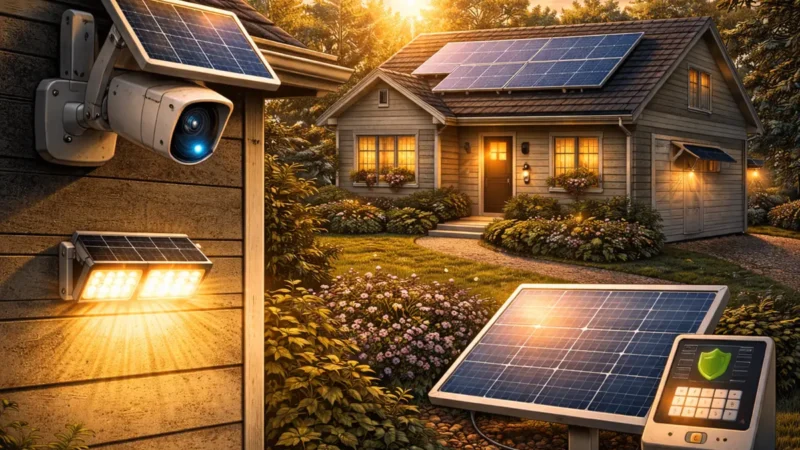
Landscaping alone will not stop a determined intruder. Instead, it acts as a multiplier for your other measures. If you have cameras, good landscaping keeps the views clear. If you use smart lighting to simulate occupancy, a maintained yard makes that simulation more believable.
American Family Insurance suggests that landscaping for DIY home security should be viewed as a way to “harden” your property’s exterior. It is an essential component when designing a home security system on a budget.
🏁 Conclusion
Landscaping is quieter than cameras and less obvious than alarms, but that is exactly why it works. It shapes behavior and reduces opportunities before a break-in even begins. By learning how to design yard for security, you create a space that feels watched and cared for.
The goal is not to turn your home into a fortress, but to make it the least appealing option on the block. Get that right, and your entire DIY setup becomes significantly more effective.