🏠Low-Tech Ways to Make Your Home Look Occupied

TLDR
- Visible signs of occupancy like lights, movement, and noise make burglars less likely to choose your home.
- Simple tools like timers and radios create realistic activity without expensive systems.
- Mail, trash, and outdoor upkeep quietly signal whether someone is home or not.
- Cars, curtains, and small daily details can strongly influence how your home is perceived.
- Layering multiple low-tech methods works far better than relying on just one trick.
There is a funny thing about home security: a lot of it comes down to psychology. Most break-ins are not carefully planned heists. They are quick decisions. Someone walks down a street, scans a few houses, and picks the one that looks easiest. And one of the biggest green flags for them? A home that feels empty.
Research into burglary patterns consistently shows that signs of occupancy like lights, movement, and everyday activity make a property less attractive. If there is even a hint that someone might be inside, many burglars simply move on.
That is good news, because creating that illusion does not require expensive gear. In fact, some of the most effective occupancy simulation tips are surprisingly low-tech.
Let us walk through the ones that actually make a difference. Understanding these concepts is the first step when assessing your home like a burglar would.
🧠 Why “Looking Occupied” Works
Before we get into tactics, it helps to understand the mindset. Burglars tend to avoid risk. Studies show they are more likely to back off when there is a higher chance of being seen, interrupted, or identified. Even small cues like a car in the driveway or lights switching on can shift that risk calculation.
On the flip side, homes that clearly look empty are often targeted because they offer time and privacy. So your goal is not to build a fortress. It is to create just enough doubt.
When you are designing a home security system on a budget, creating a believable “lived-in” look is often more effective than the most expensive alarm.
Expert Tip! Burglars look for “The Three Ds” when scanning a house: Darkness (no lights), Deliveries (piled mail), and Dormancy (no signs of life). Neutralize these, and you significantly lower your risk profile.
⏱️ Use Timers (But Don’t Make Them Predictable)
Light timers are one of the oldest tricks in the book and they still work. But here is the catch: a single lamp turning on at exactly 6:00 PM every day is not very convincing. Real life is not that precise.
A better approach is to use timers for lights security in different rooms, staggered throughout the evening. Some turn on early, others later. One might shut off before midnight, another stays on longer. If your timers have a random or “vacation” mode, use it. That slight variation makes a big difference.
| Room Type | Timing Logic | Visual Impact |
| Living Room | Main evening hours | Signals primary occupancy. |
| Kitchen | Morning and meal times | Signals active household routine. |
| Bathroom | Random 15-minute bursts | Signals movement between rooms. |
| Bedroom | Late night window | Signals a household winding down. |
From personal experience, this is one of the easiest upgrades you can make. It takes maybe 15 minutes to set up, and it instantly changes how your home feels from the outside. This is a foundational step in how to make your house look occupied when away.
📻 Let There Be Sound
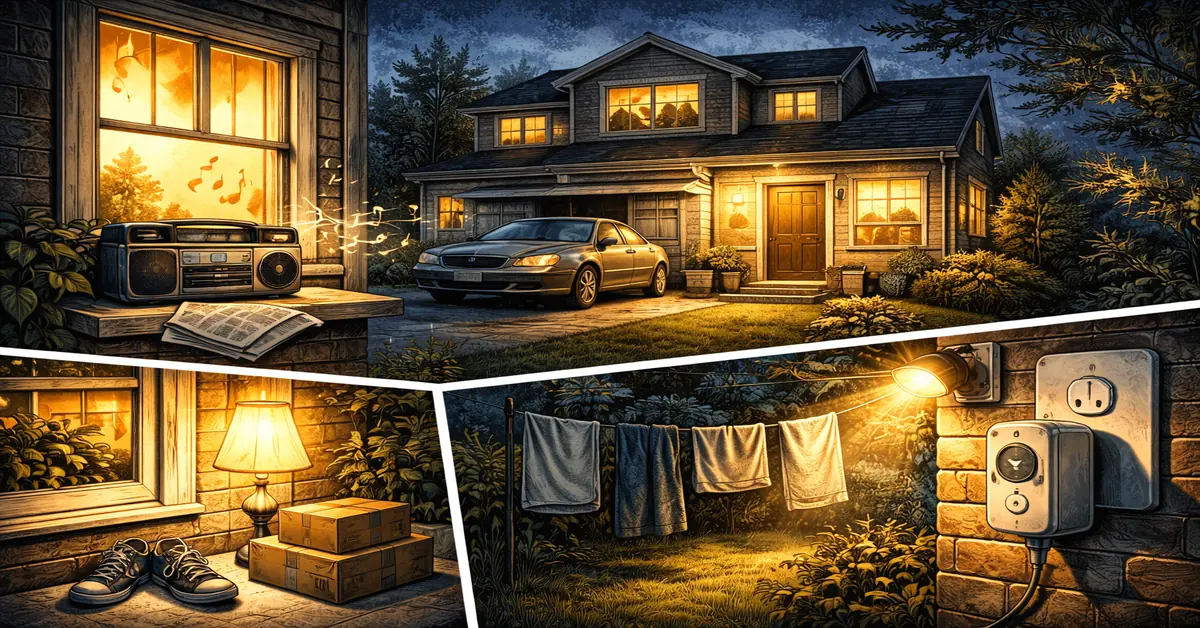
A silent house feels empty. A house with noise feels lived-in. Leaving a radio or TV on especially in the evening adds another layer of realism. You do not need it blasting. Just enough volume that someone near a window or door might notice it.
Talk radio works particularly well because it mimics conversation. It is subtle but effective. You can leave tv on for security as well, as the flickering light can be seen through curtains, suggesting someone is relaxing in the living room. Unlike lights alone, sound cannot be seen from a distance.
That means someone has to get closer to check, which already increases their risk of being spotted by motion sensors.
- Choose Talk over Music: Humans voices suggest active presence.
- Evening Placement: Keep the device near a front-facing window.
- Volume Check: Stand outside; if you can hear it faintly, it is perfect.
📦 Don’t Let Mail and Packages Pile Up
Nothing says “nobody is home” faster than a stack of deliveries. Mail buildup is one of the most obvious signals burglars look for. It is consistent, visible, and easy to spot from the street.
If you are away, you have a few options:
- Ask a neighbor to collect your mail daily.
- Pause deliveries with the postal service when possible.
- Arrange for package holds or pick-up lockers.
Even a couple of days can make a difference, especially in quieter neighborhoods where real entry patterns are easier to notice. This is one of the simple ways to deter burglars when away.
✂️ Keep Up Basic Outdoor Maintenance
An overgrown lawn or scattered flyers might not seem like a big deal, but they quietly tell a story. Homes that look neglected often signal absence. On the other hand, a maintained exterior suggests someone is around or at least paying attention.
If you are gone for more than a few days, have someone mow the lawn if needed. Remove door hangers or flyers and keep pathways clear. These small details blend into the background when done right. But when they are missing, they stand out as home security threats most people ignore.
Scannable Maintenance Checklist:
- Grass height matches the neighborhood average.
- No door hangers, takeout menus, or flyers on the porch.
- Walkways and driveways are swept or cleared of debris.
- Trash bins are moved back into their proper place after pickup.
🪟 Use Curtains and Blinds Strategically
Windows are a double-edged sword. On one hand, open curtains let light spill out, which can make house look occupied. On the other, they also give a clear view inside. The goal is balance.
During the evening, partially closed curtains with lights on inside can create that “someone is home” effect without exposing everything. Fully closed blinds during the day, especially if they stay that way for days, can signal the opposite.
If you are leaving for a while, set things up the way you normally would when you are home. Consistency matters more than perfection in simulate occupancy home security strategies.
🚗 Park a Car (Even If You’re Not Using It)
A car in the driveway is one of the strongest visual cues of occupancy. Studies on burglary behavior show that visible signs like vehicles can influence whether a home is selected. It is simple: if there is a car, someone might be inside or coming back soon.
- Neighbor’s Car: Ask a friend to park in your driveway while you are gone.
- Positioning: Don’t park in the same exact spot for 10 days; movement is key.
- Second Vehicles: If you have an extra car, leave it out rather than in the garage.
It is low effort, but it changes how your home is read at a glance. This is particularly effective for best DIY security setups for apartments where parking spots are visible to the public.
🗑️ Trash Day Still Matters
This one is easy to overlook. If your trash bins never move, it can signal that no one is home. On the flip side, bins that appear and disappear on schedule suggest normal activity.
If you are away during collection days, ask someone to roll your bins out and bring them back in. It is a small detail, but it fits into the bigger picture of routine. And routine is exactly what you want to simulate. This is a classic minimalist home security setup tactic.
🔦 Add Low-Tech Motion Lighting
While this leans slightly into tech, basic motion lights are still simple, affordable, and incredibly effective. They do not just illuminate your property, they create the impression that something or someone triggered them.
| Light Type | Benefit | Best Placement |
| PIR Motion Sensor | Startles intruders with sudden light. | Side pathways and back doors. |
| Dusk-to-Dawn | Ensures no dark corners at night. | Front porch and garage. |
| Smart Bulbs | Can be controlled from your phone. | Main living areas. |
Burglars generally prefer darkness and low visibility. Sudden light increases the chance of being seen, which raises the perceived risk. Even a single motion light near an entry point can make a noticeable difference.
👟 Create Small Signs of Daily Life
Sometimes it is the little things that sell the illusion. Think about what your home looks like when you are actually there. You do not need to stage a scene, but leaving a few natural details in place helps avoid that “closed-up” look. This is a common DIY home security where to start tip for beginners.
| The “Lived-In” Detail | Why it Works |
| Worn shoes by the door | Suggests someone just stepped inside. |
| Garden tools on a bench | Suggests ongoing yard work. |
| Toys in the yard | Suggests a busy household. |
| Curtains at varied heights | Suggests human adjustment during the day. |
One thing I have noticed over the years is that homes feel empty when they look too perfect. Real life has a bit of mess to it and that is a good thing here.
🧱 Layering Is What Makes It Work
No single trick is foolproof. For example, some wonder does leaving a light on deter burglars effectively. Research suggests lighting contributes to perceived occupancy but works best when combined with other cues.
The real strength comes from layering:
- Lights + sound
- Mail management + visible activity
- Cars + movement + routine
Each piece reinforces the others. Together, they create a believable picture. And that is what you are aiming for, not perfection, just plausibility. This is the heart of a layered home security framework.
🏠 A Quick Reality Check
It is worth saying this plainly: no method guarantees protection. But that is not the goal. Most burglaries are opportunistic. The person is not looking for your specific home, they are looking for the easiest one. If your place looks even slightly more complicated, uncertain, or risky than the next, that is often enough.
You are not trying to be invincible. You are trying to be skipped. It is a proven fact that security cameras can deter crime, but they are much more effective when the house doesn’t look like an empty shell.
🏁 Conclusion
You do not need a complicated system to make your home look occupied. A few lights, a bit of noise, and some attention to everyday details can go a long way. These are small changes, but they tap into something bigger: how people read a space from the outside.
Once you start thinking this way, it gets easier to spot gaps and fix them. If you are building a layered home defense setup, this is a great place to start. It is affordable, low effort, and surprisingly effective. Sometimes, the smartest security move is just making your home look like someone is already there.