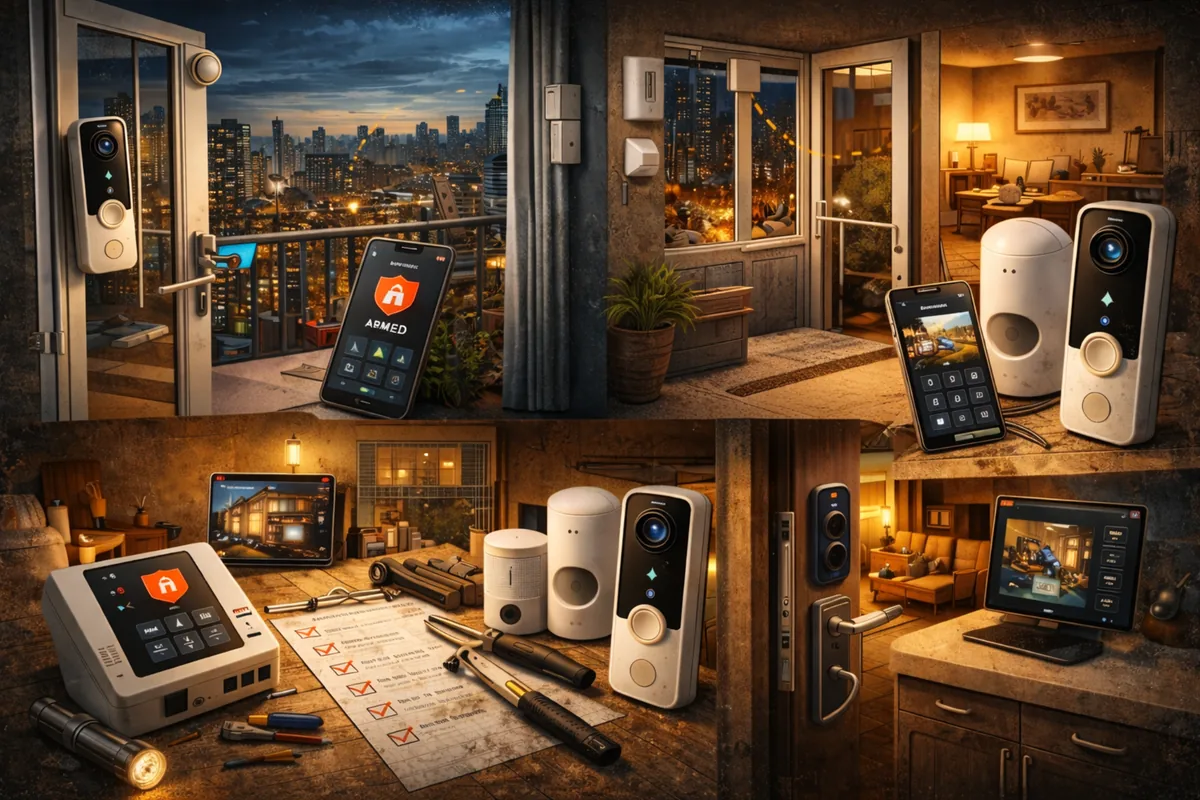
Best DIY Security Setups for Apartments: A Renter’s Guide to Protection

Key Take-Aways
- Apartments benefit most from layered security: door reinforcement, visibility, sensors, and awareness
- Rent-friendly devices like adhesive sensors and battery cameras allow protection without permanent changes
- Entry doors and shared hallways are the highest priority zones to secure first for maximum impact
Apartment security is a very different game from securing a detached house. You share walls, parking areas, hallways, and sometimes even entry points with people you do not know well.
That changes both the risks and the solutions available to you. The good news is you do not need a drill, wiring experience, or a landlord’s permission to build a genuinely effective apartment security system.
Most modern DIY gear is designed specifically for renters and smaller spaces. The trick is choosing the right pieces and placing them where they actually matter to prevent being one of the home security threats most people ignore.
Never forget your digital privacy in your DIY security setups. Ensure you’ve always got a quality VPN whenever you go online!

Start With the Entry Door
Your apartment door is the single most important security point. Nearly every intrusion into an apartment begins here because it is predictable, accessible, and quick to test for vulnerabilities.
Reinforce Before You Electrify
Before adding a single smart device, improve the physical resistance of the door. A door jammer or portable home security for apartment brace dramatically increases kick resistance without permanent installation.
Reinforced strike plates and longer screws are even better if your lease allows simple hardware swaps. Many landlords approve them because they improve the property’s long-term value.
Door viewers are underrated as well. Knowing who is outside reduces risky door openings, which is one of the most common real-world safety failures. If you are unsure what makes a home easy to break into, the front door is always the first place a burglar looks.
Expert Tip: Check your local fire codes before adding secondary manual locks or braces to ensure you still have a clear emergency exit path.
Add a Contact Sensor
A door sensor is the first electronic layer you should install for DIY apartment security. It alerts you when the door opens and logs activity while you are away from the unit.
It also acts as a visible deterrent if placed clearly. For apartments, reliability matters more than range since you are not covering a massive warehouse.
A single dependable sensor protects the main access point where almost all activity occurs. This is a primary component of a layered home security practical DIY framework because of its simplicity and effectiveness.
Read Also: Motion sensors vs contact sensors what you actually need
Consider a Doorbell Camera Carefully
Doorbell cameras work well in apartments, but placement is sensitive. You want visibility of faces and package drop areas without pointing directly into a neighbor’s interior space.
Angling the lens slightly downward usually solves most privacy issues. It captures interactions at your threshold rather than surveying the entire shared hallway.
If your building prohibits mounting to the wall, use a door mount bracket that hangs over the top edge. These require no screws and cause no damage to the door or frame, making them ideal for a self install security apartment project.
| Requirement | DIY Apartment Solution | Benefit |
| No Drilling | Adhesive strips or over-door mounts | Saves your security deposit |
| Connectivity | Battery-powered Wi-Fi units | No electrical wiring needed |
| Visibility | Peephole cameras | Uses existing door hardware |
Windows Matter More Than You Think
Many renters ignore windows because upper floors feel safe from intruders. In reality, accessible windows include ground floor units, those facing stair landings, and anything near a fire escape.
These are frequently tested because they are quieter than forcing a heavy hallway door. Understanding how home burglaries actually happen will help you identify which windows are your highest risk.
Window Sensors Are Cheap Protection
Stick-on window sensors work extremely well in apartments. They require no wiring and usually install in seconds with simple adhesive backings.
You do not need a sensor on every single pane of glass. Focus on reachable windows first to create a solid perimeter. This is one of the most practical security tips for renters looking to protect their space.
Glass Break Sensors for Open Layouts
If your apartment has large sliding doors or wide living room windows, a single glass break sensor can cover multiple openings. Place it centrally in the room rather than directly beside the glass.
It listens for the specific frequency pattern of breaking glass. This complements contact sensors that only detect opening movements.
Read Also: Why most homes are vulnerable despite having locks
Cameras Inside a Small Space
Cameras in apartments are powerful but easy to misuse. Recording constantly inside a small living area quickly becomes annoying for the residents.
The better strategy for best DIY home security for apartments is targeted observation. This keeps the data relevant and reduces the time you spend reviewing useless footage.
Use One Main Interior Camera
Place one camera facing the entry path, not the couch or bed. When the door opens, you want confirmation of who entered rather than a 24-hour recording of your normal life.
Entry-focused positioning gives you the most useful evidence while minimizing privacy fatigue. You can learn more about this in our guide on where to place security cameras for maximum coverage.
Turn On Motion Zones
Modern cameras allow you to set specific motion zones. Limit recording to the doorway and immediate entry path to keep notifications meaningful.
This prevents endless notifications caused by pets or ceiling fans. The system stays helpful instead of becoming a source of digital noise.
Motion Detection Without Annoyance
Apartments create a challenge for motion sensors because people move constantly in small areas. Poor placement leads to false alarms every single evening.
Place Motion Sensors in Transition
Spaces Good locations include entry hallways or the space between the bedroom and living room. These areas detect movement that should not happen when you are away.
Avoid pointing sensors directly at seating areas or beds. You will likely regret it within a day of the system being active.
Expert Tip: High-quality motion sensors often have a “pet immune” setting that ignores movement from smaller animals while still detecting humans.
Lighting Still Works Indoors
Lighting is not just an outdoor deterrent. It matters inside apartments as well to create the illusion of occupancy.
Smart bulbs
tied to door sensors can turn on lights when the door opens during away mode. That simple automation creates the impression that someone is already home.
Timers also help significantly. A lamp turning on in the evening while you are at work prevents your unit from looking consistently empty to anyone watching. This is an essential part of how to build redundancy into a DIY security setup.
Read Also: Local storage vs cloud storage for security cameras
Package Theft and Delivery Protection
Apartments experience more package theft than houses because deliveries concentrate in predictable lobby areas. This is a common issue that DIY home security actually protects against when used correctly.
Use Alert Focused Recording
Instead of recording constantly, set your door camera to notify you of motion near the threshold. Immediate awareness allows you to retrieve items before they disappear.
Coordinate With Building
Patterns Pay attention to delivery schedules in your building. Packages often arrive at similar times daily, so you can adjust notifications for those specific windows.
Network Security Matters Too
Your devices rely entirely on your Wi-Fi network. Weak settings can expose your cameras or allow unwanted access to your home automation.
Change default router passwords and update your firmware regularly. You should also consider optimizing Wi-Fi for home security devices to ensure a stable connection.
A Practical Apartment Security Layout
Here is a simple and effective baseline setup that fits most apartment layouts:
- Core Layer: Door brace and a reliable contact sensor.
- Detection Layer: Window sensors and a centrally placed glass break sensor.
- Awareness Layer: One entry-focused camera and smart light automation.
This covers forced entry and opportunistic theft with minimal complexity. It is far more effective than a massive system that you never remember to arm.
Keeping It Comfortable to Live With
Security systems fail when people stop using them. In apartments, daily annoyance is the biggest enemy of consistent protection.
Set schedules so the system arms automatically when you leave for work. The fewer buttons you have to press daily, the more consistent your protection becomes. This is a lesson many learn from common DIY home security failures.
Maintenance Is Quick but Important
Check your sensor batteries every few months and test your phone alerts occasionally. It takes five minutes and prevents silent failures from going unnoticed.
Also review your notification settings after any major software updates. A quick check keeps everything predictable and ensures your system is ready when it matters most.
Conclusion
Apartment security is not about turning your home into a surveillance hub. It is about controlling access and discouraging easy opportunities for criminals.
You only need a few well placed devices to achieve that goal. Strengthen the door, monitor the entry path, and automate your lighting to create a safer environment.
Keep the system simple enough that you actually use it every day. A modest setup that runs consistently protects far better than an elaborate one you eventually ignore.
Build small and adjust your setup gradually as you learn your routine. That is the real secret to apartment security that provides lasting peace of mind.
Never forget your digital privacy in your DIY security setups. Ensure you’ve always got a quality VPN whenever you go online!