⚠️ What DIY Home Security Cannot Protect Against

TLDR
- DIY home security is effective for deterring and detecting common threats like burglary and theft.
- It cannot fully stop determined intruders, targeted attacks, or human error.
- Most break-ins exploit simple weaknesses like unlocked doors or poor visibility.
- Security systems work best as part of a layered approach, not a single solution.
- Understanding limitations helps you build smarter, more realistic protection.
It’s easy to assume that once you’ve installed cameras, sensors, and a smart lock, your home is fully covered. Many homeowners experience that same quiet sense of relief right after setting up their new gear. You test the live feed once, look at the clean dashboard on your phone, and assume your property is safe from harm.
But here’s the honest truth: no residential security gear can protect against every single threat. Recognizing these distinct DIY home security limitations doesn’t mean your current hardware lacks value; it absolutely plays a massive role in day-to-day defense.
Rather, understanding exactly what home security cannot prevent is what separates a fragile setup from a truly resilient asset. Let’s dive deeply into the realistic limits of alarm systems, the common operational mistakes you might encounter, and how to intelligently address these defense gaps.
🌎 The Big Picture: Systems Reduce Risk, Not Eliminate It
Before evaluating the technical nuances of your hardware, it is critical to ground your expectations in operational reality. High-quality home security measures are statistically proven to reduce the likelihood of property crimes. A significant percentage of opportunistic intruders will immediately abandon an attempt if they notice visible outdoor warning indicators or exterior focal lenses.
However, even a masterfully configured network of sensors cannot offer a flawless guarantee of absolute safety. These digital assets are designed to serve as a single component within a much broader home defense strategy, rather than a magic bullet that acts as a standalone cure.
When you look closely at how retail security suites operate, it becomes clear that hardware acts as a detection framework, not a physical barrier. Failing to make this mental distinction is one of the foundational missteps people make when planning their household protection.
💡 Expert Tip
Acknowledge the Technical Boundaries: Hardware can notify you of an ongoing problem, but it cannot physically block a motivated threat. To better understand how these boundaries affect your overall protection, take a look at our analysis of what DIY home security actually protects against versus what it leaves uncovered.
🎯 1. Determined or Targeted Intruders
The vast majority of off-the-shelf security packages are engineered to deter impulsive, opportunistic crimes. This usually involves an individual walking down a street, spotting an dark dark entryway, and taking a quick gamble on a home that looks completely empty. Standard detection tools are incredibly effective at frustrating these low-level attempts.
What these systems cannot do effectively is completely stop an organized adversary who has made a definitive decision to target your specific residence. A highly focused intruder will deliberately analyze your property layout to identify vulnerability gaps, wait out your predictable daily commuting patterns, and track your family’s travel windows.
When a criminal takes the time to study your home, basic digital deterrents naturally lose a portion of their initial effectiveness. This is why understanding home security blind spots explained across your perimeter is vital; your physical protection layers must be rugged enough to withstand a deliberate approach.
📋 Vulnerability Mitigation Steps
- Ensure all high-definition lenses are mounted high enough to prevent manual blindfolding or direct physical blocking.
- Review your property layout carefully to uncover hidden entryways that lack proper sensor monitoring.
- Keep your daily schedules less predictable whenever possible to avoid giving observers an easy blueprint of your routines.
- Learn how to spot hidden vulnerabilities by evaluating your layout the way an experienced intruder would.
🚪 2. Unlocked Doors and Human Error
This limitation feels almost too simple to mention, yet it remains one of the primary reasons why security systems fail to stop crime. A staggering percentage of residential break-ins happen completely without forced entry. This means an intruder didn’t need to break a window pane or pry open a casing; they simply walked right through an unlocked slider or a front door.
No advanced camera algorithm, contact point, or audio siren can compensate for an unlatched entryway. Your smart technology will remain completely silent if someone accesses an opening that lacks a sensor, or if you simply forget to change your system from its disarmed status when rushing out the door.
Human forgetfulness is an inevitable reality of daily life, and it represents one of the major risks not covered by home security out of the box. Designing your home’s defenses around these natural human slips is an absolute necessity if you want your system to hold up when it counts.
🔍 Read More
- Set up automated location tracking profiles within your app to send geo-fenced arming reminders whenever your phone leaves the driveway.
- Deploy heavy-duty automated electronic locks that refresh their locked status after remaining shut for a specified number of minutes.
- Discover how to avoid leaving obvious invitations for casual property criminals by looking at our breakdown of what makes a home easy to break into.
🔌 3. Power Disruptions and Network Failures
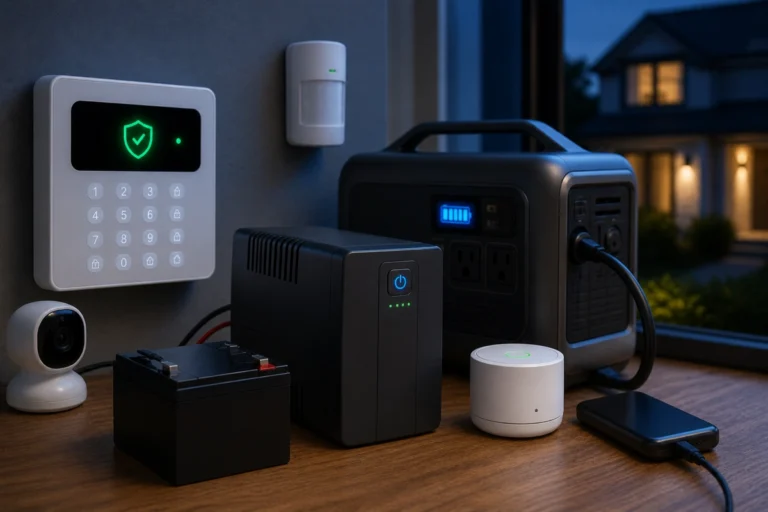
Modern standalone security setups rely heavily on a constant supply of electricity and an active, high-speed connection to the internet. If a severe summer storm rolls through, a utility transformer blows, or a local network provider suffers a widespread data blackout, your primary defense assets can experience immediate, silent service degradations.
Without a constant power connection, your cameras may completely stop logging video clips, you will lose the ability to check your property remotely, and your cloud database will become unreachable. While certain high-end hardware modules include built-in power cells and local storage, these features are still bound by strict mechanical limits.
Internal battery packs are typically built to sustain your hardware for a few hours rather than multiple consecutive days of a blacked-out grid. Furthermore, standard cloud-reliant cameras will often stop recording entirely the moment they lose access to your local router’s Wi-Fi network.
📊 Threat Matrix: Power and Data Disruptions
| System State | Affected Features | Remaining Protective Capabilities |
| Total Wi-Fi Blackout | Push notifications, remote live viewing, cloud archiving | Local siren triggers, onboard media logging (if supported) |
| Main Power Failure | Continuous plug-in cameras, main base station power | Low-power battery sensors, cellular backup lines |
| Total System Cut | Complete digital monitoring and all smartphone app updates | Physical door locks, reinforced frames, security film |
Building true hardware redundancy into your installation is the single most effective way to address these network dependencies. You can find detailed strategies for keeping your property protected during an outage by reading our walkthrough on backup power solutions for home security systems.
🔨 4. Physical Destruction or Device Tampering
One of the main reasons DIY hardware is so popular is that the individual modules are incredibly accessible and easy to mount without professional tools. Unfortunately, that same ease of accessibility also makes your physical equipment highly vulnerable to direct manual tampering if an intruder gets close enough.
An exterior camera that is mounted within arm’s reach can be easily spray-painted, forcefully turned toward a blank wall, or pulled off its mounting base entirely. Similarly, a baseline window magnet can be broken with a heavy tool, and an exposed interior control hub can simply be unplugged from its wall socket.
This vulnerability emphasizes what security cameras cannot do: they can document an act of vandalism, but they cannot physically stop a person from damaging the lens. Hardening your physical layout against manual interference requires strategic, thoughtful hardware placement.
💡 Expert Tip
Elevate Your Hardware Beyond Reach: Always mount your primary exterior cameras at least nine feet above the ground to prevent quick physical tampering. To ensure your modules remain securely anchored over the long haul, take a look at our selection tips for the best ways to mount security sensors that don’t fail over time.
⏱️ 5. Fast, Low-Skill Property Break-Ins
There is a common, inaccurate assumption that residential property crimes are slow, highly calculated operations. In reality, many break-ins are incredibly fast smash-and-grab events. A casual burglar may only spend a few minutes inside a house, grabbing easy-to-conceal electronics or jewelry from the master bedroom before immediately fleeing out the back door.
During a lightning-fast entry like this, your smart devices are primarily operating in a reactive state. Your sirens will scream after the door is smashed, your camera will log the person’s face, and a push alert will arrive on your phone while the event is happening, but none of those digital actions will physically block the initial entry or prevent the immediate loss of your valuables.
This operational reality highlights why security systems fail to stop crime if they are treated as a replacement for real physical friction. To keep your property safe against rapid entries, you must focus heavily on structural reinforcement tools that deny immediate entry.
🔍 Read More
- Apply shatter-resistant security film across exposed ground-floor window panes to resist blunt impact.
- Keep your most critical documents and family heirlooms secured inside a heavy, boltdown security safe.
- Discover how to strengthen your primary entry points against sudden forced entries by reviewing our guide on door jamb reinforcement is it worth it.
🗣️ 6. Social Engineering and Deception
Not every security threat you face will attempt to force their way through a window or pick a lock in the middle of the night. Some of the most challenging risks to manage arrive right at your front door through basic conversation, deceptive cover stories, or sophisticated social engineering.
An individual looking to gain entry to your home might put on a high-visibility vest to pose as a delivery driver, claim to be a utility technician checking a gas line, or ask to come inside to use your phone during an apparent roadside emergency. If a resident opens the door and voluntarily invites that person inside, your digital security system will not register the entry as an unauthorized event.
Even the most advanced video doorbell suites cannot solve this vulnerability. They are excellent for providing visual confirmation of a visitor, but the final decision to unlock the entry point rests entirely with you. This is an area where personal awareness and strict household rules matter infinitely more than your technology budget.
📋 Front Door Safety Practices
- Verify Credentials: Never allow a service technician inside without first calling their main office to verify their scheduled appointment.
- Communicate Through the App: Use your video doorbell’s two-way audio feature to speak with delivery workers without physically opening your door.
- Train Your Household: Ensure your children and family members understand exactly who is allowed inside the home and who must stay outside.
- Securing Common Triggers: For an entry-by-entry look at how to handle visitor access safely, see our overview on mastering keyless entry security risks and best practices.
🔑 7. Internal Risks and Familiar Access
It can be incredibly uncomfortable to think about, but real security risks don’t always originate from anonymous strangers. Individuals who have been granted legitimate, authorized access to your living space over time can easily become an unhandled risk factor if your relationship changes or if they abuse your trust.
Former roommates, residential maintenance contractors, cleaning services, or casual acquaintances often possess an intimate knowledge of your interior layout, your daily commuting habits, and exactly where you store your most valuable items. Basic retail security systems cannot automatically distinguish between an authorized guest and an active threat once a person uses a valid entry code.
If someone knows your master security PIN or has a physical duplicate of your house key, they can navigate past your motion detectors and entry magnets without ever setting off an alarm. Managing this risk requires close, active management of your digital permissions.
💡 Expert Tip
Issue Unique Entry Codes: Never share a single master keypad PIN with outside guests or workers. Assign unique, trackable temporary access codes to every individual so you can monitor exactly who enters your home and when. Learn how to manage your digital keys by checking out our structural analysis on smart lock installation mistakes to avoid.
🛋️ 8. Falling Into a False Sense of Security
Perhaps the most subtle and dangerous limitation of any DIY installation is the false sense of absolute security it can foster within a household. Once the cameras are mounted and the monthly storage fees are paid, it is incredibly easy to fall into the lazy habit of assuming your property is perfectly protected and requires no further thought.
In reality, digital systems perform at their absolute best when they are integrated into a multi-layered, common-sense defense strategy. If you choose to place all your trust in high-definition surveillance lenses while ignoring poor perimeter lighting, weak door frames, and fragile locks, you are leaving major structural gaps in your home’s defense.
Technology is an incredible asset, but it can never serve as a complete replacement for robust physical security habits. Over-relying on electronics while neglecting the structural integrity of your entryways is one of the most common security mistakes homeowners make.
🔍 Read More
- Make it a firm daily habit to physically check the locks on your doors and windows every single evening before bed.
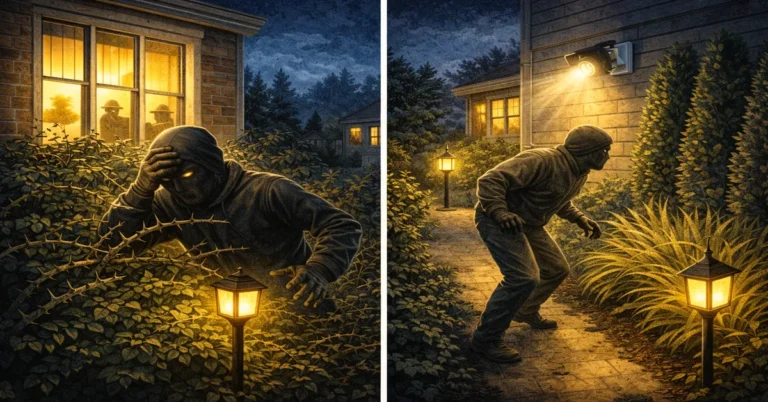
- Regularly look at your property from the street at night to pinpoint and correct dark, unlit zones around your perimeter.
- Learn how to easily integrate smart technology with robust physical habits by exploring our baseline routine for a simple nighttime home security routine.
🏆 What DIY Systems Still Manage to Do Exceptionally Well
After reviewing what home security cannot prevent, it is worth pausing to state a critical fact: committing to install and upgrade home security equipment is still one of the absolute best steps you can take to protect your family. These systems are highly effective assets when deployed with a realistic understanding of their true capabilities.
📋 Core Security Strengths
- Deterring Casual Intruders: The simple presence of visible window magnets and cameras forces criminals to look for an easier target.
- Instant Situational Updates: Getting a real-time notification on your smartphone allows you to assess your home’s status from anywhere in the world.
- Providing Useful Evidence: If a property crime does occur, high-definition clip archives offer vital visual tracking clues for local law enforcement.
- Broad Environmental Overviews: Integrating extra modules can turn your security hub into a comprehensive safety monitor for smoke, carbon monoxide, and water leaks.
The ultimate goal of residential security isn’t to achieve an impossible standard of absolute perfection. Rather, it’s about making your home a significantly more difficult, frustrating, and unattractive target to a criminal.
🛠️ Strategically Building Around System Limitations
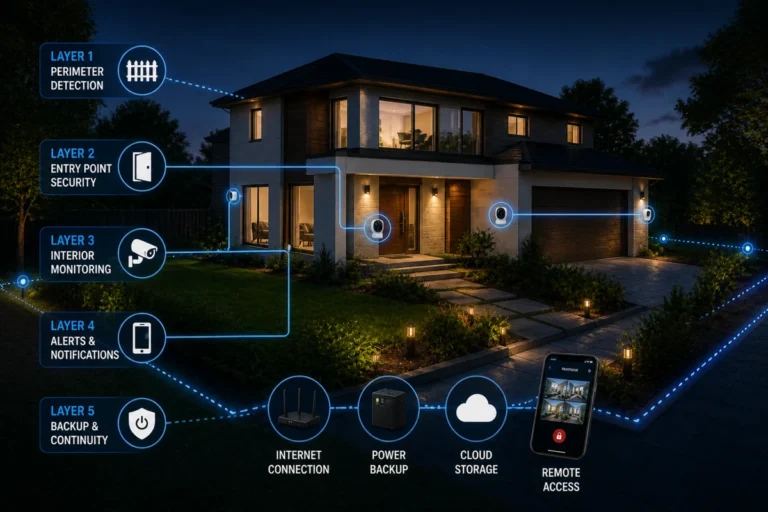
Instead of wasting your time and money trying to force your digital sensors to do things they weren’t designed for, the smartest approach is to build a defense plan that naturally compensates for these hardware limits. This means surrounding your electronic alerts with strong physical layers.
You can create an incredibly resilient property framework by pairing your wireless cameras with bright, motion-activated exterior floodlights, using dual local and cloud backup storage setups, and reinforcing your primary wooden door frames with steel strike plates.
None of these individual steps are overly complex or prohibitively expensive to execute on your own. However, when you weave them together into a unified approach, they form a highly reliable, defensive grid that minimizes your exposure to unexpected tech failures.
📊 Comprehensive Layered Defense Framework
| Defense Layer | Primary Responsibility | Practical DIY Action |
| Outer Perimeter | Initial deterrence and visibility | Install motion-activated lighting and maintain clear landscaping |
| Physical Barrier | Delaying and blocking entry attempts | Reinforce exterior door frames and upgrade to high-quality deadbolts |
| Electronic Layer | Real-time detection and logging | Deploy contact magnets, motion sensors, and surveillance cameras |
| Operational Layer | Overcoming human error and tech bugs | Establish a strict checking routine and turn on auto-arm schedules |
By combining digital alerts with physical reinforcement, you create a home that can withstand both tech disruptions and direct entry attempts. To see how to deploy these protective tiers seamlessly across your property, explore our step-by-step layout guide on building a layered home security practical DIY framework.
🏁 Conclusion
At the end of the day, DIY home security is an incredibly powerful, adaptive, and affordable tool for modern homeowners. But it isn’t magic. It will not automatically stop a motivated intruder, it can’t fix basic human forgetfulness, and it won’t magically cover up structural security flaws that you choose to ignore.
What a high-quality system does exceptionally well is dramatically lower your overall risk profile.
When you fully understand the limits of alarm systems, you are in a much stronger position to fortify your home precisely where it matters most. Real peace of mind doesn’t come from chasing an unrealistic standard of technical perfection; it comes from constructing a thoughtful, layered, and practical defense plan that protects your family through every everyday scenario.