🔋 Battery vs Wired Security Devices: Pros and Cons

TLDR
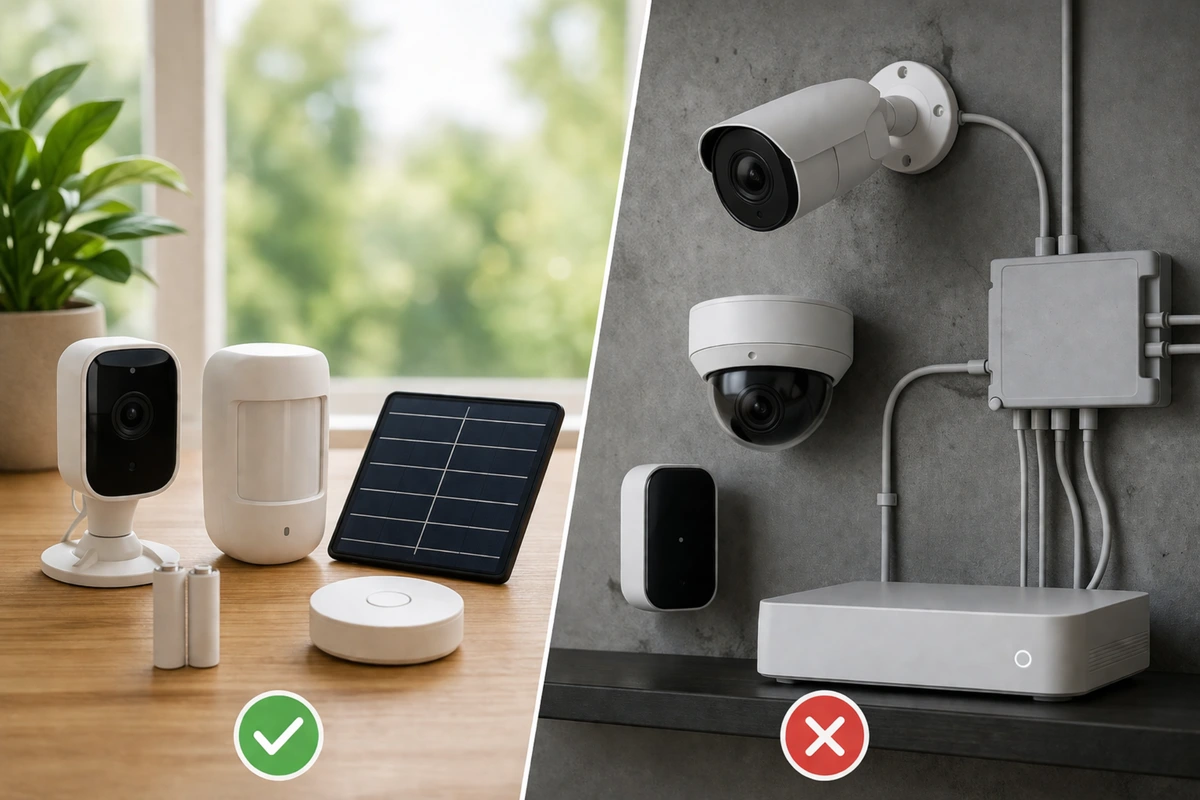
- Battery-powered security devices are easy to install and flexible in placement but require periodic battery replacement.
- Wired devices provide consistent power and often more stable performance but require more complex installation.
- Battery devices are ideal for renters, apartments, and locations without nearby outlets.
- Wired systems reduce maintenance and are often preferred for permanent camera installations.
- Many modern DIY setups combine both battery and wired devices for a balanced, reliable system.
One of the first decisions you face when building a home security system is surprisingly simple: how your devices get power. Some cameras, sensors, and alarms run on batteries, while others connect directly to household electricity through wiring.
Both approaches work exceptionally well, but they serve slightly different structural needs. Understanding the technical tradeoffs helps you plan a layout that matches your home, your lifestyle, and your day-to-day comfort level with device maintenance.
The best choice often depends less on the hardware itself and more on where it will be positioned. Let’s break down exactly what each option offers to help you navigate a battery vs wired security system choice for your property.
🛠️ What Battery-Powered Security Devices Are
Battery powered security devices pros and cons start with understanding how these components operate without a physical link to your electrical grid. They rely entirely on replaceable or rechargeable internal cells to fuel their circuitry.
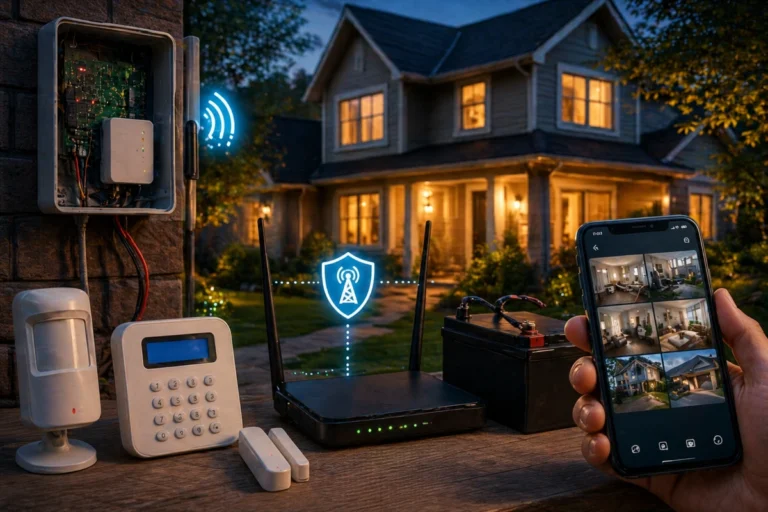
You will commonly see independent power applied to hardware like wireless cameras, perimeter contact points, and entry hubs. They send data across your home using low-power frequencies or local network paths, which is exactly how standard wireless setups handle security monitoring.
Because they do not require complex electrical wiring, the installation process remains incredibly clean. This convenience is the main reason standalone power has become the industry standard for modern, user-installed home hardware.
Common Battery-Powered Components
- Wireless Security Cameras: Capture video over local networks and use internal cells to avoid trailing power cables.
- Door and Window Sensors: Use tiny coin or lithium cells to monitor entry frames efficiently for years.
- Motion Detectors: Analyze interior spaces for heat signatures while drawing minimal standby current from internal batteries.
- Smart Locks: Power motorized deadbolts using independent cells to keep door entry functional during blackouts.
📈 Advantages of Battery-Powered Devices
The single biggest operational advantage of independent power is unmatched installation flexibility. Since you don’t have to fish cables through drywall, you can place cameras or sensors exactly where they provide the most tactical value.
Outdoor cameras can be mounted on distant trees, detached garage walls, or fence posts without expensive trenching. Entry points can be secured instantly by learning the best ways to mount sensors using simple adhesive strips.
This flexibility makes independent hardware perfect for short-term residents or historic properties where drilling is strictly prohibited. It allows you to build out a complete renter-friendly security plan without risking your initial housing deposit.
Expanding a wireless system is equally simple because adding a new hardware piece takes only a few clicks inside a smartphone app. This lets you experiment with coverage zones and adjust your perimeter as you learn how your home functions.
Installation Attributes Comparison
| Feature | Battery-Powered Devices | Wired Security Devices |
| Setup Time | Under 10 minutes per device | 30 to 60+ minutes per device |
| Tools Needed | None (uses adhesive or light screws) | Drill, screwdrivers, fish tape, wire strippers |
| Location Freedom | Unlimited (anywhere within wireless range) | Limited (must reach an outlet or junction box) |
| Removal Ease | Instant (leaves zero wall damage) | Complex (requires patching holes or removing lines) |
🧰 The Maintenance Tradeoff
The main drawback when you choose battery powered security devices pros and cons is long-term upkeep. Batteries eventually drop in capacity, and the device will go completely offline unless you swap or charge the cells periodically.
Modern hardware uses specialized software sleep states to extend lifespan, meaning basic door indicators can run for months or years. However, the true survival time of your cells depends on a few specific operational variables.
Frequent motion alerts, constant live streaming, or poor network signals will drain cells much faster than normal. Routine upkeep and smart management of system batteries will ensure your monitoring stays active year-round.
Fortunately, modern smartphone applications track these metrics automatically and send alerts when a cell drops below a specific threshold. This gives you plenty of warning before a sector drops offline.
Expert Security Tip
Watch the Traffic: To maximize cell life on an entryway camera, use your app to mask out high-traffic sidewalks. This prevents the lens from waking up and recording every passing pedestrian or neighborhood car.
⚡ What Wired Security Devices Are
Wired security devices draw continuous energy directly from your property’s electrical grid or specialized low-voltage transformers. They do not use temporary storage to run their primary processing engines.
Examples include PoE surveillance cameras, hardwired panel boards, and video doorbells attached to existing low-voltage chime lines. Because these devices enjoy a continuous stream of electricity, they never experience downtime from an uncharged cell.
This constant power flow enables advanced software features that are simply impossible on battery hardware. It provides a highly reliable foundation if you are starting a home security setup from scratch.
Read More
To understand how environmental conditions alter your upkeep schedule, you can read this technical article on how temperature affects battery performance to see why cold weather saps cell capacity.
🏆 Advantages of Wired Devices
Uncompromising power reliability is the primary reason homeowners invest in a hardwired system. Devices attached directly to household lines operate continuously without energy restrictions, allowing for advanced monitoring strategies.
Wired surveillance cameras can stream 4K video feeds continuously, utilize high-powered night vision LEDs, and process advanced onboard video analytics without a drop in performance. This makes them ideal if you want to understand the different types of home cameras for advanced tracking.
Another major benefit is drastically reduced physical upkeep over the lifetime of the hardware. Once a wired line is safely run through a ceiling or attic, the device requires almost zero manual interaction beyond occasional firmware updates.
If you prefer a hands-off approach to home care, wired assets are incredibly attractive. They deliver a reliable foundation that limits the weekly maintenance chores common with large wireless sensor arrays.
Wired Alarm System Benefits
- Continuous Recording: Captures 24/7 video history rather than short, fragmented clips triggered only by motion events.
- Higher Data Speeds: Eliminates local wireless interference by transferring video over physical Ethernet or coaxial lines.
- Zero Battery Expenses: Removes the recurring cost of purchasing specialized replacement lithium cells over the years.
- No Charging Downtime: Ensures your cameras never go offline for hours while a module sits plugged into a wall charger.
🏗️ Installation Complexity
The clear trade-off for this premium reliability is the initial setup difficulty. Running thick power lines or data cables through finished walls, crawlspaces, or external brick requires specialized tools, careful structural planning, and occasionally a licensed professional.
This complexity can be a major hurdle if you prefer a quick DIY process or rent your property. Routing cables over long distances inside an existing house involves drilling through structural studs or navigating dusty attic insulation floors.
Because of this high entry barrier, full hardwired configurations are most common during initial home construction or major room renovations. For an average homeowner, understanding whether to choose professional or DIY installation paths is critical before purchasing wired gear.
While a dedicated DIY enthusiast can certainly route low-voltage lines, it requires significantly more physical labor than mounting a basic battery-powered bracket.
Expert Security Tip
Test Before You Fish: Always plug your wired cameras into their data hub using temporary cables on a table before feeding lines through your walls. Confirming the hardware works first avoids the nightmare of troubleshooting a cable hidden inside your ceiling.
🔌 Reliability During Power Outages
Utility blackouts affect wired and battery hardware in completely opposite ways. A standard battery device will keep scanning its environment during a local blackout because its internal energy supply is self-contained.
Conversely, traditional wired devices lose functionality the instant your household electricity drops unless you have planned for grid emergencies. This vulnerability is one of the primary security entry patterns that savvy intruders exploit during regional storms or intentional line cuts.
To counter this weakness, your core infrastructure requires an independent energy safeguard. Implementing a robust backup power setup for alarms bridges the gap when the municipal grid fails.
Many high-end wired hubs include small internal gel batteries designed to run the central panel for several hours during a crisis. Keeping your system online means pairing your wired assets with proper electrical protection to maintain real-world power reliability security systems.
⚖️ Performance Differences
Because battery hardware must budget every milliamp of energy, manufacturers program them to limit resource-heavy operations. For example, a wireless camera typically stays in a deep sleep state until an infrared sensor detects movement.
This can sometimes cause a slight delay, meaning a fast-moving intruder might walk past the lens before the video recording clip actually starts. A wired camera avoids this lag because its processor runs continuously, allowing it to capture pre-buffer footage before a motion trigger occurs.
Wired hardware also supports faster response times, higher bitrates, and seamless streaming options within your local network. However, rapid improvements in cell chemistry and low-energy chipsets have significantly closed this gap.
For most standard properties, modern battery assets offer more than enough speed and clarity to handle basic residential monitoring. Weighing wired vs wireless security frameworks comes down to your building layout rather than sheer data performance.
Performance Attribute Breakdown
- Pre-Roll Recording: Wired lenses constantly cache video, saving footage from a few seconds before an event occurs; battery units only record after detection.
- Smart Home Integration: Wired units handle frequent automation handshakes smoothly, while battery devices can experience high drain if pinged continuously.
- Night Vision Reach: Fixed power allows for intense, long-range infrared illumination arrays that cover large backyards effortlessly.
🦺 Hybrid Systems: The Best of Both Worlds
You do not have to limit your home to just one style of power distribution. In fact, many of the most resilient modern security frameworks use a balanced, hybrid design to leverage the strengths of both power philosophies.
For example, you can mount fixed, wired cameras around your external rooflines where power access is close to attic drop points. Simultaneously, you can use wireless battery units to protect interior doors and windows without cluttering rooms with surface molding.
Smart locks almost always run on internal batteries to keep your front door secure during grid issues, while the master home automation panel plugs into a wall outlet with a built-in battery safeguard. This balanced approach creates a highly flexible layered security ecosystem that avoids single points of failure.
A mixed layout provides premium video tracking where it is needed most, while keeping the interior installation process simple and clean. It gives you maximum protection without requiring you to tear open every wall in your house.
Hybrid Configuration Example
- Perimeter Defense: Wired PoE cameras mounted under eaves for continuous 24/7 video monitoring of driveways and yards.
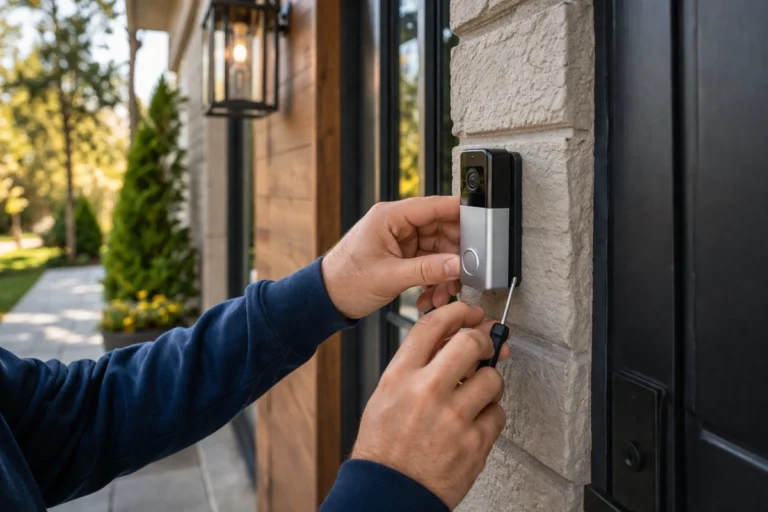
- Entryway Checkpoints: Hardwired video doorbell at the front entrance utilizing existing low-voltage chime lines.
- Interior Protection: Battery-powered window contact sensors and hallway motion detectors for clean, wire-free placement.
- Access Points: Battery-operated smart locks paired with a central plug-in alarm hub featuring internal battery backup.
🏡 Choosing the Right Option for Your Home
Deciding whether you should choose battery or wired security requires an honest look at your property’s physical boundaries and your long-term renovation comfort. If you are trying to find the perfect baseline, answering a few simple structural questions will guide your purchase.
Renters and apartment residents almost always lean toward battery-powered security options due to building lease constraints. If you own a larger single-family home and want a permanent solution, investing the time to route wired lines pays massive dividends in convenience over the years.
It is also vital to evaluate your local network environment before making a choice. High-resolution wireless cameras demand significant airtime, so taking the time to optimize Wi-Fi for security gear will prevent annoying lag or drops on your battery assets.
Neither option is universally superior to the other. Each choice simply serves a distinct style of property management and physical home design.
Structural Decision Matrix
- Do you own the property? If yes, consider wired paths for permanent assets; if renting, stick to battery gear.
- Are your eaves easily accessible? If your attic allows clean cable access, wired external cameras are highly viable.
- What is your maintenance tolerance? If you hate the idea of climbing ladders to swap batteries twice a year, prioritize wired lines.
- Do you need continuous history? If you require true 24/7 background video logging, wired hardware is a mandatory requirement.
📋 Maintenance Expectations
Every home defense layout requires a baseline of routine attention to ensure it performs perfectly during a crisis. For independent devices, this means monitoring cell logs and handling the periodic maintenance of battery security devices before a zone goes dark.
For wired configurations, upkeep involves checking physical cable connections for weather wear, ensuring power transformers are running cool, and applying firmware patches. You should also run periodic manual system tests to ensure your communication lines are perfectly clear.
Taking a few minutes to test your alarm platform regularly helps you spot hardware or power vulnerabilities before they turn into real-world security gaps.
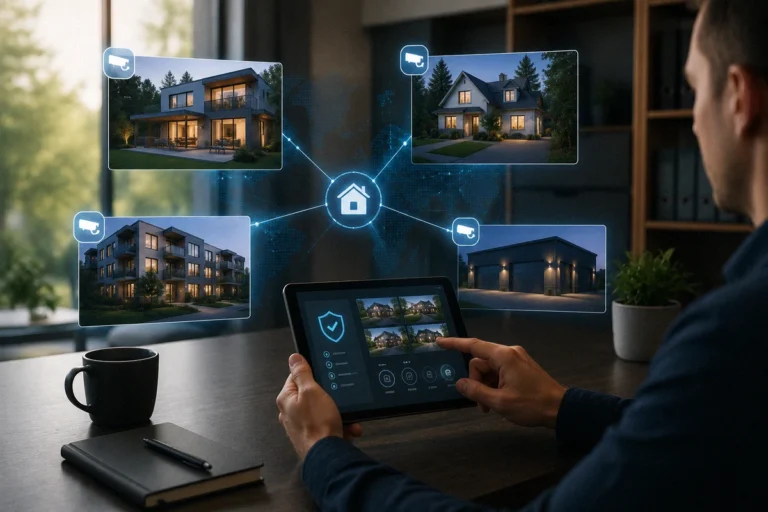
Thankfully, modern security apps make this tracking process incredibly straightforward by organizing device statuses, signal strengths, and power metrics into a single, clean dashboard. A quick monthly review of this interface is usually all it takes to keep your system operating smoothly.
✅ Conclusion
Battery-powered and wired security devices both play essential roles in modern residential protection. Battery devices offer unmatched placement freedom and are ideal for quick DIY projects, apartments, and renters who need to protect a temporary space.
Wired devices provide premium power consistency, advanced software features, and exceptionally low physical maintenance once the initial cable routing is finished. Rather than choosing one style exclusively, most properties find the highest level of protection by combining both technologies into a single framework.
A well-planned hybrid layout balances installation speed with long-term reliability. When you understand the unique technical strengths and limitations of each power style, building a safe, redundant home security framework becomes an easy, stress-free process.