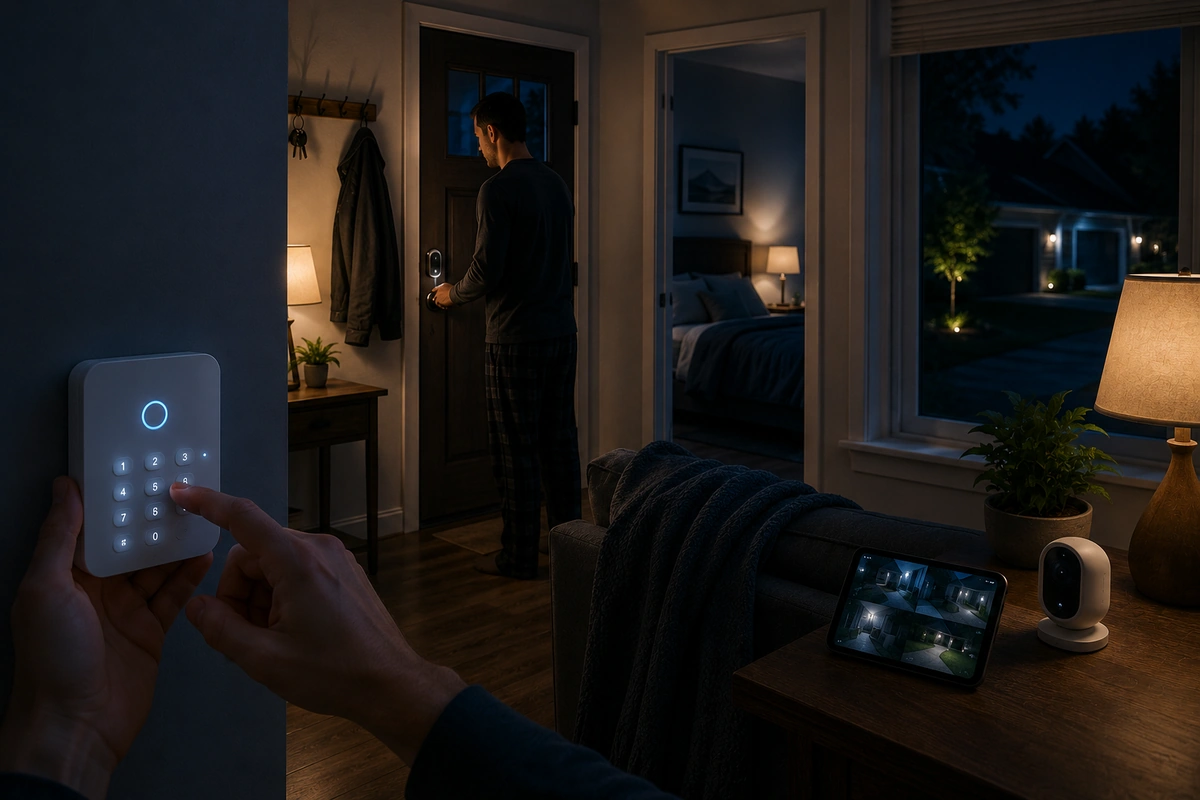
🌙A Simple Nighttime Home Security Routine

TLDR
- A simple nighttime security routine reduces risk more than complex systems you won’t consistently use.
- Layered checks including doors, lights, sensors, and visibility are more effective than single-device reliance.
- Smart habits matter as much as smart devices in home protection.
- Consistency is the real security upgrade most people overlook.
- A 3 to 5 minute routine is enough to meaningfully improve nighttime safety.
Most security incidents do not happen because homes are unprotected. Instead, they happen because small, predictable habits get skipped. Nighttime is where those gaps show up most clearly. You are tired, routines are rushed, and it is easy to assume everything is already fine.
A good nighttime home security routine does not need to feel like a checklist from a control center. It should feel like something you naturally slide into your evening without overthinking.
What we are building here is a lightweight system you can repeat daily without burnout. Think of it as the “last 5 minutes before sleep” version of your home defense.
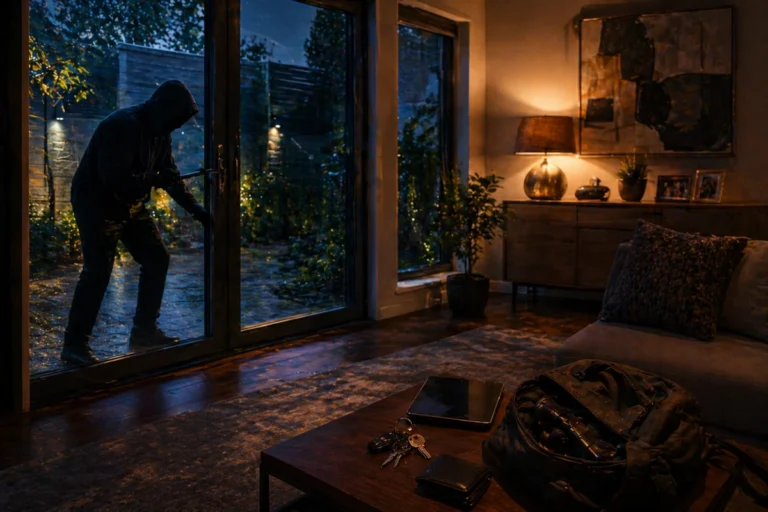
This is especially vital when you consider how home burglaries actually happen, as opportunistic intruders look for the one night you forgot to lock up. By establishing nighttime safety habits home dwellers can rely on, you turn your residence into a difficult target.
Routine Snapshot Table
| Step | Purpose | Time |
| Door and Window Check | Physical security | 1 to 2 min |
| Lighting Check | Visibility deterrent | 1 min |
| Device Check | System readiness | 1 to 2 min |
| Final Scan | Peace of mind | 30 sec |
🚪 Door and Window Check: The Foundation You Never Skip
Before anything else, you want to physically confirm entry points are secure. This sounds obvious, but it is the step most often rushed or skipped entirely. Walk through your main access points: front door, back door, sliding windows, and any ground-level openings.
You are not just checking if they are closed, but whether they are actually locked and fully engaged. Even if you have smart locks vs traditional locks, a physical check provides a necessary layer of human verification.
If you use sensors, this is where they should reinforce your lock doors and windows routine rather than replace it. A quick visual confirmation takes seconds but removes a huge amount of uncertainty. This is a primary component of what DIY home security actually protects against. After a week or so, you stop thinking about security and just do it.
Physical Security Checklist
- Doors: Confirm deadbolts are fully thrown. If you haven’t yet, reinforce your front door for added strength.
- Windows: Check that latches are sealed. Consider DIY window security upgrades for ground floors.
- Sliding Doors: Ensure they are locked from both points. Adding a bar is a great DIY method that works.
- Garage: Verify the interior door to the house is secured. Learning how to secure your garage is a critical part of home security at night.
💡 Lighting Setup: Small Detail, Big Deterrent Effect
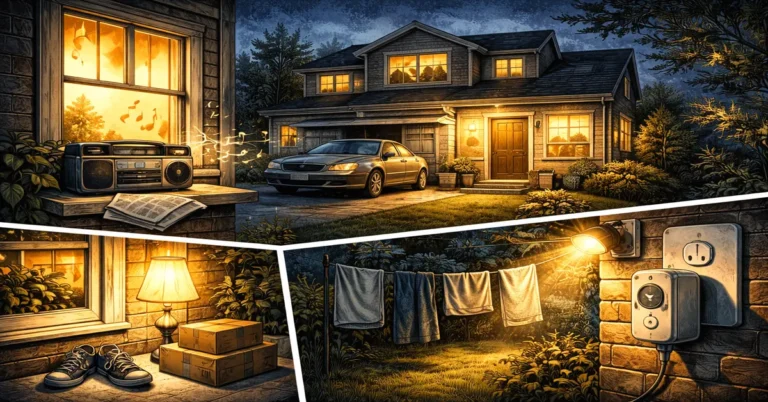
Lighting is one of those underrated layers that quietly does more work than people expect. You do not need a floodlight system. You just need consistent, predictable illumination patterns. The goal of these evening home security tips is simple: remove darkness from obvious entry paths. Motion lights outside or smart lighting to simulate occupancy work toward the same effect.
Inside the home, even a single lamp left on in a common area can make the house feel occupied. This matters more than people realize for deterrence. If you are using smart home devices, consistency is key. Random lighting schedules can actually feel unnatural. Predictability works better than complexity when following a three-minute home security checklist.
Lighting Strategy Options
- Outdoor Motion: Ensure your outdoor motion lighting setup is enabled.
- Interior Timer: Set one common area light to a smart schedule.
- Visibility: Ensure your entryway is visibly lit from an outside perspective.
- Ground Level: Avoid total darkness on first-floor windows where burglars evaluate homes.
📡 Device Check: Ensuring Your System Is Ready
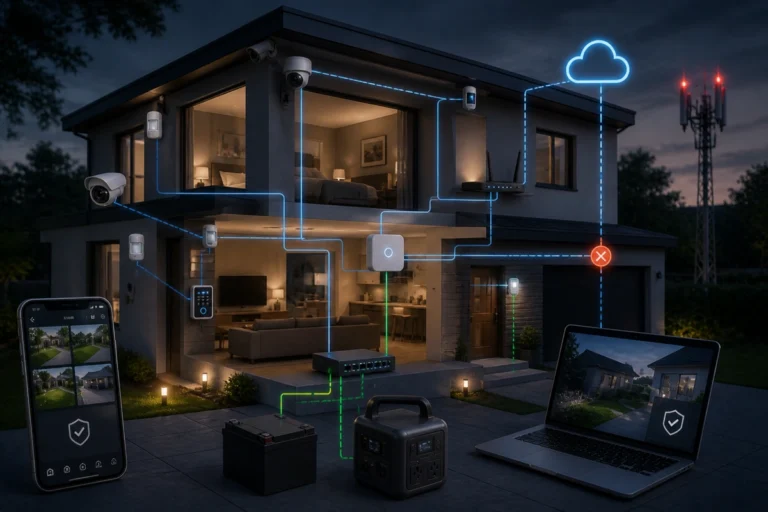
This is where your actual security devices come into play, including alarms, cameras, and hubs. The mistake many people make is assuming that because a system is installed, it is always ready. A quick nightly glance at system status can save you from discovering issues too late. This is a core part of your simple night security checklist.
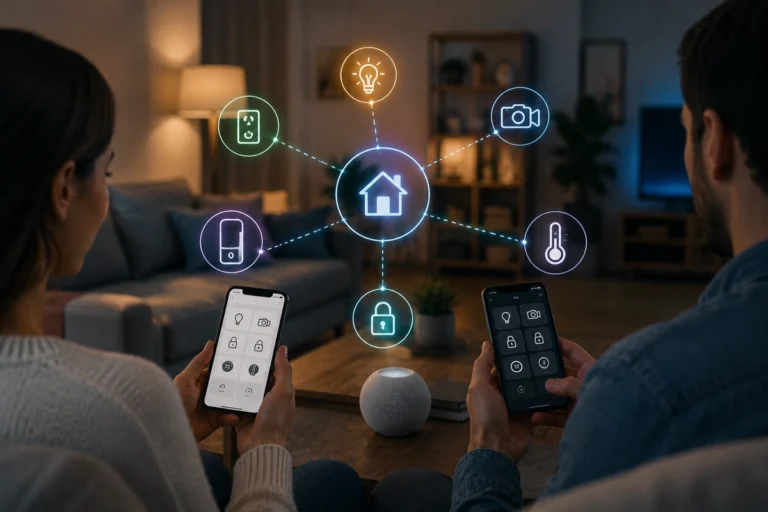
You do not need to dive into settings every night. A basic status check through your app is enough. Look for low battery alerts or connectivity issues. One thing I have noticed over time is that most issues are small and predictable. Catching common DIY home security failures early keeps the system dependable when you need it.
Digital Readiness List
- Sensors: Confirm all are showing active or online in the app.
- Cameras: Verify they are connected. Check where to place security cameras if coverage seems off.
- Power: Address any low battery warnings. Keep redundant power solutions ready for fail-safe planning.
- Alarm: Set your system to stay mode.
👀 Final Scan: The 30-Second Habit
This is the step most people skip, but it is the one that brings the what to do before bed security routine together. You simply take a slow look around your space before heading to bed. You are not checking anything specific here. You are just confirming the environment feels consistent. Doors are locked, lights are on schedule, and the system is armed.
This bedtime check is surprisingly effective because it forces your brain to register the “state of the home” before you disengage for the night. Over time, this becomes the mental switch between active awareness and rest mode. It is a simple way to avoid the security mistakes most people make.
Final Visual Sweep
- Entry Points: Do they look and feel physically secure?
- Atmosphere: Is the lighting behaving as expected?
- Internal Check: Are valuables hidden where thieves don’t look?
- Arming: Confirm the hub shows the system is active for the night.
🧠 Conclusion: Consistency Over Complexity
A nighttime home security routine does not need to be complicated to be effective. In fact, the simpler it is, the more likely you are to stick with it long-term. The real advantage comes from repetition. When you do the same small steps every night, you reduce uncertainty and strengthen your layered home security posture without adding stress.
You do not need perfect systems. You need predictable habits that support whatever system you already have in place. Whether you have best budget home alarm systems or high-end gear, your involvement is the key. Once this routine becomes automatic, you stop thinking of it as security work and more like just part of closing your day.
Good home security at night is a marathon, not a sprint. By testing your home security system regularly and maintaining this routine, you ensure your sanctuary stays that way.