🚘Driveway Alarm Systems: Do You Actually Need One?

TLDR
- Driveway alarms offer early warnings by picking up movement before a visitor reaches your front door.
- They are ideal for rural properties, long driveways, and hidden entry points.
- Tightly packed suburban properties usually get enough coverage from standard security cameras.
- Sensor options include infrared, magnetic probes, and radar technology.
- These tools work best when integrated into a broader, multi-layered home security plan.
That sudden sound of tires on gravel or a car door shutting late at night instantly puts your brain on high alert. You find yourself staring out the window, trying to figure out if it is a delivery driver, a lost neighbor, or a potential security threat.
A dedicated driveway alarm system is built specifically to handle that exact moment of uncertainty. By placing a sensor at the perimeter of your lot, these systems give you an instant heads-up before a visitor ever steps onto your porch.
This advanced warning gives you extra seconds to check your feeds, turn on lights, or lock your entryways. But before investing in one, it is important to look at whether you actually need perimeter sensing or if it will just cause frustrating false alarms. The answer depends on your property layout, location, and existing tech.
🏡 What Exactly Is a Driveway Alarm?
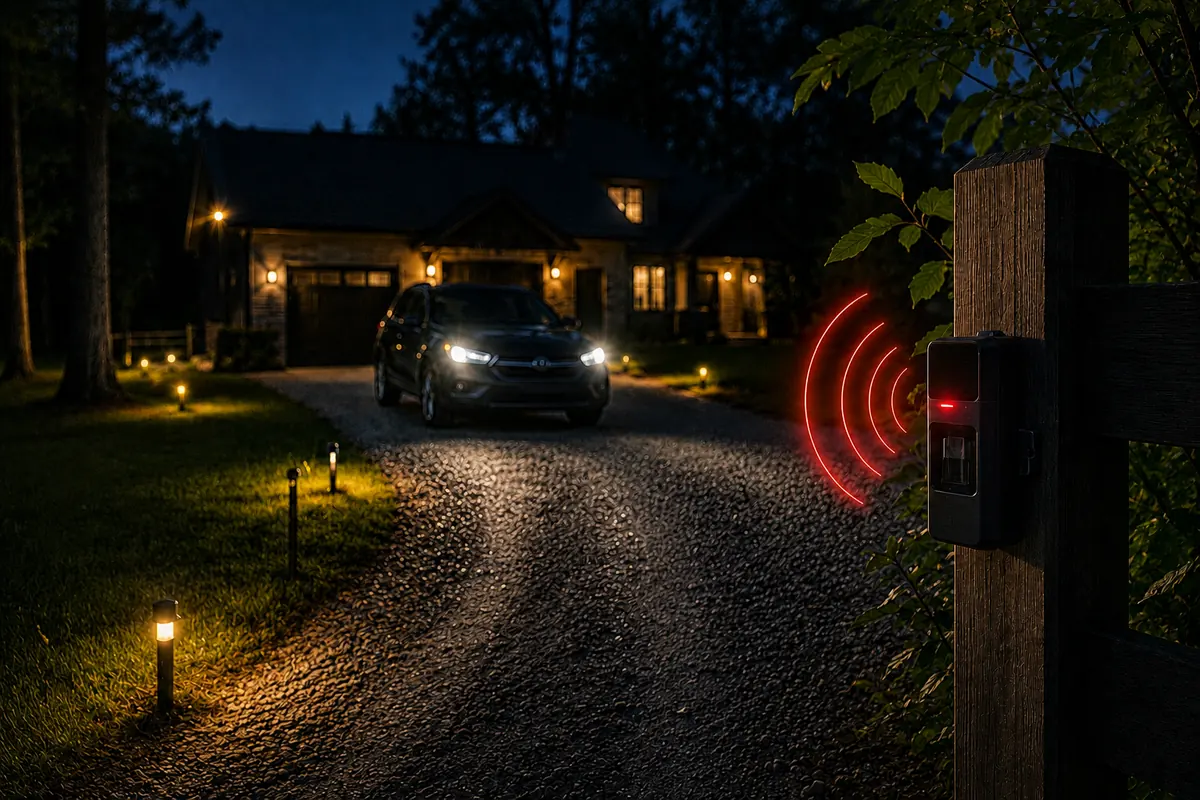
A driveway motion sensor alarm consists of an outdoor sensor paired with an indoor chime or smartphone app. When an object crosses the invisible detection line, the sensor transmits a real-time alert to your house. Choosing the correct sensor mechanism is vital to avoid structural blind spots and constant false alerts.
| Sensor Variety | Primary Advantage | Optimal Use Case |
| Passive Infrared (PIR) | Budget-friendly and easy to install | Standard driveways with clear sightlines |
| Magnetic Probe | Ignores wildlife and blowing leaves | Long lanes where you only track vehicles |
| Radar-Based Sensor | Works perfectly in heavy rain or snow | Regions facing harsh weather patterns |
| Smart Camera System | Captures visual data alongside alerts | Lots already covered by a camera grid |
Most modern consumer options rely on wireless setups and battery power, making installation straightforward for DIYers. Premium units integrate directly into a broader integrated smart home safety system to trigger porch lights or start camera recordings when tripped.
The main rule of perimeter security is that reliability matters most. If your system triggers a loud chime every time a stray animal or blowing branch crosses the path, you will end up disabling it within a week.
🚨 What Problem Does a Driveway Alarm Actually Solve?
These systems are not active barriers and will not physically stop an intruder. Instead, they solve the problem of proximity blindness by pushing your security awareness zone out to your actual property boundaries.
To see if this upgrade makes sense for your home, you need to match the technology to your physical layout. If you don’t evaluate your specific vulnerabilities first, you risk falling into the most common security mistakes homeowners make.
- Extended Driveways: Your home sits far back from the main road, making it impossible to hear approaches.
- Rural Isolation: You live on acreage with no immediate neighbors to spot suspicious activity.
- High-Value Assets: You regularly park work trailers, boats, or expensive vehicles outside.
- Detached Infrastructure: You need to protect a separate workshop or tool shed.
- Blind Spots: Heavy landscaping or sharp corners block your view of the entryway path.
If your front door is only a few feet from a public sidewalk, a driveway sensor drops significantly in value. In dense suburban neighborhoods, trying to use an advanced perimeter sensor usually creates more hassle than actual protection.
In those situations, you are much better off focusing on basic DIY home security upgrades for renters or suburbanites, such as adding a high-quality video doorbell and motion-activated floodlights.
🌙 Why Some Homeowners Swear By Them
For rural homeowners, a perimeter alert system is a baseline safety requirement. The main advantage is time. If you only realize someone is on your property when they turn your front door handle, you are stuck playing catch-up.
Perimeter Defense Strategy: The real value of a driveway sensor is eliminating the element of surprise. Knowing a vehicle has entered your lot long before a knock hits your door completely changes how you respond to nighttime activity.
This early notification is incredibly helpful for countering modern property crimes, like thieves checking car door handles overnight. By analyzing real residential entry patterns, security experts know that speed is a criminal’s biggest asset. Catching them at the entrance of your driveway removes that advantage.
🐿️ The Biggest Complaint: False Alerts
The most frequent issue with these systems is phantom activations. A sensor that chirps constantly because of wind or small animals quickly becomes useless. When false alarms take over, you will likely turn the system off, nullifying your DIY security system investments.
To see how different models handle these issues, you can review the SafeWise driveway alarm sensor breakdown to compare engineering styles against real-world challenges.
If your main goal is tracking cars while ignoring wildlife, a magnetic probe is your best option. Because it only reacts to large masses of metal, it ignores dogs and blowing leaves while cleanly logging every incoming vehicle.
🔒 Are Driveway Alarms Good for Security?
A driveway sensor cannot lock doors or call emergency services on its own. If you treat it as your only line of defense, your property remains highly vulnerable.
Instead, the best driveway alarms for home security serve as the outermost ring of a layered home security framework. Security works best when multiple distinct defense rings overlap.
- Outer Ring: Driveway sensors provide early warning of incoming traffic.
- Yard Ring: Outdoor Motion Lighting removes shadows and hiding spots.
- Property Ring: Surveillance Cameras record active movement along physical walls.
- Entry Ring: Smart Deadbolts offer physical resistance against forced entry.
🛠️ Installation Is Usually Easier Than People Expect
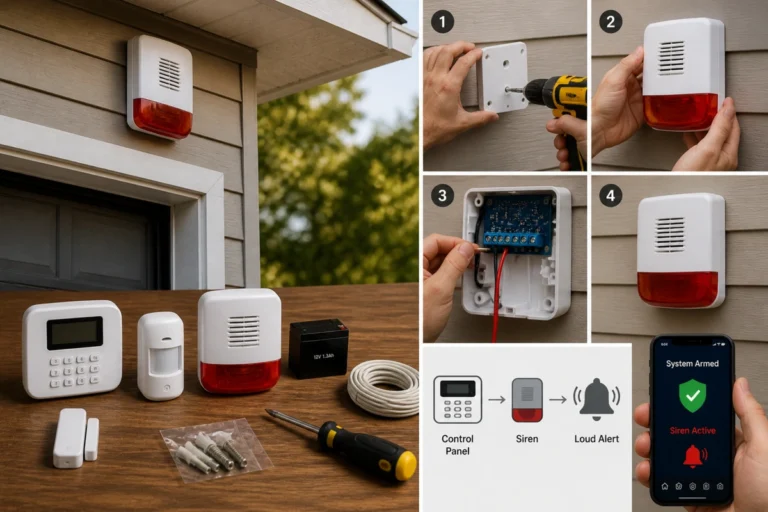
You do not need a professional technician or advanced wiring knowledge to install driveway alert system kits. Modern wireless hardware makes it easy to monitor your perimeter in less than an hour.
- Pair Components: Sync your outdoor sensors with the indoor base station at a table before mounting them outside.
- Set Mount Height: Place sensors roughly 3 to 4 feet off the ground on a post to track vehicles while avoiding ground clutter.
- Check Angles: Position the sensor eye perpendicular to the driveway path to catch cross-traffic cleanly.
- Test Boundaries: Run test drives to calibrate the detection range so it ignores the main public road.
The biggest installation mistake is placing the sensor too close to public streets. If your detection beam covers the sidewalk, every passing pedestrian or school bus will trigger a chime inside your house. Pulling your hardware back 15 feet inside your property line prevents this issue.
👑 Who Probably Doesn’t Need One?
More hardware does not automatically mean a safer home. Before buying more gear, it is always smart to pause and assess your property like a burglar would to find your true weak points.
If you have a short concrete lot where your cars park right beneath your front window, or if you live on a busy urban street with constant foot traffic, a driveway sensor is an unnecessary addition. You can build a highly dependable defense using a minimalist home security setup built around reinforced locks and a simple porch camera.
💰 Are They Worth the Cost?
Perimeter alarms are highly affordable compared to full surveillance grids. You can easily find a reliable system without breaking your budget, making them an excellent choice when designing a home security system on a budget.
Most traditional driveway alarms do not require monthly subscription fees or cloud storage contracts. However, if you are deciding between a driveway alarm and a high-quality outdoor camera, prioritize the camera first for its visual evidence. If you already have a solid camera network, an alarm is a great way to boost your early warning capabilities.
🏁 Final Verdict: Do You Actually Need One?
When reviewing the wireless driveway alarm pros cons, the choice comes down to your land layout. A driveway alarm is an incredibly effective tool for homes with long approaches, blind entryways, or isolated rural yards.
It shifts your home security strategy from a reactive stance to a proactive early warning network, giving you control over your perimeter before a visitor ever knocks on your door.