☠Why You Should Add Smoke, CO, and Water Sensors to Your System

TLDR
- Security systems should protect against more than break-ins: Smoke, carbon monoxide, and water damage are common household risks that smart sensors can detect early.
- Early alerts matter: Connected sensors can notify you quickly, even when you’re not home, helping reduce damage and improve response time.
- Carbon monoxide is especially important because it’s invisible and odorless: A dedicated CO detector is one of the most important safety devices you can have.
- Water leaks often become expensive problems when unnoticed: Small leaks near appliances, sinks, or water heaters can escalate surprisingly fast.
- A layered home safety system works best: Cameras and alarms are useful, but environmental sensors fill major gaps in protection.
When people think about home security, they usually picture cameras, motion alerts, smart locks, and maybe a loud siren that makes everyone in the neighborhood briefly stop what they’re doing. Those tools absolutely matter. But many of the biggest household emergencies have nothing to do with intruders. Fires, carbon monoxide leaks, and water damage don’t politely appear in your driveway where a camera can spot them.
That is where expanding your setup with smoke CO water sensors home devices quietly becomes one of the most useful things you can do. When you explore how home burglaries actually happen, you realize how much focus goes into physical perimeter defense. Yet properties face severe vulnerabilities from environmental elements that standard alarms ignore.
Choosing to add safety sensors to security system installations bridges this gap perfectly. Let’s break down how these devices protect what cameras cannot see.
🚒 Smoke Sensors: Still One of the Most Important Devices
Smoke alarms have been protecting properties for decades, but traditional models only work if you are within earshot. A smart smoke detector integration changes the equation entirely by sending real-time push alerts straight to your phone. This added connectivity is vital when you are traveling, sleeping in a distant room, or managing properties remotely.
According to national safety guidelines published in the NFPA smoke alarm directory, proper device distribution is critical. Devices must be present on every level of the home, inside every bedroom, and outside all distinct sleeping areas to guarantee sufficient warning margins.
Strategic Smoke Sensor Placement
| Target Area | Mounting Strategy | Detection Role |
| Bedrooms | Center ceiling placement | Protects occupants while sleeping |
| Hallways | Outside bedroom clusters | Intercepts smoke traveling through hallways |
| Living Areas | Main ceiling points | Monitors common high-traffic zones |
| Basements | Near stairwells | Catches hidden structural fire risks |
Mounting your sensors properly means keeping them away from kitchen cooking plumes to minimize false alarms. By adding these connected detectors, you ensure your DIY security system remains a dependable shield even when the property is completely vacant.
☠️ Carbon Monoxide Sensors Protect Against an Invisible Threat
Carbon monoxide is one of the easiest household risks to overlook because it is completely invisible, odorless, and tasteless. It can result from malfunctioning gas furnaces, blocked ventilation flues, or vehicles left running in attached spaces. This insidious nature is exactly why a carbon monoxide detector smart home addition is non-negotiable.
Because early symptoms resemble flu-like illnesses, people frequently ignore the warning signs until it is too late. This is a primary example of home security threats most people ignore until a crisis occurs.
Critical Safety Parameters
- Target Placements: Mount CO detectors outside all sleeping quarters and on every floor level.
- Separation Rule: Remember that smoke detectors and carbon monoxide detectors use different physical sensors; do not assume one covers the other unless you buy a certified combination unit.
- Proactive Protection: Learn more about these risks directly from the official CPSC carbon monoxide information center to establish a baseline for your family.
💧 Water Sensors Save You From Costly Disasters
While fire poses an immediate threat to life safety, structural water leaks are often the most expensive headache a homeowner faces. A pinhole leak behind a refrigerator line or a failing relief valve on a water heater can pool quietly for weeks, rotting your subfloor and destroying your drywall long before it becomes obvious.
The real value of water leak detector benefits comes down to instant notification. Catching a puddle when it is two inches wide costs a towel; catching it after it floods a room can cost thousands of dollars.
Smart Places to Install Water Sensors
- Under Major Sinks: Kitchen and bathroom plumbing joints can loosen over time.
- Behind Washing Machines: High-pressure water supply hoses are prone to sudden splits.
- Around Water Heaters: Catch age-related tank failures before the full capacity dumps into your home.
- Sump Pump Wells: Get an alert if the pump fails during a heavy downpour, which is a key part of a minimalist security setup.
📱 Integrating Sensors Into a Layered System
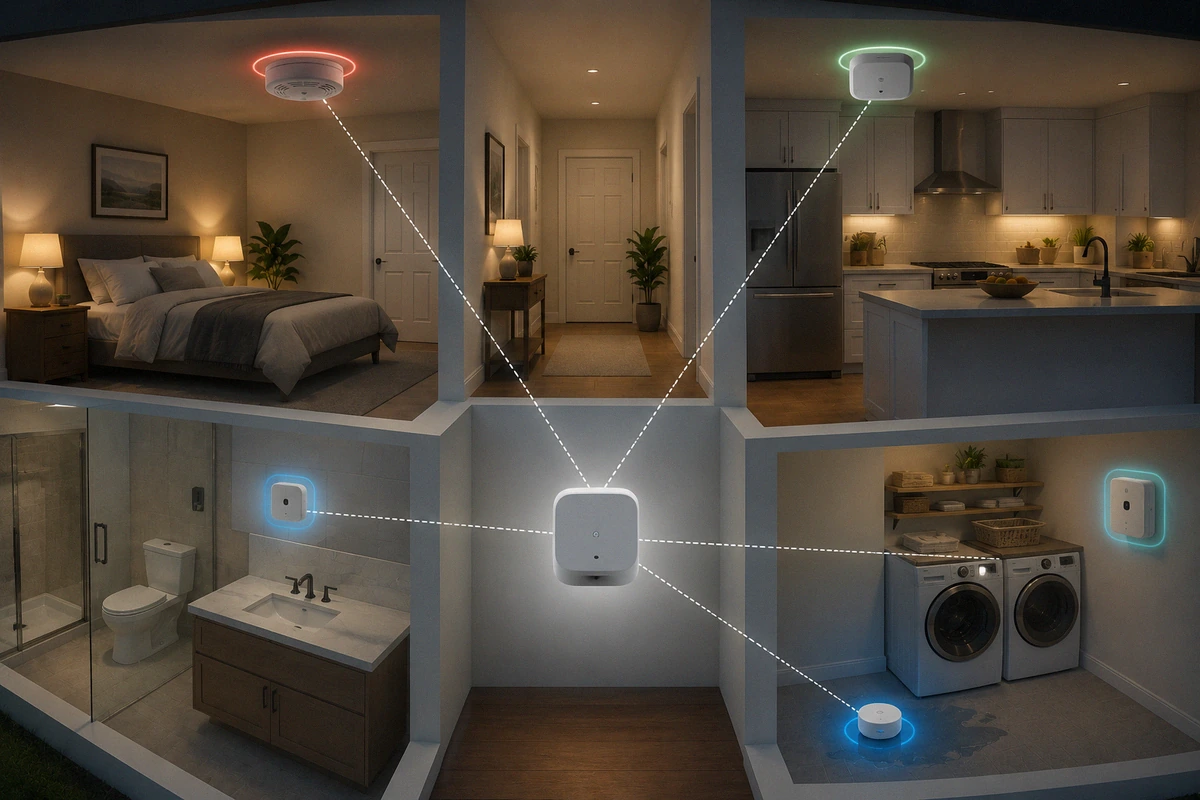
A true integrated home safety system combines observation, detection, and mitigation. When you first establish a layered home security framework, you shouldn’t rely on any single device type to do all the work.
[Perimeter Alarms] --> Catch Intruders at Doors/Windows[Security Cameras] --> Capture Facial IDs and Context[Safety Sensors] --> Monitor Smoke, Carbon Monoxide, & WaterBy linking your environmental sensors to a unified application dashboard, you can build a comprehensive defense profile that is easy to manage on your mobile device. This level of organization is perfect for renters optimizing apartment security, where water leaks from neighboring units are a constant background concern.
Comprehensive Risk Mitigation Matrix
| Household Risk | Frontline Tool | System Integration |
| Intruders / Forced Entry | Contact Sensors | Sounds siren, alerts app immediately |
| Smoldering Fire | Smoke Detector | Wakes occupants, sends remote alert |
| Gas Buildup | CO Detector | Sounds distinct alarm tone, triggers app |
| Plumbing Failures | Leak Sensors | Pins exact location of water pooling |
Understanding why add fire and flood sensors to your layout becomes clear once you realize that internal property hazards are statistically more likely to cause severe property damage than random burglaries.
🧰 Routine Maintenance Keeps Your Shield Active
Like any other component in a wireless network setup, safety sensors require regular upkeep. An unmonitored or dead sensor is nothing more than decoration, which is one of the most common security mistakes homeowners make.
Maintenance Best Practices
- Run Monthly Tests: Press the physical test buttons on your smoke and CO units to verify the sirens.
- Check Expiration Dates: Most carbon monoxide sensors must be replaced entirely every 5 to 7 years.
- Audit Power Levels: Address any low-battery warning alerts through your smart app immediately to prevent blind spots.
- Clean Sensor Leads: Ensure your water sensor probes are free of dust or lint buildup that could insulate them from moisture.
Including these quick checks when you are testing your security system regularly ensures your hardware will perform exactly as expected during an emergency.
🏁 Conclusion: Broadening the Scope of Home Protection
When people begin researching how to start building a security network, the conversation almost always drops straight into picking out cameras and window locks. Those are important physical safeguards, but they are only half the battle.
Choosing to add safety sensors to security system configurations shifts your mindset from narrow anti-theft defense to holistic home protection.
Hardware like smart smoke integration and dedicated moisture sensors ensure you are prepared for whatever emergency develops inside your walls. Take an hour this week to evaluate your baseline plumbing risks, check your alarm expiration tags, and ensure your property is protected from all threats, both visible and invisible.