🚐How to Secure an RV or Mobile Home

TLDR
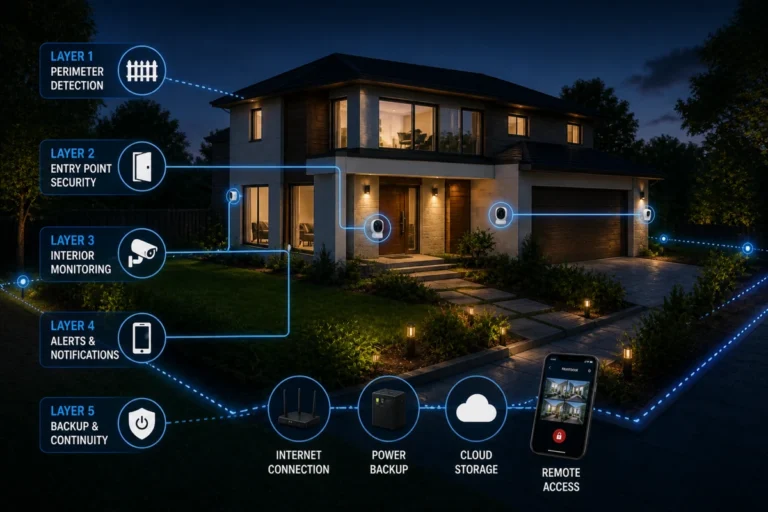
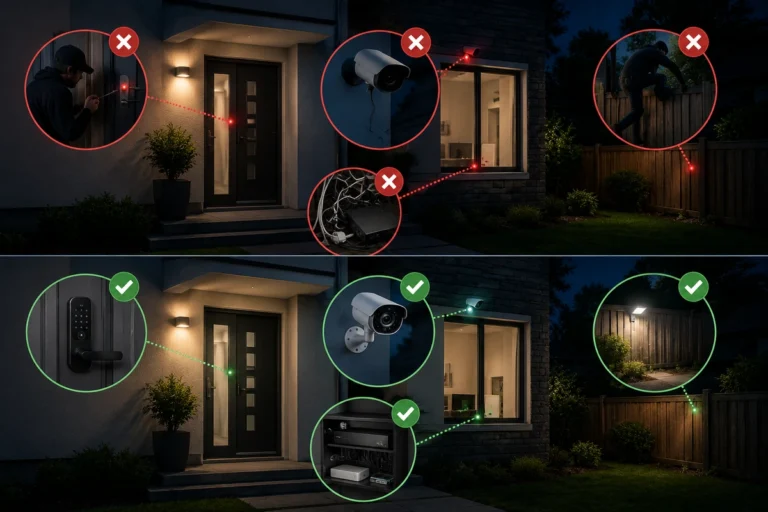
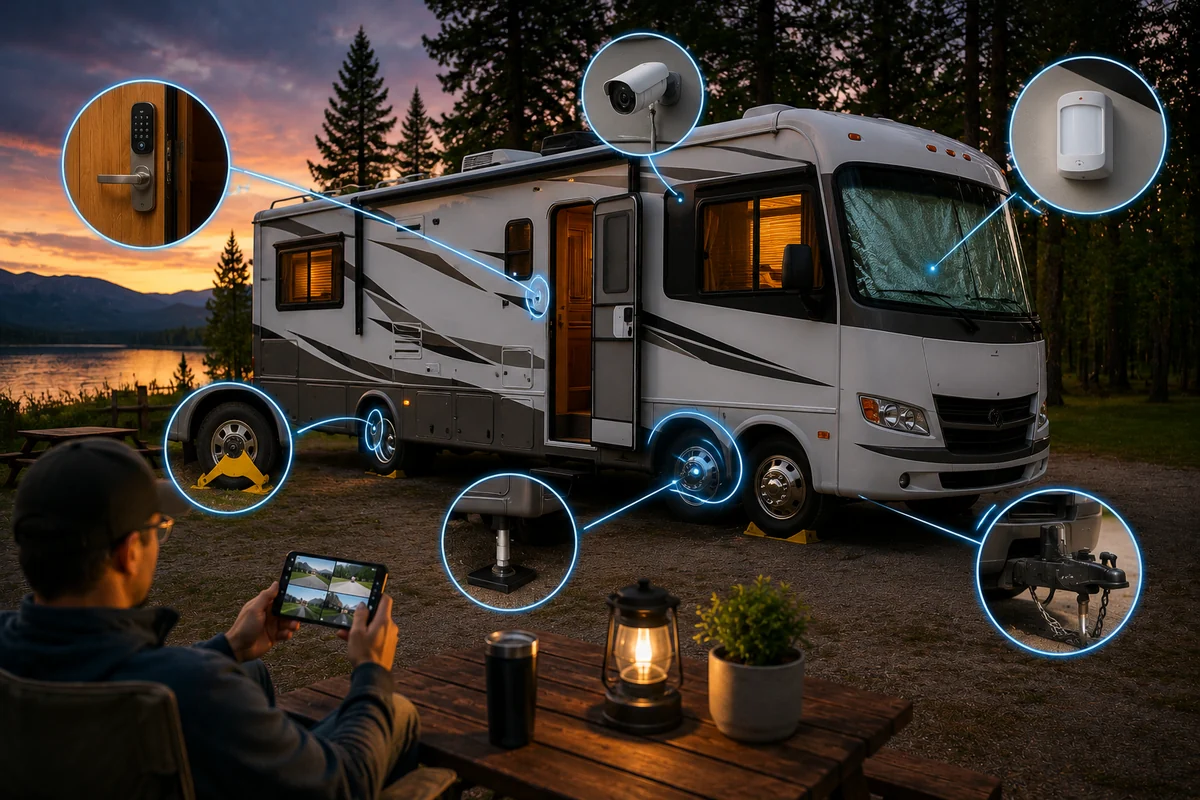
- RVs and mobile homes benefit most from layered security that combines locks, lighting, alarms, and cameras.
- Entry doors, windows, storage compartments, and hitch points are the most common security weak spots.
- Smart security devices make remote monitoring easier, especially when the property is unattended.
- Motion lighting and visible security measures can increase awareness and discourage unwanted visitors.
- Regular maintenance is just as important as buying new security equipment.
Whether you live in an RV full-time, use it for weekend adventures, or own a mobile home in a residential community, safety deserves a little extra attention. Unlike traditional brick-and-mortar houses, recreational vehicles and manufactured houses often feature lighter construction materials, more exposed entry points, and greater mobility.
Those physical differences do not make them inherently unsafe, but they do mean your protection strategy should be tailored directly to the unique way these properties are built and used.
The good news is that establishing a highly resilient protection plan does not require signing expensive monitoring contracts or handling incredibly complicated technical installations. A few smart hardware upgrades and consistent habits can dramatically improve your peace of mind whether you are parked at a remote campsite or settled in a suburban park.
By looking at your property as a series of defensive zones, you can eliminate common vulnerabilities before a prowler ever spots them. Let us dive into the most practical, cost-effective methods to achieve robust RV security and long-term mobile home security.
🔒 Start With the Doors
The main entry door is almost always the first place an intruder looks when checking a property. Unfortunately, factory-installed locks on many standard recreational vehicles and older mobile homes are notoriously weak, often sharing identical key codes across thousands of different vehicle manufacturing runs.
Upgrading this single area is an essential first step to prevent break ins mobile home layouts face.
Before you invest heavily in external tech, you need to ensure the physical frame can withstand a forced entry attempt. If your door does not close smoothly or the latch assembly feels loose, a prowler can easily bypass it with basic hand tools. Solid physical reinforcement must always serve as the foundation of your defensive strategy.
Door Security Checklist
- Deadbolt Functionality: Verify that your deadbolt extends fully into the strike pocket and cannot be shimmied open with a plastic card.
- Door Frame Condition: Inspect the structural frame around the latch for signs of warping, wood rot, or metal fatigue.
- Strike Plate Security: Ensure the metal strike plate is securely attached using long, heavy-duty mounting hardware.
- Lock Alignment: Align the latch assembly so it catches perfectly without requiring you to push or pull violently on the door handle.
- Key Control Practices: Upgrade factory-standard cylinders with unique aftermarket locks so random master keys cannot open your home.
Prioritizing your entryways is a core part of learning diy home security where to start safely. Taking the time to patch these basic physical gaps makes it much harder for an intruder to gain access to your living space.
🪟 Don’t Forget the Windows
Windows are frequently ignored during safety upgrades because most attention naturally goes toward front and rear doors. Yet many mobile structures feature numerous accessible, thin-paned windows that are highly vulnerable to basic tampering. Keeping your window latches in flawless working condition is vital to maintaining complete perimeter protection.
If you are parked in an open area where your interior belongings are clearly visible from nearby paths, you are accidentally inviting unwanted attention. Using simple secondary locking bars and thick curtains when you are away from the property is an easy way to address what makes a home easy to break into without altering your daily lifestyle.
Window Risk Assessment Matrix
| Window Type | Common Operational Risk | Recommended Security Improvement |
| Sliding Windows | Track latches can be easily jimmied or bypassed | Install adjustable track locks or wooden dowels in the frame |
| Awning Windows | Crank mechanisms can fail or loosen over time | Perform regular operational inspections and grease the gears |
| Large Front Windows | High visibility of interior electronics and valuables | Deploy thick privacy curtains, tinted film, or daytime shades |
| Emergency Exits | Accidental misuse or loose exterior sealing latches | Conduct routine safety testing and secure the perimeter seals |
Upgrading these specific weak spots is a low-cost task that immediately changes how an outsider evaluates your structure. For a closer look at affordable window track reinforcements, our guide on diy window security upgrades that actually deter break ins provides simple methods to secure thin frames effectively.
💡 Use Outdoor Lighting Strategically
Bright exterior illumination remains one of the most effective, low-cost deterrents available for any style of residence. Intruders thrive in dark shadows where they can work completely unseen. By bathing your property’s perimeter in clear, bright light, you eliminate their primary advantage and force them to look elsewhere.
For mobile structures, motion-activated lighting is especially useful because it saves valuable battery power while drawing immediate attention to any unusual movement around your site. If you travel frequently, using compact, portable solar fixtures can keep your perimeter bright without draining your internal house batteries.
Best Exterior Lighting Locations
- Main Entry Doors: Illumination directly above the latch prevents a prowler from tampering with your locks in the dark.
- Steps and Walkways: Keeps the immediate approach safe while preventing trip hazards during nighttime hours.
- Parking Areas: Sheds clear light on tow vehicles, tires, and external utility setups.
- Storage Compartments: Discourages thieves from targeting exterior utility bays or equipment lockers under the frame.
- Utility Connections: Keeps your water, power, and propane stations fully visible from the main living area.
Read More
If you want to read more about how proper lighting layouts impact neighborhood safety, checking out this comprehensive guide on recreational vehicle safety configurations can show you how to blend illumination with structural awareness.
Maximizing your light placement makes your entire property much safer. To avoid common setup mistakes like blinding your own security sensors, our practical guide on outdoor motion lighting setup placement and mistakes to avoid offers clean instructions for creating the perfect defensive perimeter.
📷 Add Cameras Where They Matter Most
A dedicated RV camera system setup provides real-time awareness rather than a physical barrier, but that visibility is incredibly valuable when managing a mobile property. Visible cameras send a clear signal to prowlers that your home is actively monitored, instantly raising their perceived risk of being caught.
When securing a mobile home, prioritizing cameras that cover both the front and rear approaches will give you the best overall visibility. For mobile platforms, it is usually best to focus on the main door and your expensive gear bays before trying to cover every single square inch of the vehicle’s exterior walls.
Camera Placement Guide
- Main Entrance: Capture high-resolution facial views of anyone approaching your front step.
- Vehicle Parking Area: Monitors the tow vehicle or commuter car parked alongside the main structure.
- Storage Bays: Keeps a watchful eye on exterior side lockers where expensive gear is stowed.
- Hitch Area: Provides immediate alerts if anyone attempts to mess with your trailer coupler or tongue jack.
- Rear Access Points: Eliminates blind spots near the back utility ladder or secondary emergency exits.
Choosing the right hardware for a mobile footprint requires balancing power needs and connection options. For a deep dive into choosing weatherproof, low-power options, our analysis of the best diy home security cameras for apartments applies perfectly to the compact needs of small mobile spaces.
🚨 Install an Alarm System That Fits Your Lifestyle
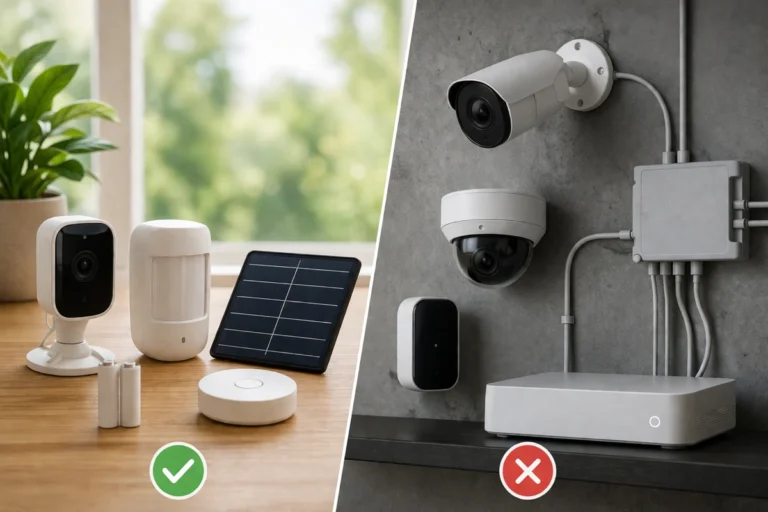
Not every security network is built to handle the unique demands of mobile living. A traditional wired setup can easily fail when exposed to the constant vibration of highway travel, making durable wireless locks and alarms for RV setups the preferred choice for people on the move.
If you leave your property unattended for weeks at a time, having remote mobile alerts can be far more valuable than simply having a loud local siren. Knowing about a broken window or a power failure instantly allows you to contact local park management or emergency services before major damage occurs.
Alarm System Feature Checklist
- Wireless Door Sensors: Installs instantly on lightweight doors without requiring complex internal wiring channels.
- Glass Break Sensors: Monitors large windows for acoustic shock waves or sudden pressure changes.
- Mobile App Notifications: Delivers real-time status updates directly to your smartphone wherever you have cellular service.
- Cellular Data Backup: Keeps the system online even when local park Wi-Fi signals drop out or fail completely.
- Internal Battery Backup: Guarantees continuous protection during power outages or when your house batteries are disconnected.
- Remote System Arming: Allows you to check system status and adjust settings from any location using a web dashboard.
Deploying a flexible, responsive sensor grid gives you an excellent defense against unexpected intrusions. For an open comparison of top-rated, contract-free starter options that fit small spaces, our breakdown of the best budget home alarm systems will help you find a reliable setup that fits your budget.
🔗 Protect the Hitch and Tow Components
For towable units, the hitch assembly is one of the most critical areas to protect. If a thief can back their truck up to your uncoupled trailer, they can tow your entire home away in a matter of minutes. Learning how to secure RV from theft always requires locking down these vital physical towing components.
The real objective here is not necessarily to build an completely unbreakable barrier, but rather to increase the time, noise, and tools required to move the vehicle. Most opportunistic thieves will quickly abandon a target if they realize they have to use loud power tools or grinding wheels to cut through a heavy steel lock in an open neighborhood.
Hitch Security Essentials
- Heavy-Duty Coupler Locks: Encloses the entire hitch ball socket in a hardened steel shroud to prevent unauthorized hookups.
- Hardened Hitch Pin Locks: Secures the receiver bar directly to the tow vehicle frame to prevent simple pin pulling.
- High-Security Wheel Chock Locks: Clamps directly onto the trailer tires to physically prevent the wheels from rolling forward or backward.
- Secure Storage Orientations: Parking the unit with the hitch tongue facing away from the access road makes quick thefts incredibly difficult.
Adding these physical layers can completely change a thief’s risk calculations. To see how these tools fit into a broader property plan, our comprehensive guide on layered home security a practical diy framework will show you how to combine physical towing locks with electronic monitoring tools.
📦 Secure Exterior Storage Compartments
Many property owners stack their most expensive utility gear right in their exterior side compartments. Power tools, portable inverter generators, extra solar batteries, and high-end outdoor equipment are frequently left behind thin plastic doors secured by cheap, mass-produced camper locks that are incredibly easy to pry open with a simple screwdriver.
Inspecting these utility bays regularly and replacing weak factory cam locks with high-quality tubular or electronic combinations can quickly upgrade your storage protection. It is also smart to periodically review exactly what you keep outside, moving your most sensitive gear inside the main cabin when your property is sitting idle.
Commonly Stored High-Value Items
- Inverter Generators: Expensive, highly portable power units that are top targets for campsite thieves.
- Pro-Grade Power Tools: Impact wrenches, cordless drills, and specialty mechanical tools kept for roadside repairs.
- Premium Camping Equipment: High-end portable grills, comfortable camp chairs, and advanced outdoor kitchen setups.
- Lithium Battery Banks: Costly external power storage packs located near the front tongue or side lockers.
- Mobile Electronics: Portable satellite dishes, cell boosters, and expensive exterior entertainment gear.
- Recreational Equipment: Quality bicycles, water sports gear, and outdoor tools left tied to external racks.
Protecting these storage compartments prevents costly out-of-pocket losses. If you are trying to figure out how to keep your most important gear safe, checking our list of the best places to hide valuables and where thieves actually look will help you organize your storage spaces safely.
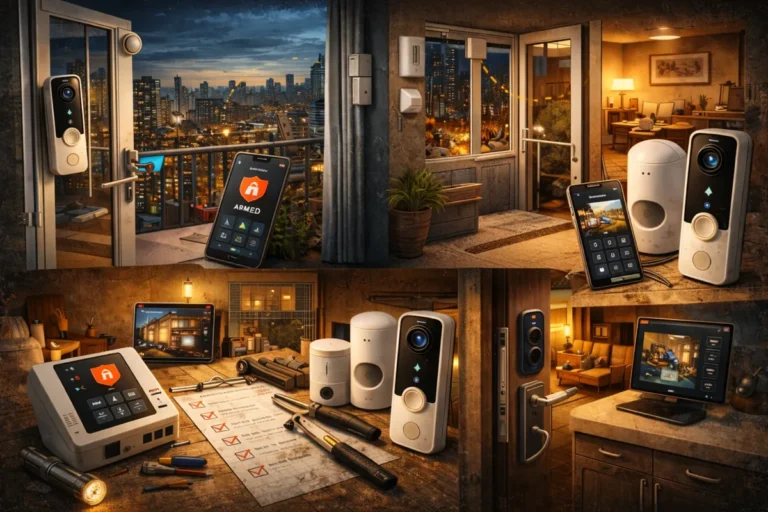
📱 Take Advantage of Smart Home Technology
Modern automated security tech is far more accessible, weather-resistant, and power-efficient than it was just a few years ago. Homeowners no longer have to rely on complicated local wiring setups to keep a watchful eye on their property while they are away.
For seasonal travelers, having real-time remote monitoring tools offers immense reassurance when the vehicle sits in a storage yard over the winter months. For mobile home residents, smart hubs allow you to create the exact same type of seamless perimeter safety network that traditional homeowners enjoy.
Popular Smart Features
- Mobile App Control: Manage your entire security layout and view live camera feeds right from your smartphone.
- Smart Door Locks: Unlock your entryways using temporary digital PIN codes instead of carrying heavy brass keys everywhere.
- Instant Motion Alerts: Receive immediate push notifications the second someone steps onto your patio or porch area.
- Smart Geofencing: Automatically arms your internal security sensors the moment your smartphone moves away from the property.
- Remote System Monitoring: Check on your interior temperatures, power levels, and door sensors from anywhere in the world.
Expert Security Tip
Isolate Your Network: When using smart devices on public park networks, always use a dedicated mobile router with a built-in firewall to protect your cameras and smart locks from digital tampering by other users on the same signal.
Embracing smart automation makes managing your daily safety routine incredibly simple. If you are weighing the pros and cons of cloud-based alert networks, reviewing our guide on local storage vs cloud storage for security cameras will help you find the most stable way to handle your data on the road.
🌳 Pay Attention to Your Surroundings
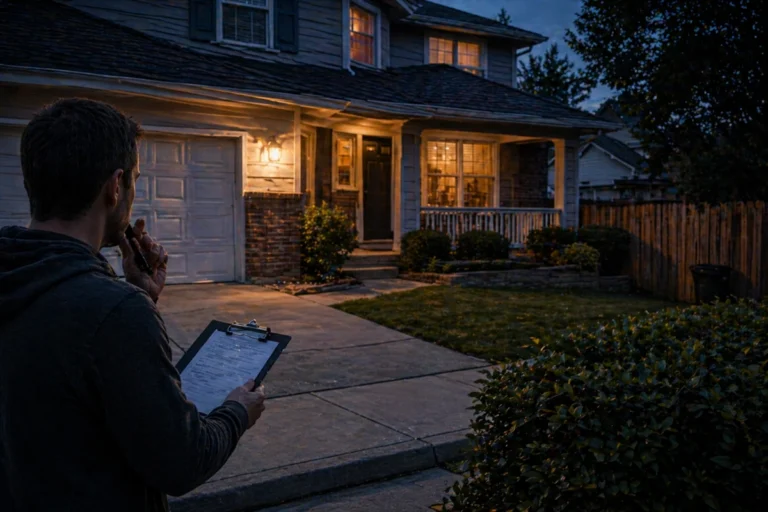
True home safety is never just about buying the most expensive tech gadgets on the market. Simple environmental design and situational awareness play a massive role in how attractive your property looks to potential intruders. Taking a few minutes to evaluate your space from an outsider’s perspective can reveal hidden vulnerabilities you might otherwise miss.
Simple layout adjustments can make a profound difference in your overall protection. Trimming back an overgrown bush that blocks your front window or repositioning a dark parking space can do more to improve your safety than installing an extra set of unmonitored cameras.
Property Walkaround Checklist
- Overgrown Vegetation: Trim back low-hanging limbs and thick bushes that create convenient blind spots around windows.
- Hidden Access Points: Look for dark pathways or gaps in fencing where someone could approach unseen.
- Broken Lighting: Replace burned-out bulbs and clean dirty solar panels to keep your exterior lights bright.
- Damaged Hardware: Inspect your window frames and door panels for cracks, loose screws, or weather wear.
- Visibility Integrity: Verify that expensive laptops or electronics are not clearly visible from public walkways.
- Unsecured Gear: Stash away loose tools, bicycles, and storage bins before turning in for the night.
Being aware of your environment is one of the most effective, low-cost ways to protect your space. For more tips on using your property’s natural layout to deter prowlers, our guide on using landscaping as a home security layer shows you how to design a beautiful, naturally secure perimeter.
🔥 Don’t Overlook Safety Sensors
Property protection and personal safety always go hand in hand. In many cases, the greatest threat to a mobile structure isn’t an outside intruder, it is a fast-spreading kitchen fire, an undetected propane leak, or a dangerous buildup of carbon monoxide inside a tightly sealed space.
Recreational vehicles and manufactured homes can burn incredibly quickly due to their lightweight framing materials. Ensuring your interior safety sensors are fully operational is just as critical as locking your front door.
Essential Safety Devices
- Photoelectric Smoke Alarms: Delivers early warning notices for slow-smoldering fires before they fill the cabin with smoke.
- Carbon Monoxide Detectors: Continuously monitors the air for odorless, invisible gas leaks from gas heaters or exhaust pipes.
- Propane Gas Sensors: Placed low to the floor to catch heavy propane fumes from stoves or lines early.
- Rated Fire Extinguishers: Keep fully charged, accessible extinguishers mounted near the kitchen and the main bedroom exit.
Testing these safety devices monthly keeps them ready to perform when it counts. If you are planning an off-grid electrical setup for your system, our comprehensive solar powered security the ultimate off grid defense guide will help you keep all your alarms and sensors fully powered without relying on shore connections.
🛠️ Make Security Maintenance a Habit
The most advanced security system in the world won’t help you if the batteries died months ago and nobody noticed. Setting aside just a few minutes every month to run through a quick maintenance checklist will prevent unexpected hardware failures and ensure your system is always ready when you need it.
Regular maintenance helps you catch minor issues before they turn into major security vulnerabilities. Taking care of your gear ensures your investment continues to provide reliable protection day after day.
Monthly Maintenance Routine
- Test Door and Window Locks: Check that all deadbolts, latches, and window bars slide smoothly and lock tightly.
- Clean Camera Lenses: Wipe away dust, cobwebs, and road grime to keep your video feeds crystal clear.
- Verify System Alerts: Trigger a test alarm to confirm your smartphone is receiving real-time notifications properly.
- Check Sensor Batteries: Swap out low batteries in your motion detectors and door contacts before they go offline.
- Inspect Exterior Lights: Clean solar cells and verify that motion sensors are triggering at the correct distance.
- Audit Storage Locks: Ensure your utility bay keys turn smoothly and the alignment hasn’t shifted from travel vibrations.
Staying on top of these quick checks keeps your hardware working flawlessly. If you are ready to expand your system over time, our guide on how to upgrade a diy system over time shows you how to build a comprehensive defense framework step by step.
✅ Conclusion
Securing an RV or mobile home does not require transforming your living space into an intimidating, windowless fortress. In reality, the most reliable setups are almost always the simplest ones built on consistent, everyday habits.
Start by reinforcing your doors and window tracks to establish a strong physical perimeter. Add smart, motion-activated lighting to eliminate dark hiding spots, and place cameras where they provide the most useful visibility. Finally, maintain what you install so a dead battery never leaves your property exposed.
Whether you are parked at a bustling holiday campground, living full-time on the highway, or settled into a quiet residential community, property defense works best when it is layered, intentional, and well-maintained. Combining robust physical locks, smart monitoring tech, and solid habits will ensure your home stays thoroughly protected no matter where its journey takes you.