🏠How to Create an “Away Mode” for Your Home

TLDR
- “Away Mode” is about simulating real, unpredictable activity—not just turning lights on and off.
- Randomized lighting schedules are far more effective than fixed timers.
- Combining lights, sound, and small routines creates a convincing “someone’s home” effect.
- Outdoor cues like motion lighting and mail management strengthen the illusion.
- The most reliable setup layers multiple simple automations instead of relying on one trick.
There is a big difference between having a security system and making your home feel occupied when you are not there. That is where a home away mode comes in.
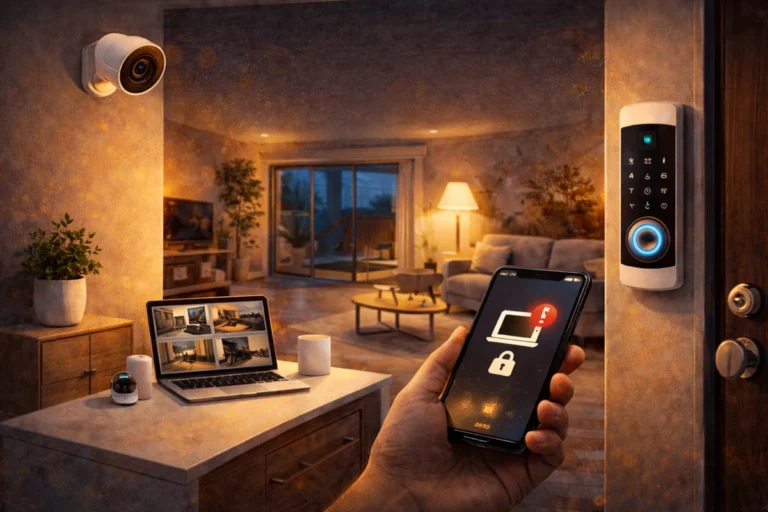
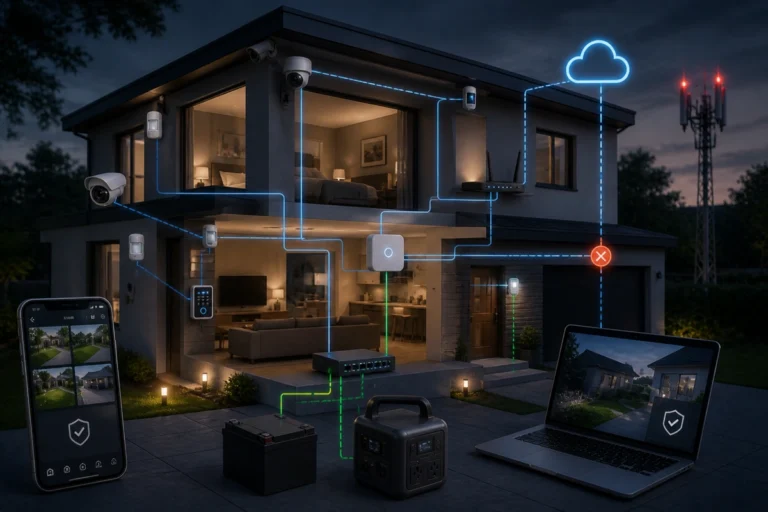
Done right, it does not just switch on a light or two. It recreates the rhythm of daily life: lights turning on at slightly different times, a bit of background noise, maybe even small changes outside. The goal is not perfection; it is believability. You do not need an expensive setup to make it work, especially if you follow a DIY home security where to start guide for the basics.
🧠 What “Away Mode” Actually Means
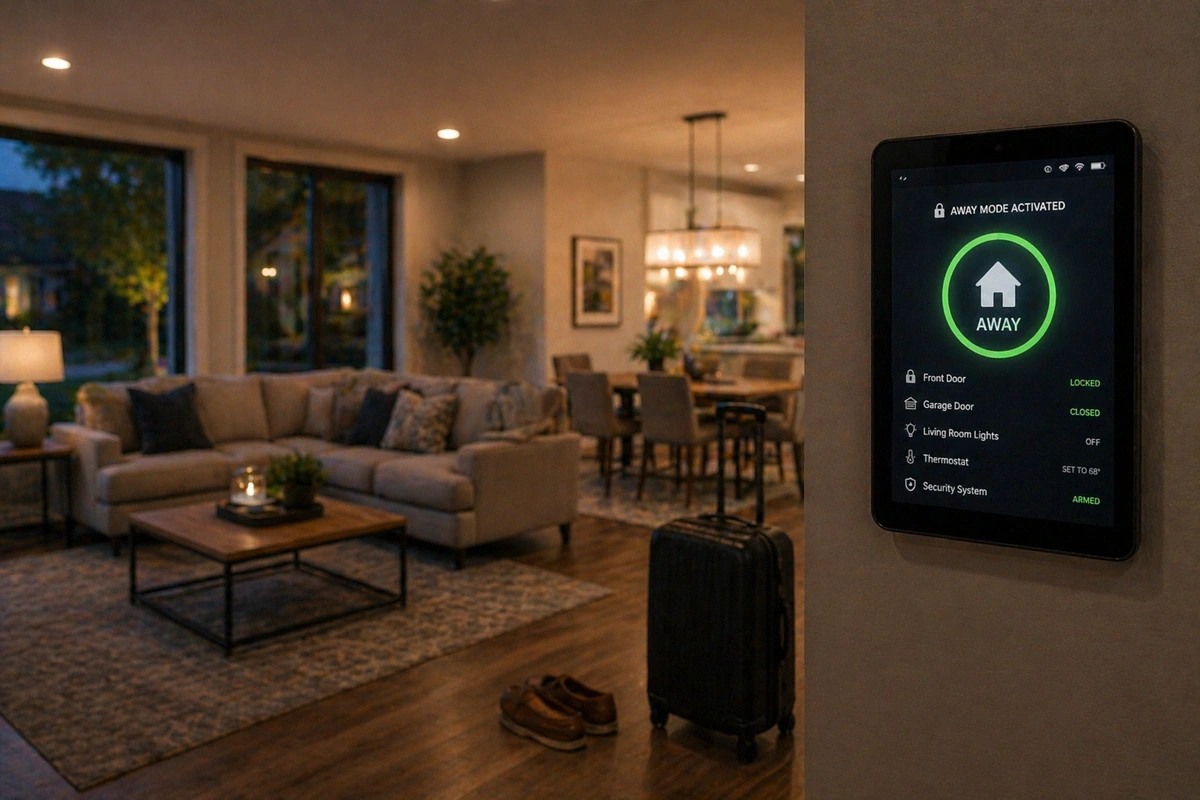
Away Mode is a combination of automated actions that simulate normal activity while you are not home. According to security industry standards, a smart home away mode setup usually includes:
- Lighting schedules
- Occasional sound (TV, radio)
- Motion-triggered outdoor lighting
- Small environmental cues
The key idea is simple: your home should behave the way it normally does, just without you there. This is important because predictable patterns are easy to spot. Real life is not perfectly timed, and your setup should not be either. If you are a tenant, check out DIY home security for renters to see how these automations fit your lease.
💡 Start With Lighting (But Make It Realistic)
Lighting is the backbone of any Away Mode. However, one of the most common security mistakes homeowners make is using a single light that never turns off.
| Approach | Effectiveness | Why It Works (or Doesn’t) |
| One light always on | Low | Signals no one is adjusting it |
| Fixed timer (same time) | Medium | Better, but still predictable |
| Randomized schedules | High | Mimics real human behavior |
| Multi-room variation | Very High | Creates a lived-in, dynamic look |
Research into burglary behavior shows that predictable patterns can actually signal automation rather than occupancy. On the flip side, varied timing makes it much harder to tell if someone is home.
To schedule lights and devices away mode effectively, use two or three lights and stagger them. Living room first, then maybe a bedroom later. It feels natural and is a great way to design a home security system on a budget.
🎲 Add Randomness (The Secret Sauce)
If there is one thing that separates a convincing Away Mode from a weak one, it is randomness. To simulate occupancy smart home style, you must avoid the “robot” look.
Do this:
- Vary light timing by 15 to 30 minutes
- Change which rooms are used each night
- Occasionally skip a light entirely
- Let some lights turn off earlier than others
Instead of this:
- Same lights, same time, every day
- All lights turning on at once
- Lights staying on all night
Unpredictability creates doubt. If you are looking for the best away mode settings for security, many smart home resources suggest that a 30-minute variance is enough to confuse observers.
📺 Bring in Sound for Extra Realism
Lighting alone helps, but adding sound takes things up a notch. A quiet house can feel empty. A house with faint noise, especially in the evening, feels lived-in.
Some easy ways to do this:
- Turn on a TV for an hour in the evening
- Use a radio with talk programming
- Set a smart speaker to play low-volume audio
You can even create away mode without hub control by using simple mechanical plug timers on a radio. It changes the whole “feel” of the house from the outside. This is a subtle layer often discussed in layered home security frameworks.
🌙 Use Outdoor Lighting Strategically
Outdoor lighting is not just about visibility; it is about signaling activity. You want to avoid outdoor motion lighting mistakes like leaving lights on all night without variation.
Well-placed lighting reduces hiding spots and increases the perceived risk for anyone approaching. Motion-activated lights are especially useful because they react to movement, which feels more “alive.” This is far more effective than fake cameras or security signs.
🚗 Don’t Forget the Outside Signals
Away Mode is not just about what happens inside. To learn how to automate home when away, you must also manage the external cues that make a home easy to break into.
External Checklist:
- Ask someone to collect your mail
- Avoid letting packages pile up
- Have a neighbor occasionally use your driveway if possible
- Put bins out and bring them back on schedule
⚙️ Use Simple Automation
You do not need a complex system. If you prefer a minimalist home security setup, basic tools will do the job:
- Plug-in timers for lamps and radios
- Smart plugs with scheduling features
- Smart bulbs with “vacation mode”
- Basic motion sensors for outdoor lights
🏁 Conclusion: Keep It Simple, Make It Believable
Creating an effective home away mode is about small, intentional choices that add up. When those pieces come together, your home tells a simple story: that someone is probably inside.
If you are building a DIY home security system, this is one of the easiest wins. It is affordable and flexible. Start simple, add a layer or two, then step outside and see how it looks.
You might be surprised how convincing it already is. Just remember to keep your tech updated by testing your home security system regularly.