Are Neighborhood Camera Networks Worth It?

Key Take-Aways
- Neighborhood camera networks can help deter some crimes, especially opportunistic ones, but they are definitely not a complete solution.
- Their biggest proven value is helping investigations by providing footage and timelines – in other words, AFTER you’ve got robbed/kidnapped/killed.
- The best approach is to treat them as one layer in a broader home security strategy.
If you’re in any way active in the DIY home security niche, you’ve probably heard about neighbourhood camera networks.
Maybe a few homes on your street install cameras? Then a few more. Before long, there is a loose network of coverage: front yards, driveways, sidewalks, and maybe even shared access through apps or neighborhood groups.
On paper, it sounds like a solid idea. More cameras should mean more security, right?
The reality is a bit more nuanced. Are neighborhood camera networks effective?
They can absolutely help, but they are not the silver bullet people sometimes expect. Whether they are worth it depends on what you think they are supposed to do.
Personally, I’m a very private person, so I don’t bother. I just ensure my own DIY home setup is solid, both on the physical side (strong locks, reinforced doors, simple yet effective cameras and sensors etc.) and the digital side (long, strong passwords, separate network for cameras and a quality VPN).

What Is a Neighborhood Camera Network, Really?
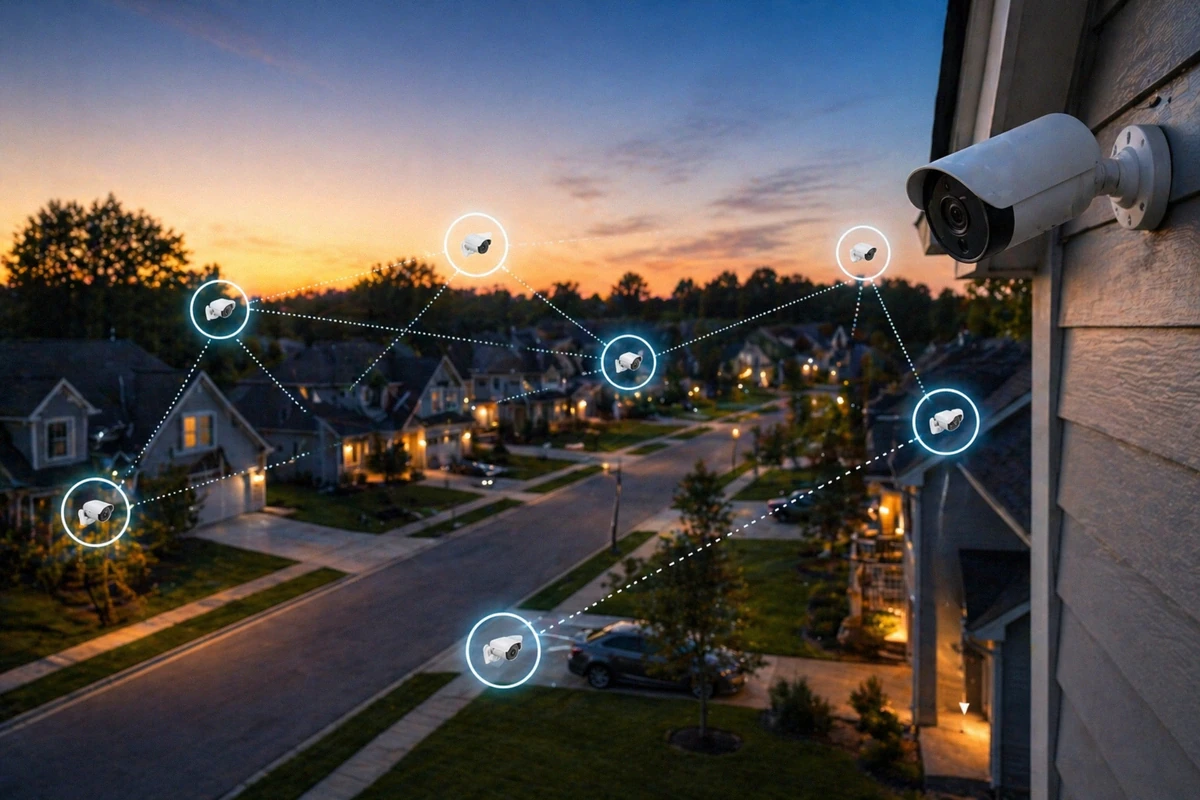
At its core, a neighborhood camera network is just multiple homes using cameras in a way that overlaps or connects. That can look like:
- Individual homes with visible cameras covering shared areas.
- Neighbors sharing footage when something happens.
- Community groups coordinating alerts or clips.
- Systems that allow voluntary video sharing with others.
There is no single standard. Some are informal, like texting a group chat, while others involve setting up neighborhood camera system software like Ring’s Neighbors app or similar community portals.
The key idea is coverage beyond your own front door.
Do They Actually Reduce Crime?
Here is where things get interesting. Research on surveillance cameras shows mixed results.
In some cases, areas with higher camera density see reductions in certain types of crime, especially visible, opportunistic ones.
However, it is not consistent across all environments. Other reviews of residential surveillance show that cameras alone do not always lead to broad crime reduction. What this means in plain terms:
- Cameras can deter some behavior.
- They do not stop everything.
- Results depend heavily on how they are used.
So yes, they can help, but not automatically. It is similar to why most homes are vulnerable despite having locks: gear is only as good as the strategy behind it.
Where They Work Best
Community security cameras tend to shine in specific situations. They are most effective for:
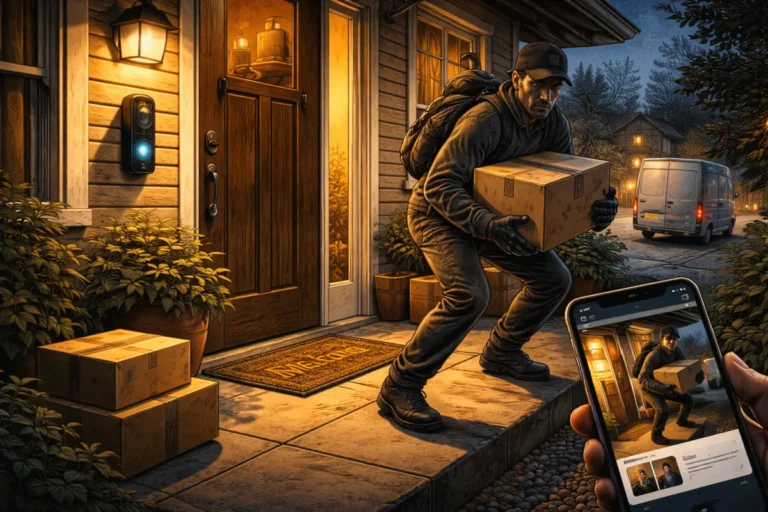
- Package theft and porch piracy
- Vehicle break-ins
- Vandalism
- Suspicious activity tracking
These are typically quick, visible crimes where the presence of cameras changes the risk calculation.
If someone thinks they might be recorded, not just by one camera but several, they are more likely to move on.
This is why many people start by looking for the best DIY home security cameras for apartments or homes that face the street directly.
Their Biggest Strength: Investigations
Here is something that often gets overlooked. Cameras are not just about prevention.
In many cases, the benefits of community surveillance are felt most after something happens. Studies consistently show that camera footage helps:
- Reconstruct timelines
- Identify suspects or vehicles
- Provide evidence for investigations
In fact, some research suggests the investigative benefit is more consistent than deterrence.
That is a big deal.
Even if a crime is not prevented, it is more likely to be understood and sometimes solved.
Now, I have my own thoughts about it.
If you get murdered, do you really care that much that your expansive neighbourhood camera network helps catch your killers? Probably not, because you’d be dead, and you would have been better off investing your money into other ways to stop criminals from entering.
However, I do admit there’s a lot of value in massively aiding the investigation of crimes like kidnapping of theft.
But then again, most police forces tend to be slow and ineffective, and if you’re relying/counting on them to get your stuff back … good luck.
Coverage Matters More Than Quantity
More cameras do not automatically mean better coverage. This is a common neighborhood camera network mistake.
Imagine this scenario:
- House A has a camera facing the driveway.
- House B covers the front yard.
- House C has a doorbell camera pointed at the street.
Individually, each one is limited. But together, they create overlapping visibility. This joint effect of multiple cameras covering connected areas has been extensively studied and can improve overall effectiveness when coverage overlaps properly.
But if all cameras point in isolated directions with gaps in between, the network becomes much less useful. This is why proper camera placement is more important than just buying more gear.
The Limitations
It is easy to get overly optimistic about community security cameras, so let us keep it grounded. Some real limitations include:
- Cameras do not physically stop crimes.
- Offenders can avoid visible camera angles.
- Crimes can shift to less-covered areas, a phenomenon called crime displacement.
- Poor image quality limits usefulness.
- Not all neighbors participate equally.
If you rely solely on cameras, you are also glossing over home security threats most people ignore. You still need to lock your doors and reinforce your windows, for example.
🔒 What About Privacy?
This is where things get personal. Privacy concerns neighborhood cameras generate are legitimate.
Cameras may capture public sidewalks, nearby homes, or people passing by without their consent.
A few practical considerations:
- Be mindful of camera angles.
- Avoid pointing directly into neighbors’ windows.
- Communicate openly when sharing security camera footage neighbors might be appearing in.
Trust plays a big role here. Without it, even a well-intentioned setup can cause friction.
This is why, for me personally, neighbourhood camera networks can fuck off. I have zero trust in people to not abuse the “power” a camera pointing towards my property.
And even if they themselves do nothing wrong with this eye of Sauron into your private life, they could get hacked, because unlike you, they’re probably not using a quality VPN.
How to Use Them the Right Way
If you are considering joining or building a neighborhood camera network, keep it simple:
- Focus on key areas like entries, streets, and shared spaces.
- Aim for overlapping coverage when possible.
- Keep cameras visible because deterrence matters.
- Combine with outdoor motion lighting and other layers.
- Share information responsibly.
Conclusion: Useful, But Not a Standalone Solution
In summation, neighborhood camera networks can absolutely add value. They can make your area feel more active and provide useful footage when something happens.
But they are not a magic fix. Their effectiveness depends on placement, participation, and expectations.
That is the best way to see them: not as a total solution, but as a smart addition to your DIY home defense.
Personally, I don’t bother. I just ensure my own DIY home setup is solid, both on the physical side (strong locks, reinforced doors, simple yet effective cameras and sensors etc.) and the digital side (long, strong passwords, separate network for cameras and a quality VPN).