🛡️Home Security Setup for Families With Kids

TLDR
- Families with kids need a home security setup that balances safety, convenience, and ease of use.
- Smart locks, door sensors, indoor rules, and child-safe automations can improve security without adding stress.
- Alerts and cameras work best when focused on entrances and common areas, not over-monitoring your household.
- Emergency planning matters just as much as devices, especially for older children staying home alone.
- The best family security systems are simple, layered, and easy for everyone in the house to understand.
Home security looks a little different once kids enter the picture. Suddenly, you are not just thinking about basic property protection or package theft.
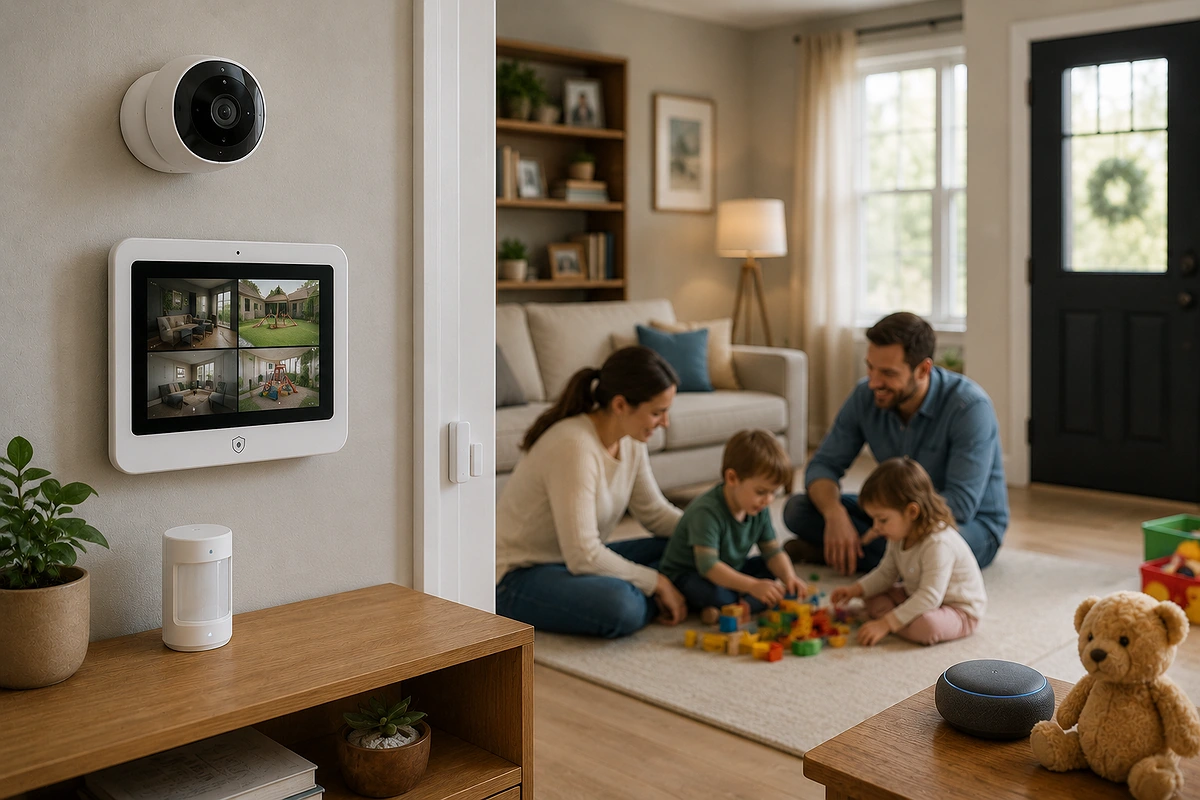
You are thinking about wandering toddlers pulling open doors, kids forgetting to lock up after school, teenagers coming home late, and making sure everyone feels safe without turning your living space into an intimidating fortress. Managing a busy household means balancing external protection with daily interior convenience.
The good news is that you do not need an overly complicated system to protect your loved ones. In fact, for a household with children, simpler is almost always better.
A great setup focuses on visibility, smart habits, and devices that quietly support your routine instead of constantly interrupting it with false triggers. Let’s walk through a practical approach to building a reliable family home security setup that actually works.
🚪 Start With the Entry Points
If there is one place to begin your upgrade, it is your physical doors and accessible ground-floor windows. Busy families naturally create a massive amount of daily foot traffic.
Front doors open constantly for neighborhood friends, garage entries get forgotten during afternoon sports drop-offs, and side doors sometimes become temporary shortcuts that accidentally stay wide open for hours at a time.
When establishing a plan for home security with kids, managing these high-traffic boundaries is your first line of defense. Standard entries are frequently left vulnerable because human error increases when managing a hectic schedule.
Implementing magnetic contact sensors and reinforced hardware ensures that even if someone forgets to check the door, your system remains fully aware of the opening.
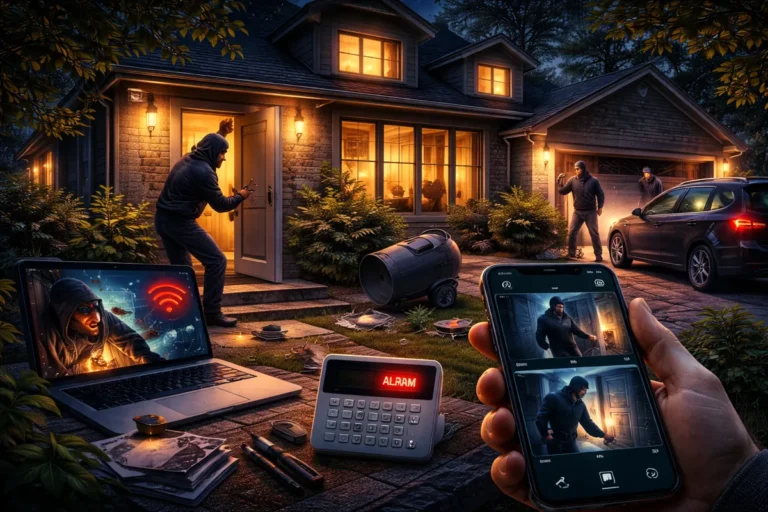
The core objective here is awareness rather than anxiety. You want a system that quietly logs entries and alerts you if an exterior boundary opens unexpectedly, particularly late at night or during typical school hours. Taking the time to secure these paths addresses home security threats most people ignore before they turn into real household emergencies.
Family Entrance Protection Map
| Entry Zone | Hardware Reinforcement | Monitoring Component |
| Main Front Door | Heavy-duty security strike plate | Smart lock + contact sensor |
| Rear Patio Entry | Solid secondary locking bar | Glass break sensor + lighting |
| Attached Garage Door | Reinforced overhead track lock | Tilt sensor + automated closer |
| Ground Windows | Mechanical frame sash locks | Magnetic contact reed switches |
One thing that becomes obvious when analyzing active family households is that the attached garage door gets ignored way more than it should.
Because family members rely on it constantly for loading cars and storing bikes, it quietly becomes the weakest structural link in many homes. Making sure this threshold is monitored helps you realize what makes a home easy to break into so you can seal the vulnerability permanently.
🔐 Smart Locks Make Everyday Life Easier
For busy parents, electronic smart locks are honestly one of the most useful hardware upgrades available. Young children lose physical keys constantly, teenagers forget them on the school bus, and parents frequently find themselves juggling heavy backpacks, strollers, groceries, and about twelve other things while trying to unlock the front door manually.
Implementing automated deadbolts creates a highly efficient child safe security systems environment. Instead of hidden keys under the doormat, older kids can enter a personalized PIN code that automatically notifies your smartphone the second they arrive safely inside.
It completely eliminates the classic stress of lost keys while giving parents full remote control over who enters the property.
[Child Types PIN Code] ---> [Door Unlocks Safely] ---> [Parent Receives "Child Home" Mobile Alert]Expert Security Tip
Keypad Reliability: The most effective smart lock setup for families is usually the least complex option. Physical or backlit rubber keypads often provide much better real-world reliability for young children than voice assistants, advanced smartphone automation chains, or location-based bluetooth geofencing.
The biggest mistake families make is overcomplicating their access rules. Keep your code assignments tight and clean: use one core code for adults, one dedicated code for responsible older kids, and temporary, time-restricted access codes for babysitters or extended family.
Before purchasing a new lock, reviewing a practical smart locks vs traditional locks a security comparison helps ensure your mechanical fallback remains completely dependable.
📹 Cameras: Useful, But Place Them Thoughtfully
This topic can get sensitive very quickly. Visual monitoring tools can absolutely help protect a family, but your device placement needs to be deliberate.
The ultimate goal should be external property perimeter protection and basic entryway visibility, not constant tracking of your children’s indoor lives. Over-monitoring internal spaces can quickly make a home feel sterile and stressful.
When considering placing sensors with children in mind, prioritize your outdoor cameras over indoor living spaces. Focus your lenses on the front porch, the driveway, and the backyard gate access points.
Indoor cameras should be highly situational, limited perhaps to a main toddler playroom or a central living area, and scaled back completely once your children enter their teenage years.
[Outdoor Perimeter Feeds] = High Security Value (Detects External Threats)[Excessive Indoor Monitoring] = Low Security Value (Creates Household Privacy Frustration)Read More
If you are currently evaluating internal device placement, remember to think about camera angles from a child’s specific height. Small kids move differently than adults, and severe blind spots near low door handles, mudroom benches, or basement stairways are surprisingly common when camera lenses are angled too high.
Reviewing where to place security cameras for maximum coverage will help you optimize your camera angles for everyone in the household.
It is also worth noting that kid-focused smart gadgets have drawn academic and regulatory interest regarding user data management.
Researchers looking at smart home tech have analyzed the unfulfilled promises of child safety and privacy in modern consumer monitoring devices. Using local storage options instead of continuous cloud uploads can help keep your family’s daily video data private.
💡 Use Smart Lighting for Peace of Mind
Automated lighting feels incredibly underrated when building a family home security setup. You do not need massive, high-intensity motion-activated floodlights blinding the entire block every time a neighborhood cat walks by. Small, quiet, internal and external automations can make your property feel significantly safer and more predictable for your children.
For families with young kids, automated nighttime illumination matters far more than people realize. Setting low-intensity hallway smart bulbs to activate at a dim 10% brightness between midnight and 6:00 AM helps everyone move safely during nighttime bathroom trips without stumbling into furniture half-asleep.
Automated Lighting Guidelines
- Sunset Trigger: Configure your front porch lights to turn on automatically at dusk so your family never walks up to a dark doorstep.
- Entry Linkage: Link your entry light to your front door sensor, illuminating the main foyer the second the door opens after dark.
- Path Awareness: Place small, plug-in motion nightlights along stairways and long hallways to prevent accidental midnight trips.
- Simulated Presence: Use smart bulb vacation schedules to make an empty house look completely occupied when traveling over school breaks.
Let’s be realistic: parents stepping on sharp toys in total darkness should probably count as a major household safety hazard. Incorporating smart illumination into your outdoor motion lighting setup placement and mistakes to avoid routine keeps your pathways clean, clear, and visible for everyone.
🚨 Keep Alerts Helpful, Not Annoying
This configuration choice is vital for long-term safety. If your smartphone buzzer goes off every single time someone opens the kitchen pantry, steps into the backyard, or walks past a hallway motion sensor, you will experience severe notification fatigue within 48 hours.
Once alert exhaustion sets in, parents inevitably mute the entire app, causing them to miss real, high-priority emergencies.
To build a truly functional family friendly alarm system setup, you must separate everyday household activity from genuine security alerts.
Notification Priority Setup
- High Priority (Keep Enabled): Front door unlocked after midnight, garage door left open for more than twenty minutes, off-hours window opening, or low-battery system warnings.
- Low Priority (Disable or Mute): Daytime movement in common playrooms, backyard motion during afternoon play hours, and interior kitchen hallway activity logs.
Your property defense tools should quietly support your lifestyle in the background, not constantly shout for your attention. Designing your system around a clear layered home security a practical diy framework ensures your alerts remain meaningful, accurate, and actionable.
🛏️ Build a Simple Nighttime Routine
For households with kids, daily consistency is far more powerful than buying expensive new gadgets. A quick, coordinated five-minute nightly security check is significantly more effective at preventing break-ins than adding another high-tech device to a chaotic environment.
You can even involve older children in this process to teach them everyday safety habits. It turns property protection into an engaging, normal household routine rather than a scary topic.
Check Front/Back Deadbolts ---> Verify Garage Overhead Door ---> Confirm Alarm Panel StatusNighttime Family Checklist
- Lock the Doors: Manually check or remotely verify that all exterior deadbolts are fully thrown.
- Seal the Garage: Ensure the main garage overhead door is completely down and locked for the night.
- Arm the Panel: Set your alarm hub to “Home” mode to secure perimeter entry points while letting everyone move freely inside.
- Clear the Walkways: Double-check that main exit paths are clear of toys or obstructions in case of an emergency evacuation.
We frequently overestimate how complicated household defense needs to be. Establishing basic habits helps you avoid the most common security mistakes homeowners make, keeping your family safe through simple, repeating actions.
📱 Set Up Emergency Access for Older Kids
If your children are reaching the age where they can stay home alone for short periods after school, proactive preparation makes a massive difference. While modern smartphone apps provide excellent connectivity, establishing clear, practical expectations is what keeps your kids safe.
Start by creating a simple, physical home safety cheat sheet and mounting it in a highly visible area like the kitchen fridge or mudroom wall. Having a physical reference prevents panic during unexpected situations.
Labeled Home Safety Cheat Sheet
- Emergency Contacts: Clean list of parent cell numbers, trusted immediate neighbors, and official emergency services.
- Alarm Basics: Straightforward instructions on how to disarm the system if an accidental trigger occurs, along with the master cancel code.
- Visitor Rules: Clear, non-negotiable household policies regarding answering the door or using the video doorbell when home alone.
- Evacuation Plan: Simple map showing two distinct ways out of the house in case of a fire or environmental hazard.
Providing clear instruction helps older kids build confidence rather than fear. Reviewing basic system controls ensures everyone understands the difference between diy home security vs professional monitoring setups so they know exactly what happens when an alarm triggers.
🔥 Do Not Forget Safety Devices
True home security is not just about keeping uninvited intruders out of your house. For busy families, environmental hazards like fire, carbon monoxide leaks, and unexpected water damage present a much more frequent threat to daily safety.
Upgrading to interconnected smart environmental detectors ensures that if a fire starts in the basement while you are away, every alarm in the house sounds instantly, and a high-priority notification hits your phone. This provides vital response time, especially if your children are staying home with a babysitter.
Non-Intrusion Safety Hardware
| Hazard Detector | Primary Safety Function | Family Protection Value |
| Smart Smoke Alarm | Rapid thermal and smoke detection | Vital early warning for bedroom areas |
| Carbon Monoxide Unit | Monitored invisible gas tracking | Real-time air quality safety alerts |
| Water Leak Sensor | Placement near washers and water heaters | Prevents expensive structural flooring damage |
| Smart Plug Monitors | Automated appliance shut-offs | Eliminates accidental curling iron or oven hazards |
Sometimes the biggest household emergency has absolutely nothing to do with property crime. Incorporating environmental protection into your overall layout is an essential step when designing a home security system on a budget.
🧠 Teach Security Without Fear
This psychological element may matter most of all. Children should absolutely understand the basic operational fundamentals of your home defense system, but they never need to be exposed to scary, alarmist conversations about worst-case crime scenarios.
Focus on framing security as a normal, healthy part of daily life, similar to wearing a seatbelt in the car or a helmet on a bicycle.
Age-Appropriate Safety Training
- Young Children (Ages 4–8): Focus on simple safety tips for kids at home. Teach them that exterior doors always stay completely closed, never to open the door for strangers without a parent present, and to immediately tell an adult if something feels unusual.
- Older Children (Ages 9+): Learn how to teach kids home security mechanics. Show them how to operate door locks, manage basic alarm panel codes, handle video doorbell interactions safely, and follow designated emergency contact protocols.
When home security is treated as a normal, calm daily routine, children participate naturally instead of resisting the rules or feeling anxious inside their own rooms. Confidence always works better than fear.
🏁 Conclusion
A reliable family home security setup is not about packing your living spaces full of complex gadgets or invasive cameras. It is about building a clean, streamlined system that fits naturally into the hectic flow of everyday family life.
For most properties, that means securing your doors, managing smart notifications, automating lighting, and prioritizing the boundaries that matter most.
The best setups are always the ones that every single person in the house can actually understand and use. Kids can navigate them easily, parents trust their data, and nobody feels overwhelmed by constant digital noise or complicated rules.
Security should ultimately help your household feel calmer and more relaxed. For a busy family with children, finding that perfect balance matters more than anything else.