🔑Best DIY Security Setup for Studio Apartments and Tiny Homes

TLDR
- Small spaces need smart, layered security rather than oversized or expensive systems.
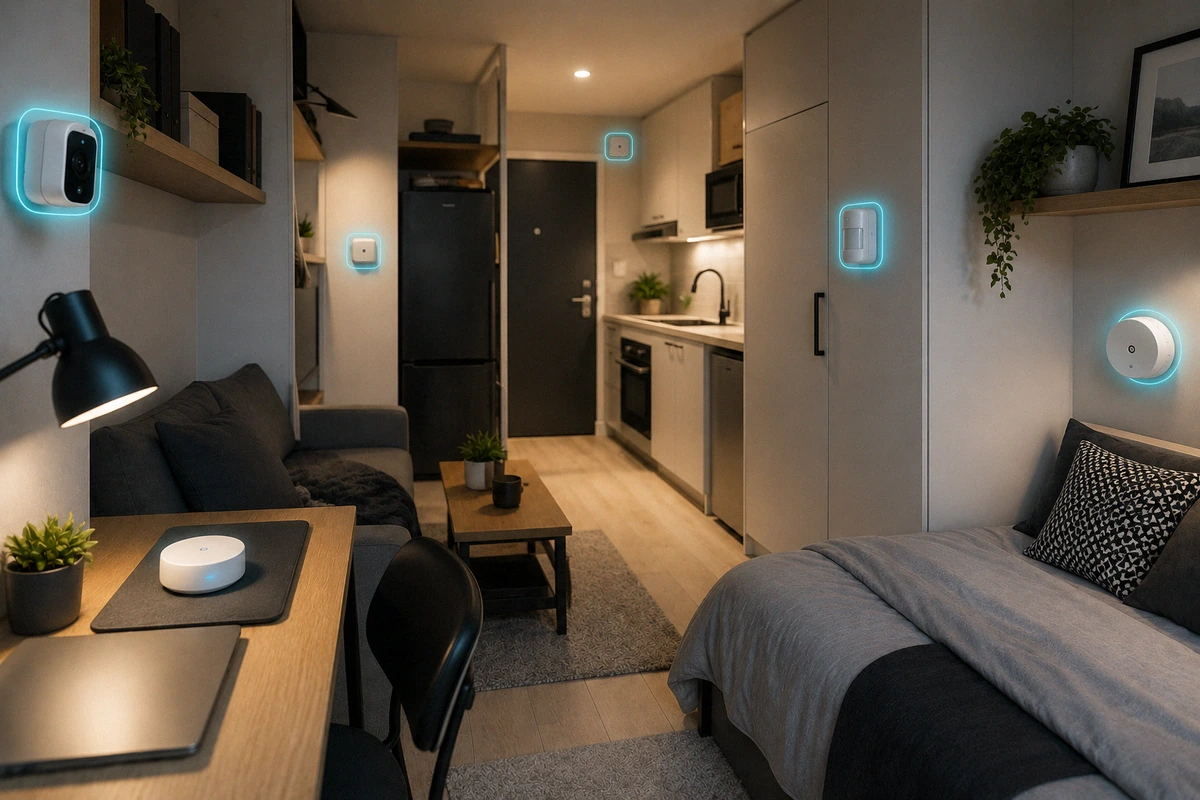
- A simple DIY setup for studio apartments and tiny homes usually includes a smart lock, door sensor, camera, and motion lighting.
- Placement matters more in small homes because one poorly positioned device can create blind spots or constant false alerts.
- Renters and tiny homeowners benefit most from wireless, non-permanent devices that move easily.
- The best setup protects entrances and daily routines without making your living space feel cluttered or stressful.
Living in a studio apartment or tiny home comes with an odd little contradiction. On one hand, smaller spaces often feel easier to secure. There are fewer doors, fewer windows, and usually less square footage to worry about.
On the other hand, every single entry point matters more. When your front door sits six feet from your bed or your kitchen window doubles as a possible access point, security becomes personal very quickly.
The trick is building an effective setup without turning your compact home into a surveillance bunker. The good news is that you can build a genuinely strong system without spending a fortune or drilling holes everywhere. Let’s keep this practical and dive into the exact hardware choices that balance protection with minimalist living.
🚪 Start With the Front Door First
In most studio apartments and tiny homes, your main door is the absolute priority for physical security. Before buying complex cameras or advanced smart gadgets, make sure your first line of defense actually makes sense. Traditional entrance setups often rely on basic builder-grade hardware that offers little resistance against forced entry patterns.
If you are currently evaluating your options, implementing a dedicated small apartment security system begins with physical reinforcement.
For renters, replacing standard strike plate screws with longer versions is an invisible upgrade that significantly increases door strength. If your landlord prohibits hardware modifications, portable physical barriers provide a non-destructive alternative.
Pairing physical reinforcement with basic digital monitoring transforms a weak entrance into a highly secure point of entry. A quality contact sensor on the main door provides immediate awareness of your home’s status, whether you are asleep inside or away at work.
Entry Point Protection Options
| Entry Zone | Hardware Upgrades | Digital Monitoring |
| Main Entrance Door | Grade 1 solid deadbolt | High-accuracy contact sensor |
| Door Frame Strike Plate | 3-inch heavy-duty steel screws | Integrated vibration or shock sensor |
| Front Door Peephole | Wide-angle mechanical viewer | Battery-powered video doorbell camera |
| Sliding Glass Entry | Solid metal security lock bar | Window glass break sensor unit |
One thing that becomes clear with small-space living is that people underestimate how much peace of mind comes from simply knowing your door status at a glance. Taking a proactive approach to your entryway helps you understand why most homes are vulnerable despite having locks installed on the door, allowing you to patch those gaps easily.
📹 One Camera Is Usually Enough
This may sound strange coming from a home security blog, but tiny homes and studio apartments usually do not need a multi-camera network. In smaller spaces, one thoughtfully placed camera covers nearly your entire floor plan. The ultimate goal is maximum visibility without creating unnecessary tech overkill or infringing on your personal privacy.
When establishing security for studio apartment layouts, position your indoor camera facing the primary entry point rather than the entire living area.
You want to capture a clear facial view of anyone stepping through the door while keeping your sleeping or bathroom areas completely out of the frame. For mobile structures or tiny houses, shifting your camera focus toward external perimeter monitoring is often a smarter choice.
Camera Positioning Strategy
- Angle Placement: Position your camera near a corner to maximize the field of view across the primary entry zone.
- Avoid Wall Proximity: Do not place the lens too close to adjacent walls, as infrared reflections will blind night vision modes.
- Height Adjustment: Mount the device at a height of six to seven feet to capture clear faces without being easily reached.
- Privacy Controls: Utilize built-in geofencing features that automatically disable indoor recording whenever you are at home.
A common mistake is putting cameras too high or too close to obstructions, creating awkward blind spots. Small homes magnify these installation errors because there is less room for correction. If you are selecting a device, checking out our comprehensive guide on home security cameras explained types features and use cases will help you choose the right model.
🔐 Smart Locks Make Tiny Living Easier
If there is one upgrade that consistently proves its value in smaller homes, it is an electronic smart lock. Small-space living often involves a lot of daily shuffling, such as managing shared apartment entryways, carrying groceries through tight hallways, or dealing with physical keys during bad weather.
Upgrading your locking mechanism provides both improved convenience and superior keyless entry management.
Integrating automated deadbolts into a compact home security system allows you to monitor entry status directly from a smartphone app.
For those who rent, look for retrofit smart locks that attach directly onto the interior side of your existing deadbolt. This keeps your landlord’s original physical key perfectly functional on the outside while giving you complete wireless access on the inside.
Expert Security Tip
Mechanical vs Digital Balance: While keyless entry tools provide incredible convenience, they must always be paired with a solid physical lock structure. Before choosing a digital upgrade, reviewing a detailed smart locks vs traditional locks a security comparison ensures your physical cylinder remains strong against manual picking or bumping techniques.
Many landlords will gladly approve non-destructive lock upgrades if the original hardware can be reinstalled prior to your move-out date. Choosing the right device improves your daily workflow while adding an active layer of defense to your main entrance.
🚨 Sensors Matter More Than Motion Detectors
This is a detail that catches many small-space residents completely off guard. In large, sprawling suburban homes, interior motion detectors are highly effective for covering wide hallways and living rooms. In a tiny home or a studio apartment, active interior motion sensors can become incredibly annoying, triggering false alarms when you move around at night.
When designing the best DIY security for small spaces, a perimeter-first sensor approach is much more effective than tracking internal motion. Placing contact sensors on accessible windows and your main entry door secures the boundary of your home without interfering with your interior movements.
Perimeter Sensor Checklist
- Front Entryway: High-priority contact sensor to log every door opening and closing event.
- Ground-Floor Windows: Magnetic sensors placed on any window frame accessible from the street or ground level.
- Balcony or Sliding Doors: Heavy-duty tracking sensors combined with physical secondary locking bars.
- Emergency Alarms: Integrated smoke, carbon monoxide, and water leak sensors to protect against environmental hazards.
Smaller layouts naturally reduce potential hiding spots, which means knowing if an entry point has been opened matters far more than tracking movement inside the living space.
If you are trying to decide which hardware options fit your budget, balancing your hardware types based on a clear motion sensors vs contact sensors what you actually need comparison prevents wasteful overspending.
💡 Smart Lighting Adds Quiet Security
Lighting works differently in compact living spaces. You do not need massive, blinding commercial floodlights blasting your neighbors every time a small animal walks past your window. Instead, you need soft, intentional, automated illumination that improves visibility while making your home look occupied from the outside.
For tiny homes parked on open land, exterior motion lighting creates an excellent deterrent zone around your perimeter. For studio apartments, automated indoor smart bulbs simulate occupancy when you are working late or traveling for the weekend.
Read More
If you want to maximize your visibility without running complex electrical lines outside your tiny home, look into off-grid illumination options. Reading our solar powered security the ultimate off-grid defense guide provides excellent strategies for setting up sustainable, low-maintenance exterior lighting arrays.
Smart Space Lighting Check
- Sunset Automation: Set interior entryway smart bulbs to automatically activate at sunset so you never return to a dark apartment.
- Motion Sensors: Mount small, battery-operated motion lights near dark outdoor paths or storage compartments.
- Away Modes: Configure smart lighting schedules that mimic your normal daily routine when you travel out of town.
- Path Visibility: Install low-wattage interior nightlights to navigate your space safely at night without turning on bright overhead fixtures.
Security setups always function best when they blend seamlessly into your daily life rather than shouting for attention. Combining automated lighting with clear window treatments ensures your home remains private and secure from outside observation.
📶 Think About Wi-Fi Before Buying Devices
This is a critical technical factor that gets overlooked constantly during hardware installations. Most modern DIY security systems rely heavily on your local wireless network to transmit video clips and send mobile push notifications.
While small homes offer excellent signal coverage due to their compact footprints, overloading a budget router with smart devices can quickly cause connection drops.
When configuring a wireless security small home setup, strive to keep your device footprint lean, efficient, and direct. A highly dependable small-space system typically requires only a smart lock, one camera, a few contact sensors, and a few smart bulbs.
[Internet Router] ---> [Smart Lock] + [Single Camera] + [Perimeter Sensors] = Lean & Stable System[Internet Router] ---> [Excessive Cameras] + [Unnecessary Smart Gadgets] = Network Overload & DropsAdding endless wireless accessories tends to create severe notification fatigue rather than delivering any meaningful security improvements. If you want to maintain a fast network, taking the time for optimizing wi-fi for home security devices ensures your camera feeds remain responsive and clear.
🧳 Renters Need Flexible Security
If you occupy a rental studio apartment or live a nomadic lifestyle in a mobile tiny home, hardware flexibility is an absolute requirement. You want to avoid permanent wall drilling, complex rewiring, or heavy hardware that cannot be easily packed away at the end of a lease cycle.
Investing in a renter friendly security small apartment layout means choosing high-quality, adhesive-mounted hardware options. Wireless sensors and battery-powered cameras can be uninstalled in under ten minutes without leaving any permanent marks on your walls or window frames.
For those looking for broader market insights, looking at recent discussions on consumer tech trends highlights how manufacturers are focusing more on creating versatile portable security devices for modern apartments and rental properties.
Portable System Benefits
- Damage-Free Install: High-strength double-sided adhesive tape holds sensors securely without damaging wall paint or trim.
- Easy Moving: Pack up your entire security array into a single small box whenever you decide to relocate.
- Scalable Hardware: Expand your wireless hub with additional sensors if you move into a larger home down the road.
- Zero Rewiring: Battery-operated components eliminate the need for complicated electrical work or professional installation fees.
Nobody wants to invest their hard-earned money into a security system that becomes completely useless after one lease cycle. Focusing on modular, adaptable devices protects your current living space while preserving your long-term security investment.
🌙 Create a Tiny-Space Night Routine
One of the single best advantages of small-space living is that physical security checks are incredibly fast. You do not have to wander through multiple floors checking dozens of windows or locking three different patio doors before going to sleep. A comprehensive nighttime routine in a studio or tiny home takes less than two minutes.
Developing reliable daily habits is the foundation of a layered home security a practical diy framework. Automated tools provide excellent data, but your personal routine ensures those tools are actively armed and ready to protect you.
Plaintext
Check Entry Deadbolt --> Verify Window Latches --> Check App Sensor Status --> Arm System to Home ModeNighttime Safety Snapshot
- Lock the Deadbolt: Confirm that your primary door lock is physically thrown and secure.
- Secure the Windows: Double-check that accessible ground-floor windows are fully latched.
- Arm the Sensors: Switch your alarm hub into “Home” mode to activate your perimeter sensors while disabling interior motion rules.
- Check the Camera: Verify that your external camera feed is online and operating properly.
- Charge Your Phone: Keep your primary notification device plugged in right next to your bed for easy emergency access.
Simple habits quietly make a massive difference in your overall safety posture. When your security tools match your daily habits, protecting your property becomes completely effortless.
🏁 Conclusion
The ideal portable alarm for tiny homes and studio apartments is usually much smaller and more focused than people expect. You do not need to purchase massive hardware packages or pay expensive monthly monitoring subscriptions to achieve complete peace of mind. In compact spaces, deliberate device placement and high-quality choices matter far more than pure equipment quantity.
A heavy-duty lock, a couple of smart perimeter sensors, one well-positioned video camera, and automated lighting will create an incredibly resilient security foundation. The true goal of any home defense project is simple confidence.
You want a setup that helps you sleep better at night, allows you to leave home without second-guessing yourself, and protects your property without cluttering the small space you worked so hard to make comfortable. Compact homes deserve smart, streamlined protection too.