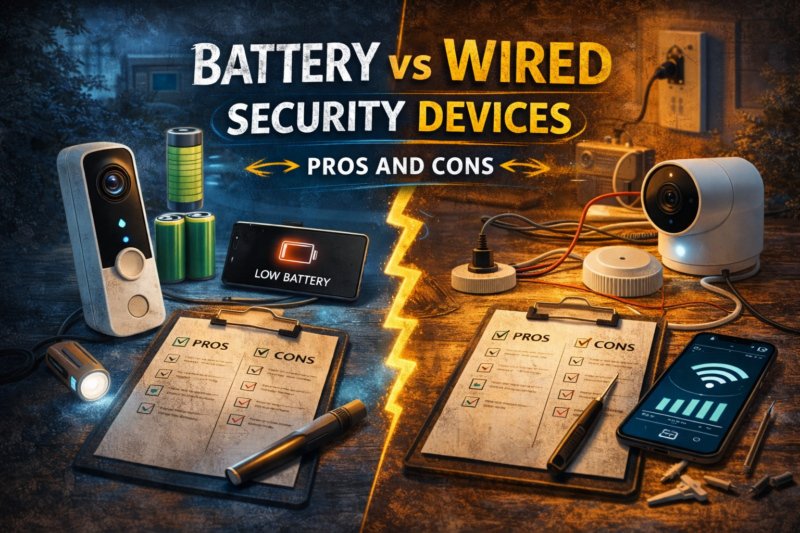
Battery vs Wired Security Devices: Pros and Cons
TLDR
- Battery-powered security devices are easy to install and flexible in placement but require periodic battery replacement
- Wired devices provide consistent power and often more stable performance but require more complex installation
- Battery devices are ideal for renters, apartments, and locations without nearby outlets
- Wired systems reduce maintenance and are often preferred for permanent camera installations
- Many modern DIY setups combine both battery and wired devices for a balanced, reliable system
One of the first decisions you face when building a home security system is surprisingly simple: how your devices get power.
Some cameras, sensors, and alarms run on batteries. Others connect directly to household electricity through wiring. Both approaches work well, but they serve slightly different needs.
Understanding the advantages and tradeoffs helps you design a system that fits your home, your lifestyle, and your comfort level with maintenance.
After working with both types over the years, I’ve noticed that the “best” choice often depends less on the device itself and more on where and how it will be used.
Let’s break down what each option offers.
What Battery-Powered Security Devices Are
Battery-powered security devices rely on internal batteries instead of direct electrical wiring.
You’ll commonly see battery power used in:
- Wireless security cameras
- Door and window sensors
- Motion detectors
- Smart locks
- Video doorbells
These devices connect to your system through wireless communication protocols such as Wi-Fi or specialized radio signals.
Because they do not require electrical wiring, installation tends to be straightforward.
That convenience is one of the main reasons battery-powered equipment has become so common in modern DIY systems.
Advantages of Battery-Powered Devices
Battery-powered devices offer several practical benefits.
The biggest advantage is installation flexibility. Since no wiring is required, you can mount cameras or sensors almost anywhere.
Outdoor cameras can be installed on walls, fences, or sheds without running power cables. Entry sensors simply attach to doors or windows using adhesive or screws.
This flexibility is particularly valuable for renters or apartment residents who may not be allowed to modify electrical wiring.
Battery devices also make system expansion easier. Adding a new camera or sensor usually takes minutes instead of hours.
From my own experience, that freedom is incredibly useful when experimenting with coverage areas. You can reposition devices quickly until you find the ideal spot.
The Maintenance Tradeoff
The main drawback of battery-powered devices is maintenance.
Batteries eventually run out, and when they do, the device stops functioning until they are replaced or recharged.
Most modern security devices are designed to conserve energy. Motion-activated cameras and low-power sensors can run for months or even years on a single set of batteries.
However, the exact lifespan depends on several factors:
- Device activity levels
- Temperature conditions
- Video recording frequency
- Battery type and quality
Cold weather can also shorten battery performance for outdoor devices.
Fortunately, most systems send notifications when battery levels become low, giving you time to replace them.
Still, keeping track of multiple devices can require occasional attention.
What Wired Security Devices Are
Wired security devices draw power directly from your home’s electrical system or through dedicated low-voltage wiring.
Examples include:
- Wired surveillance cameras
- Hardwired alarm sensors
- Video doorbells connected to existing doorbell wiring
- Alarm panels connected to household electricity
Because these devices receive constant power, they do not depend on battery replacement to stay operational.
This continuous power supply creates a different set of advantages.
Advantages of Wired Devices
Reliability is the primary strength of wired security equipment.
Devices that receive constant power can operate continuously without worrying about battery levels. Cameras can record longer video clips, stream higher-resolution footage, or operate continuously if configured that way.
For homeowners planning long-term installations, this consistency is appealing.
Wired cameras are also common in systems that use network video recorders or centralized storage. These setups often rely on Ethernet cables that provide both power and data connectivity.
Another benefit is reduced maintenance. Once installed, wired devices usually require very little attention beyond occasional software updates.
If you prefer a “set it and forget it” approach, wired equipment can be attractive.
Installation Complexity
The biggest challenge with wired systems is installation.
Running power or data cables through walls, ceilings, or exterior surfaces can require tools, planning, and sometimes professional assistance.
This is not always practical for renters or people who prefer minimal home modification.
Even in single-family homes, running cables across large distances may involve drilling or routing wires through attic spaces.
For that reason, wired installations tend to be more common in new construction or major home renovations.
DIY enthusiasts can certainly install them, but the process requires more effort than mounting a battery camera.
Reliability During Power Outages
Power outages affect wired and battery-powered devices differently.
Battery-powered cameras and sensors may continue operating during an outage, assuming their internal batteries still have charge.
Wired devices lose power when household electricity stops unless they are connected to backup power systems such as battery backups or uninterruptible power supplies.
Many alarm panels include internal backup batteries specifically to address this issue.
In practice, both types can remain operational during outages if the system includes appropriate backup power.
This is one reason redundancy planning matters in any security setup.
Performance Differences
Battery-powered cameras often conserve energy by limiting certain features.
For example, many battery cameras record short clips triggered by motion rather than streaming continuously. This helps preserve battery life.
Wired cameras, by contrast, can operate continuously because they receive constant power.
They may also support higher bitrates, longer recording durations, or faster response times in some configurations.
However, advances in battery technology and device efficiency have significantly narrowed this gap in recent years.
For most homeowners, both types provide more than enough performance for everyday security monitoring.
Environmental Considerations
Outdoor installations introduce additional factors.
Extreme temperatures can affect battery performance. Cold weather, in particular, may shorten battery lifespan or temporarily reduce capacity.
Manufacturers design outdoor devices to operate within specific temperature ranges, but conditions still influence how frequently batteries need replacement.
Wired devices avoid this issue because they rely on constant electrical power.
That said, proper weatherproofing and installation are still important regardless of power source.
Hybrid Systems: The Best of Both Worlds
Many modern DIY security setups combine battery and wired devices.
For example, you might use wired cameras around the perimeter of a home where power access is available, while relying on battery sensors for doors and windows throughout the house.
Smart locks typically use internal batteries regardless of the broader system design, while alarm hubs often connect to household electricity with battery backup.
This hybrid approach offers flexibility without sacrificing reliability.
Personally, I find mixed systems the most practical. Wired cameras handle continuous monitoring, while battery sensors make installation easy throughout the house.
The combination keeps things simple while maintaining strong coverage.
Choosing the Right Option for Your Home
Selecting between battery and wired devices depends on several practical questions.
Consider:
- Do you own or rent your home?
- Are electrical outlets available near installation locations?
- Are you comfortable running cables through walls or ceilings?
- How often are you willing to replace batteries?
- Do you want continuous recording or motion-based recording?
Your answers will guide the best solution.
Apartments and rentals often favor battery-powered equipment. Permanent home installations often lean toward wired cameras for long-term convenience.
Neither choice is inherently better. Each simply fits different circumstances.
Maintenance Expectations
Every security system requires some maintenance, regardless of power source.
Battery devices require occasional replacement or recharging. Wired systems require periodic inspection of cables, connections, and firmware updates.
Routine checks help ensure everything continues operating as expected.
Fortunately, modern apps simplify this process by showing device status, connectivity health, and battery levels in one place.
A quick monthly glance at the system dashboard usually keeps everything running smoothly.
Conclusion
Battery-powered and wired security devices both play important roles in modern home protection.
Battery devices offer unmatched installation flexibility and are ideal for renters, apartments, and quick DIY setups. Wired devices provide consistent power and lower maintenance once installed.
Rather than choosing one exclusively, many homeowners benefit from combining both.
A well-designed hybrid system balances convenience, reliability, and long-term practicality. When you understand the strengths and limitations of each power option, building that balance becomes much easier.
The end result is a system that fits your space, your technical comfort level, and your day-to-day routine.