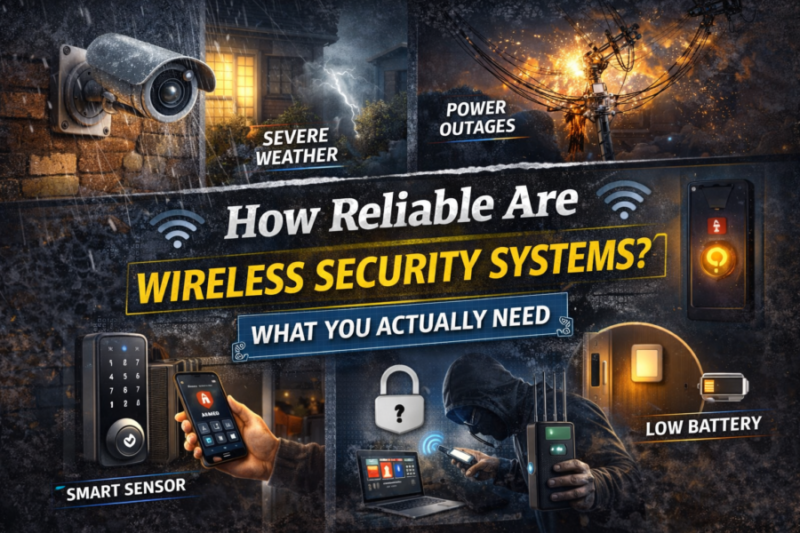
How Reliable Are Wireless Security Systems?
TLDR
- Modern wireless security systems use encrypted radio protocols and supervised signals to maintain reliable communication
- Battery backup and cellular redundancy improve performance during power or internet outages
- Signal interference and poor placement are the most common causes of reliability issues
- Regular maintenance, firmware updates, and battery checks are essential for consistent operation
- When properly installed and configured, wireless systems can be highly dependable for residential use
Wireless security systems used to have a reputation problem.
Years ago, people worried about dropped signals, easy interference, and weak connections. If you still picture unreliable sensors randomly disconnecting, you are thinking of much older technology.
Today’s wireless systems are fundamentally different. The real question is not whether wireless systems work. It is how reliable they are in everyday residential use and what factors actually affect performance.
Let’s take a practical look.
How Wireless Security Systems Communicate
Wireless alarm systems rely on radio frequency communication between sensors and a central control panel.
Most residential systems use dedicated low-power radio protocols rather than standard Wi-Fi for sensor communication. These protocols are designed for short bursts of encrypted data, such as when a door opens or motion is detected.
Because the sensors are not streaming video or large data files, bandwidth requirements are minimal. The system only transmits small signals when something changes.
This focused design contributes significantly to reliability.
Signal Supervision and Heartbeats
Modern wireless alarm systems typically use what is known as signal supervision.
That means sensors do not just communicate when triggered. They also send periodic check-in signals to confirm they are still connected and functioning. If the panel does not receive a scheduled check-in, it can alert you to a communication problem.
This supervision reduces the risk of silent sensor failure. If a device goes offline, you are notified rather than left unaware.
It is one of the key improvements that separates current systems from older wireless designs.
Encryption and Security Standards
Another concern people raise is signal interception.
Current wireless systems commonly use encryption to protect communication between sensors and control panels. Encryption helps prevent unauthorized devices from mimicking or spoofing sensor signals.
While no wireless technology is immune to theoretical attacks, encryption and authentication protocols significantly reduce practical risk in residential environments.
From a reliability standpoint, encryption does not weaken performance. It strengthens system integrity.
What About Signal Interference?
Wireless systems operate within regulated radio frequency bands. Like any radio device, they can experience interference under certain conditions.
Common household materials such as concrete, metal framing, and large appliances can reduce signal strength. Distance between the sensor and panel also matters.
However, most residential systems are designed with sufficient range to cover typical home layouts. Many manufacturers specify indoor ranges that account for walls and normal construction materials.
If a signal is weak, relocation of the panel or sensor often resolves the issue. Placement matters more than most people expect.
Battery Reliability and Power Backup
Wireless sensors typically operate on batteries.
Battery life depends on usage frequency and environmental conditions, but many sensors are designed to last months or even years before replacement is needed. Systems provide low-battery alerts well in advance of failure.
The control panel itself often includes a backup battery. In the event of a power outage, the system continues functioning for a limited period.
For additional redundancy, some systems include cellular backup. If internet service is interrupted, the system can still transmit alerts using cellular networks.
From a reliability perspective, battery backup and cellular redundancy are major advantages.
Internet Dependence: What Really Requires Wi-Fi?
There is a common misunderstanding that wireless alarm systems stop working if Wi-Fi goes down.
In most professionally designed systems, core sensor communication does not rely on your home Wi-Fi network. Sensors talk directly to the control panel using dedicated radio frequencies.
Internet connectivity is typically required for remote app access and cloud-based notifications. If Wi-Fi fails but the panel remains powered, local alarms still activate.
If the system includes cellular backup, remote alerts can continue even during internet outages.
Understanding this distinction is important when evaluating reliability.
False Alarms and Human Factors
Reliability is not just about signal strength. It is also about how accurately the system responds.
Wireless motion sensors use passive infrared detection to identify changes in heat patterns. Proper installation height and angle are essential to reduce false triggers.
Door and window contact sensors rely on correct alignment between magnet and sensor. Poor installation can cause intermittent alerts.
In my experience, most reliability complaints stem from installation mistakes rather than technology failure. Taking time to position devices correctly pays off.
Environmental Considerations
Temperature extremes can affect battery performance. Very cold conditions may temporarily reduce battery efficiency, which is why manufacturers often specify operating temperature ranges.
Outdoor wireless devices should be rated for weather exposure. Moisture and dust can degrade components if the device is not designed for exterior use.
Choosing equipment rated for your environment is part of building a reliable system.
Wireless vs Wired: Is Wired More Reliable?
Wired systems eliminate radio interference because sensors connect physically to the control panel.
In commercial or high-security environments, wired systems are often preferred for maximum signal stability. They are less vulnerable to radio jamming and do not rely on batteries for sensors.
However, installation complexity and cost are significantly higher. Running wires through finished walls is not practical for many homeowners.
For typical residential use, modern wireless systems provide dependable performance when properly installed. The trade-off favors flexibility and ease of setup without sacrificing core functionality.
Jamming Concerns
Radio jamming is sometimes cited as a vulnerability of wireless systems.
Intentional jamming requires specialized equipment and proximity. Many modern systems include detection mechanisms that recognize sustained radio interference and trigger alerts if abnormal signal disruption occurs.
While no consumer system can claim absolute immunity, the practical likelihood of targeted jamming in typical residential settings remains low compared to opportunistic entry methods.
Physical door reinforcement and layered detection remain far more critical.
Maintenance: The Often Overlooked Factor
Even the most advanced system requires maintenance.
Battery replacement, firmware updates, and occasional system testing ensure consistent performance. Most manufacturers recommend periodic testing to confirm that sensors and alarms trigger correctly.
Neglecting maintenance can create reliability issues that are entirely preventable.
I personally recommend setting calendar reminders twice a year for system checks. It keeps everything predictable and avoids surprises.
Where Wireless Systems Excel
Wireless systems are particularly well suited for:
- Apartments and rental properties
- Homes without pre-installed wiring
- DIY installations
- Gradual system expansion
You can add sensors without drilling into walls or pulling cable. That flexibility allows you to build layered protection over time.
Reliability in these scenarios is not just about signal strength. It is about adaptability.
The Bottom Line
So how reliable are wireless security systems?
When using modern, encrypted, supervised equipment installed correctly within recommended range limits, they are highly dependable for residential applications.
Most issues arise from poor placement, neglected batteries, or lack of updates rather than inherent technology flaws.
Wireless systems offer flexibility, scalability, and redundancy through battery and cellular backup. For most homeowners and renters, they provide a practical balance between reliability and convenience.
Like any security measure, they work best as part of a layered strategy. Reinforced doors, proper lighting, cameras, and consistent habits complement the alarm system.
Security is rarely about choosing perfect technology. It is about choosing well-designed tools and using them intentionally. Wireless systems, when treated that way, perform exactly as they are meant to.
Blog
-

Best Budget Home Alarm Systems
Budget home alarm systems can provide solid protection without long-term contracts or expensive professional installation.
-

Best DIY Home Security Cameras for Apartments
Apartment security does not require a complicated system.
