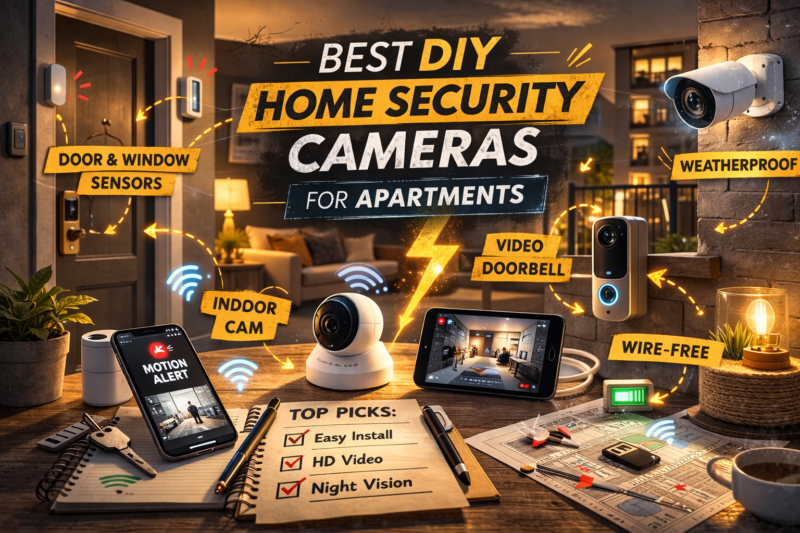
Best DIY Home Security Cameras for Apartments
TLDR
- Apartment security cameras should be compact, renter-friendly, and easy to install without drilling
- Indoor cameras with motion detection and mobile alerts provide effective monitoring for small living spaces
- Battery-powered models offer flexible placement where outlets are limited
- Privacy features such as camera shutters and activity zones help avoid recording shared hallways or neighbors
- Reliable Wi-Fi connectivity, clear night vision, and app usability matter more than having dozens of extra features
Apartment living has its perks. Maintenance is usually someone else’s problem, your commute might be shorter, and there is less space to manage. But when it comes to security, apartments bring a few unique challenges.
You usually cannot drill holes into walls or run cables through ceilings. Outdoor cameras might not be allowed on balconies or hallways. And your security setup has to fit into a smaller space without turning your living room into a surveillance control center.
The good news is that modern DIY security cameras are practically built for situations like this. Many are compact, wireless, and designed to sit on a shelf or mount with removable adhesive.
With the right camera choices, you can keep an eye on your apartment without upsetting your landlord or spending an entire weekend installing equipment.
Let’s walk through what actually matters when choosing cameras for apartment security and which types tend to work best.
What Apartment Security Cameras Need to Do Well
Before looking at specific types of cameras, it helps to think about the job they need to perform.
Apartments typically have fewer entry points than houses. Most units have a front door, maybe a balcony door, and a handful of windows. That means coverage is simpler, but placement becomes more important.
A good apartment camera should be able to monitor your main entry point or living area with a wide field of view. Motion detection should be reliable enough to notify you when someone enters the space, but not so sensitive that every passing car or moving curtain triggers an alert.
Clear night vision is another important feature. Even indoor cameras need it because lighting conditions change constantly throughout the day.
Finally, the camera’s mobile app matters more than people often realize. If the app is slow or confusing, you will end up ignoring notifications instead of actually checking them.
Indoor Cameras Are Usually the Best Starting Point
For most apartment setups, indoor cameras provide the most flexibility.
They are small, easy to install, and typically plug into a nearby outlet. Many sit on a shelf, desk, or TV stand, which means you do not need tools or wall mounts.
Indoor cameras usually include motion detection, night vision, and two-way audio. That last feature allows you to speak through the camera using your phone, which can be useful if you want to check in on pets or communicate with someone in the apartment.
From a security standpoint, placing a camera in the main living area facing the front door often gives you a clear view of anyone entering the unit.
I’ve tested setups like this before, and it’s surprisingly effective. One well-positioned camera can monitor most of the apartment without needing a complicated layout.
Battery Cameras Offer Flexible Placement
Not every apartment layout has convenient outlets exactly where you want them.
That’s where battery-powered cameras become useful. These models run on rechargeable batteries and connect to your Wi-Fi network without needing a constant power cable.
Because they do not rely on outlets, you can place them almost anywhere. Bookshelves, entryway tables, and high cabinet corners are common spots.
Battery cameras also tend to enter a low-power standby mode and wake up when motion is detected. This helps extend battery life while still capturing important activity.
For renters who want a completely wire-free setup, battery cameras make the whole process much easier.
Door-Focused Cameras for Entry Monitoring
The front door is the most important security point in almost every apartment.
If your building allows it, a door-focused camera can provide clear monitoring of that area. Some renters use a traditional doorbell camera if their unit has a compatible doorbell system.
Others choose small indoor cameras placed near the entryway facing the door.
The goal is simple. You want a clear recording whenever the door opens or someone approaches it.
Even a compact camera positioned on a nearby shelf can capture useful footage in this situation.
Privacy Controls Matter in Apartment Buildings
Apartments introduce a privacy issue that homeowners do not always face.
Hallways, shared entrances, and neighboring balconies are often visible from windows or doorways. Recording those areas unintentionally can create uncomfortable situations with neighbors.
This is why privacy features are important.
Many modern cameras allow you to create activity zones. These zones tell the camera exactly where to watch for motion and where to ignore it.
Some cameras also include physical shutters or lens covers that block recording when you are home. It is a small feature, but it can make people feel more comfortable having cameras in living spaces.
Field of View and Coverage
Apartments benefit from cameras with wide viewing angles.
A camera with a broad field of view can cover more of the room without needing multiple devices.
This is especially helpful in studio apartments or open floor plans where one camera might oversee the kitchen, living area, and entryway at the same time.
When choosing a camera, it helps to think about where you will place it and what direction it will face. Corners often provide the widest coverage because they allow the lens to capture two walls and the space between them.
Even a single well-positioned camera can create effective coverage.
Smart Alerts and Motion Detection
Motion detection is the feature you will interact with most often.
Good cameras distinguish between general movement and meaningful activity. Some models can recognize people separately from pets or general motion, which helps reduce unnecessary alerts.
Even without advanced detection features, adjustable sensitivity settings allow you to fine-tune notifications.
For apartment living, this matters a lot. Thin walls and shared hallways can create extra movement that triggers alerts if the camera is not configured properly.
Taking a few minutes to adjust those settings can make the difference between a useful security tool and a constant stream of phone notifications.
Night Vision and Low-Light Performance
Most apartment activity happens when people are home in the evening.
Because of that, night vision performance matters more than many buyers realize.
Infrared night vision allows cameras to record clear footage even in complete darkness. This is especially useful if your apartment lights are off while you are away.
Many cameras automatically switch to night mode when lighting drops, ensuring that recordings remain visible even during late-night hours.
In practice, this means you can still see what is happening inside your apartment regardless of the lighting conditions.
Cloud Storage and Video History
Recording footage is helpful, but being able to review it later is just as important.
Many cameras store video clips in cloud storage, which allows you to access recordings through the mobile app.
This can be useful if you want to check whether a package was delivered, confirm when someone entered the apartment, or review activity that occurred earlier in the day.
Some cameras also support local storage through memory cards, which keeps recordings directly on the device.
Both options have their advantages. Cloud storage is convenient for remote access, while local storage avoids ongoing subscription costs.
Simple Installation Is the Whole Point
One of the best things about modern DIY cameras is how easy they are to install.
Most models require only a Wi-Fi connection, a power source, and a smartphone app.
Many renters use removable adhesive mounts or small stands instead of permanent hardware. That way, the camera can be repositioned or removed without leaving marks on walls.
In my experience, a typical apartment camera setup can be installed in less than thirty minutes.
Compared to traditional wired security systems, it is a refreshingly simple process.
Conclusion
Apartment security does not require a complicated system.
A few thoughtfully placed cameras can provide reliable monitoring of your entryway and main living space without requiring major installation work.
Indoor cameras are usually the easiest starting point. Battery-powered models add flexibility when outlets are limited. Privacy controls help ensure that your setup respects shared living spaces.
By focusing on practical features such as reliable motion alerts, good night vision, and easy installation, you can build a simple security setup that works well in an apartment environment, whether you’re living in London, New York, Hong Kong or Rio de Janeiro.
The goal is not to cover every square inch of your home with cameras. It is simply to place the right devices in the right spots so you always know what is happening inside your space.