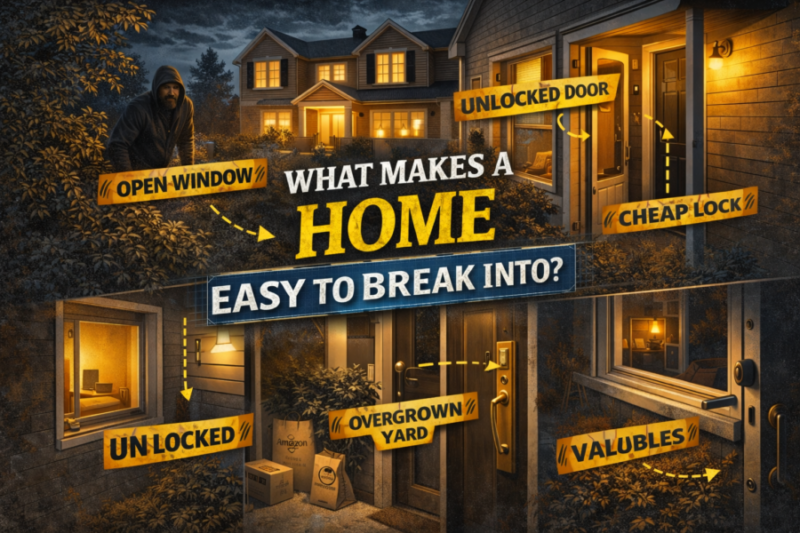
What Makes a Home Easy to Break Into?
TLDR
- Most break-ins rely on visibility, predictability, and easy access, not skill or force
- Unlocked doors, weak window latches, and garages are the most common entry points
- Poor lighting and heavy landscaping create safe cover for intruders
- Oversharing routines online can unintentionally advertise an empty home
- Simple layered habits reduce risk more than expensive equipment alone
When people imagine a burglary, they picture smashed glass and dramatic forced entry. The reality is much quieter. Most homes that get targeted simply look convenient.
Convenience is the keyword. Not wealth. Not size. Not even neighborhood reputation.
A home becomes attractive when it appears low effort, low visibility, and low interruption risk. After spending years researching home security setups and talking with readers about their experiences, the pattern is always the same.
Homes rarely fail because they lacked technology. They fail because they looked predictable.
Let’s break down the specific things that unintentionally advertise opportunity.
Visible Absence
An empty home behaves differently than an occupied one. Lights stay off at the same hours. Packages accumulate. Curtains never move. Vehicles disappear for days.
Humans are pattern detectors. Anyone walking past regularly notices routines without trying. A home that shows no activity gradually communicates certainty: nobody is inside.
This is why timing matters more than hardware. Even a modest home with lights occasionally turning on and off feels occupied. A large property sitting dark every evening feels abandoned.
Small changes interrupt pattern recognition. Timers, staggered lighting, and bringing packages inside quickly all reduce confidence for someone watching.
Unlocked or Weak Doors
The front door remains the most common access point because it is the most reliable. Not because locks fail, but because they are often unused or insufficient.
Handle locks provide minimal resistance. They are privacy hardware, not security hardware. Without a properly engaged deadbolt, the door may open with limited force.
Another overlooked issue is the door frame. Short screws in the strike plate anchor only into decorative trim rather than structural framing. A door may have a strong lock but a weak attachment point.
From a practical standpoint, a locked and reinforced door dramatically increases effort and noise. That alone discourages opportunistic attempts.
Accessible Windows
Windows feel secondary to doors, yet they often require less effort to open. Many sliding windows can be lifted out of their track if unsecured. Others have latches designed to stop wind, not pressure.
Ground level and rear windows are especially vulnerable because they are rarely checked daily. People lock the front door every night but rarely verify the back window.
Simple secondary locks or pins eliminate the lifting problem. Even inexpensive barriers force a change in plan, and inconvenience often ends an attempt before it begins.
Concealment Around the House
Visibility is a silent deterrent. When someone feels exposed, they hesitate.
Large shrubs beneath windows, tall fences without street visibility, and deep side yards create private working space. Darkness amplifies it. A person cannot be interrupted if nobody can see them.
This does not mean removing landscaping. It means controlling sightlines. Entry points visible from the street or neighboring homes naturally discourage lingering behavior.
Motion lighting works because it changes certainty. Sudden brightness removes anonymity.
Garage Weaknesses
Garages are often treated as storage areas rather than entrances, which makes them overlooked access points.
Many people leave the interior garage door unlocked because it feels inside the home perimeter. Others leave remote controls in vehicles parked outdoors overnight. If the vehicle is accessed, the house effectively is too.
Another issue is the emergency release mechanism on overhead doors. It is designed for safety but can be reached through the top panel gap if exposed. Shielding it or locking the interior door removes that shortcut.
A secured garage closes one of the quietest paths into a house.
Predictable Routines
Predictability reduces uncertainty. Leaving at the same time every morning and returning at the same time every evening forms a schedule visible to anyone nearby regularly.
This does not require surveillance. Routine is noticeable from daily life.
Breaking small habits helps. Varying lighting patterns, occasionally parking differently, or using timers while away prevents absolute certainty. Security improves when a passerby cannot confidently guess occupancy.
You are not hiding your life. You are avoiding broadcasting it.
Oversharing Online
Posting travel updates in real time feels harmless, but timing information is location information. Public posts about extended absence confirm what observation might only suggest.
Even private accounts often include acquaintances outside close circles. The problem is not malicious followers but unintended audience reach.
Sharing memories after returning home preserves privacy without losing the moment. The difference is simply removing live timing.
Digital habits influence physical safety more than most people realize.
Unsecured Networked Devices
Smart doorbells, locks, and cameras depend on the home network. If default passwords remain unchanged, access to the device may not require physical presence.
Many devices ship with common credentials or simple setup passwords meant to be replaced. When left unchanged, they become predictable entry points into monitoring systems.
Changing device passwords and updating firmware closes this gap quickly. It takes minutes but prevents remote interaction with physical security equipment.
Physical protection now includes digital housekeeping.
Spare Keys in Expected Places
People still hide keys outdoors because it feels practical. Unfortunately, hiding spots are culturally universal. Under mats, inside planters, and above frames are widely known locations.
Anyone attempting entry checks them automatically. It is not guesswork anymore.
Keypads or temporary access codes solve the convenience problem without permanent exposure. A code can be removed instantly, while a copied key cannot be recalled.
Convenience should not outlast control.
Accumulated Access Permissions
Over time, many people gain entry to a home. Friends, maintenance workers, former tenants, cleaners, or pet sitters.
The issue appears months later when codes remain active. Nobody remembers who still has them.
Reviewing access lists periodically restores awareness. Access should match current relationships, not past ones.
Security improves when permissions expire by default rather than persist indefinitely.
Package Patterns
Regular deliveries reveal absence windows. A box sitting untouched through the day signals nobody is home during working hours.
Repeated patterns establish confidence. Opportunistic theft often begins as observation rather than planning.
Redirecting valuable deliveries, using pickup points, or simply retrieving packages quickly removes that signal. The goal is not hiding delivery activity but shortening exposure time.
Noise and Interruption Risk
Intruders prefer environments where interruptions are unlikely. Quiet streets with little foot traffic and no visible neighbors reduce perceived risk.
You cannot control your neighborhood, but you can influence attention. Audible chimes, barking dogs, visible cameras, and open sightlines all introduce uncertainty.
Security devices work partly because they imply observation, not only because they record.
Conclusion
Houses or apartments rarely become easy to break into because of a single flaw. They become easy because multiple small signals align. No lights, predictable routines, hidden entry points, unused locks, and visible absence create a consistent message: low resistance.
The encouraging part is how manageable this is. Most improvements are behavioral rather than expensive. Locking consistently, adjusting visibility, reviewing access, and managing routines remove opportunity.
Security is not about turning your home into a fortress. It is about removing convenience for someone looking for it. Once effort increases or uncertainty appears, attention usually moves elsewhere.
A well protected home often looks ordinary. It just quietly refuses to be simple.
Blog
-
Best Budget Home Alarm Systems
Budget home alarm systems can provide solid protection without long-term contracts or expensive professional installation.
-
Best DIY Home Security Cameras for Apartments
Apartment security does not require a complicated system.
