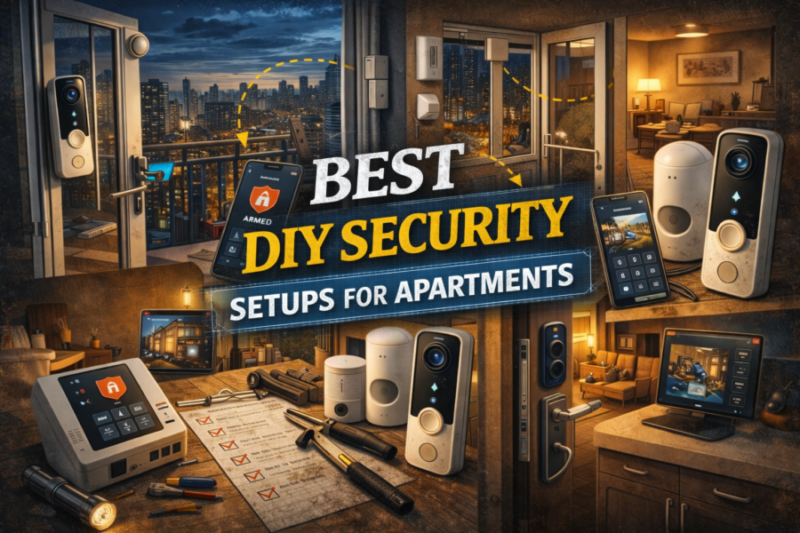
Best DIY Security Setups for Apartments
TLDR
- Apartments benefit most from layered security: door reinforcement, visibility, sensors, and awareness working together
- Rent-friendly devices like adhesive sensors and battery cameras allow protection without permanent changes
- Entry doors and shared hallways are the highest priority zones to secure first
- Smart alerts matter more than constant recording when you live in close proximity to neighbors
- A small, intentional setup usually outperforms a complicated system you won’t maintain
Apartment security is a very different game from securing a detached house. You share walls, parking areas, hallways, and sometimes even entry points with people you don’t know well. That changes both the risks and the solutions.
The good news is you don’t need a drill, wiring experience, or a landlord’s permission to build a genuinely effective security setup. Most modern DIY gear is designed specifically for renters and smaller spaces. The trick is choosing the right pieces and placing them where they actually matter.
I’ve helped friends set up apartment systems that cost less than a weekend grocery run but still stopped package theft and unwanted entry attempts. The difference was never fancy equipment. It was prioritization.
Let’s build this logically.
Start With the Entry Door
Your apartment door is the single most important security point. Nearly every intrusion into an apartment begins here because it is predictable, accessible, and quick to test.
Reinforce Before You Electrify
Before adding a single smart device, improve the physical resistance of the door.
A door jammer or portable brace dramatically increases kick resistance without permanent installation. Reinforced strike plates and longer screws are even better if your lease allows simple hardware swaps. Many landlords approve them because they improve the property.
Door viewers are underrated too. If yours is missing or cloudy, replace it. Knowing who is outside reduces risky door openings, which is one of the most common real-world safety failures.
Add a Contact Sensor
A door sensor is the first electronic layer you should install. It does three things immediately:
- Alerts you when the door opens
- Logs activity while you are away
- Acts as a visible deterrent if placed clearly
For apartments, reliability matters more than range. You are not covering a warehouse. A single dependable sensor protects the main access point where almost all activity occurs.
Consider a Doorbell Camera Carefully
Doorbell cameras work well in apartments but placement matters. You want visibility of faces and package drop areas without pointing directly into a neighbor’s interior space.
Angling slightly downward solves most issues. It captures interactions at your threshold rather than surveying the entire hallway.
If your building prohibits mounting to the wall, use a door mount bracket that hangs over the top edge. No screws, no damage, no deposit problems.
Windows Matter More Than You Think
Many renters ignore windows because upper floors feel safe. In reality, accessible windows include:
- Ground floor units
- Units facing stair landings
- Balconies
- Fire escape access
These are frequently tested because they are quieter than doors.
Window Sensors Are Cheap Protection
Stick-on window sensors work extremely well in apartments. They require no wiring and usually install in seconds.
You do not need one on every pane. Focus on reachable windows first. The goal is detection of entry, not surveillance of every inch of glass.
Glass Break Sensors for Open Layouts
If your apartment has large sliding doors or wide living room windows, a single glass break sensor can cover multiple openings. Place it centrally, not directly beside the glass.
It listens for the frequency pattern of breaking glass, which complements contact sensors that only detect opening movement.
Cameras Inside a Small Space
Cameras in apartments are powerful but easy to misuse. Recording constantly inside a small living area quickly becomes annoying. You stop respecting alerts and then you miss the important ones.
The better strategy is targeted observation.
Use One Main Interior Camera
Place one camera facing the entry path, not the couch or bed. When the door opens, you want confirmation of who entered, not a 24-hour recording of normal life.
Entry-focused positioning gives you the most useful evidence while minimizing privacy fatigue.
Turn On Motion Zones
Modern cameras allow motion zones. Use them. Limit recording to the doorway and immediate entry path.
This prevents endless notifications caused by pets, ceiling fans, or roommates moving around. The system stays helpful instead of noisy.
Motion Detection Without Annoyance
Apartments create a challenge for motion sensors because people move constantly in small areas. Poor placement leads to false alarms every evening.
Place Motion Sensors in Transition Spaces
Good locations include:
- Entry hallway
- Between bedroom and living room
- Near balcony doors
These areas detect movement that should not happen when you are away, but ignore normal activity when you are home.
Avoid pointing sensors directly at seating areas. You will regret it within a day.
Add a Local Siren
A small indoor siren changes behavior immediately. Intruders rarely linger when noise begins.
You do not need an ear-splitting industrial alarm. Even moderate volume indoors is startling in a quiet apartment building and usually ends the event instantly.
Lighting Still Works Indoors
Lighting is not just an outdoor deterrent. It matters inside apartments as well.
Smart bulbs tied to door sensors can turn on lights when the door opens during away mode. That simple automation creates the impression someone is home.
Timers also help. A lamp turning on in the evening while you are at work prevents your unit from looking consistently empty.
Package Theft and Delivery Protection
Apartments experience more package theft than houses because deliveries concentrate in predictable areas.
Use Alert Focused Recording
Instead of recording constantly, set your door camera to notify you of motion near the threshold. Immediate awareness allows you to retrieve items quickly.
Coordinate With Building Patterns
Pay attention to delivery schedules. In many buildings, packages arrive at similar times daily. Adjust notifications during those windows.
Security improves when technology matches routine rather than running blindly 24 hours a day.
Network Security Matters Too
Your devices rely on Wi-Fi. Weak settings can expose cameras or allow unwanted access.
Change default router passwords and update firmware regularly. It takes minutes but prevents common access attempts.
Separating smart devices onto a guest network also limits exposure if one device becomes compromised. You protect your personal computers automatically.
A Practical Apartment Security Layout
Here is a simple and effective baseline setup that fits most apartments:
Core Layer
- Door brace or reinforced strike plate
- Door contact sensor
- One entry-focused indoor camera
Detection Layer
- Window sensors on accessible windows
- Motion sensor in hallway or transition area
- Glass break sensor if large windows exist
Awareness Layer
- Door camera or peephole camera
- Smart light automation
- Indoor siren
This covers forced entry, quiet entry, and opportunistic theft with minimal complexity.
Keeping It Comfortable to Live With
Security systems fail when people stop using them. In apartments, annoyance is the biggest enemy.
Set schedules so the system arms automatically when you leave. Use geofencing if available. The fewer buttons you press daily, the more consistent your protection becomes.
I learned this the hard way years ago. A system that required manual arming lasted about a week before everyone ignored it. Automation fixed that instantly.
Maintenance Is Quick but Important
Check batteries every few months and test alerts occasionally. It takes five minutes and prevents silent failures.
Also review notification settings after software updates. Features improve often, but settings sometimes reset. A quick check keeps everything predictable.
Conclusion
Apartment security is not about turning your home into a surveillance hub. It is about controlling access, noticing changes, and discouraging easy opportunities.
You only need a few well placed devices to achieve that. Strengthen the door, monitor the entry path, detect window access, and automate lighting. That combination handles most real-world situations effectively.
Keep the system simple enough that you actually use it every day. A modest setup that runs consistently protects far better than an elaborate one you eventually ignore.
Build small, adjust gradually, and let your habits work with the technology instead of fighting it. That is the real secret to apartment security that lasts.
Blog
-
Best Budget Home Alarm Systems
Budget home alarm systems can provide solid protection without long-term contracts or expensive professional installation.
-
Best DIY Home Security Cameras for Apartments
Apartment security does not require a complicated system.
